
Unbiased headlines. Facts, not spin.
Every story is an unbiased news briefing written from 110+ sources across the spectrum — sources linked so you can verify it yourself.
 politics
Notable (6/10)
July 3, 2026 at 09:55 AM
politics
Notable (6/10)
July 3, 2026 at 09:55 AM
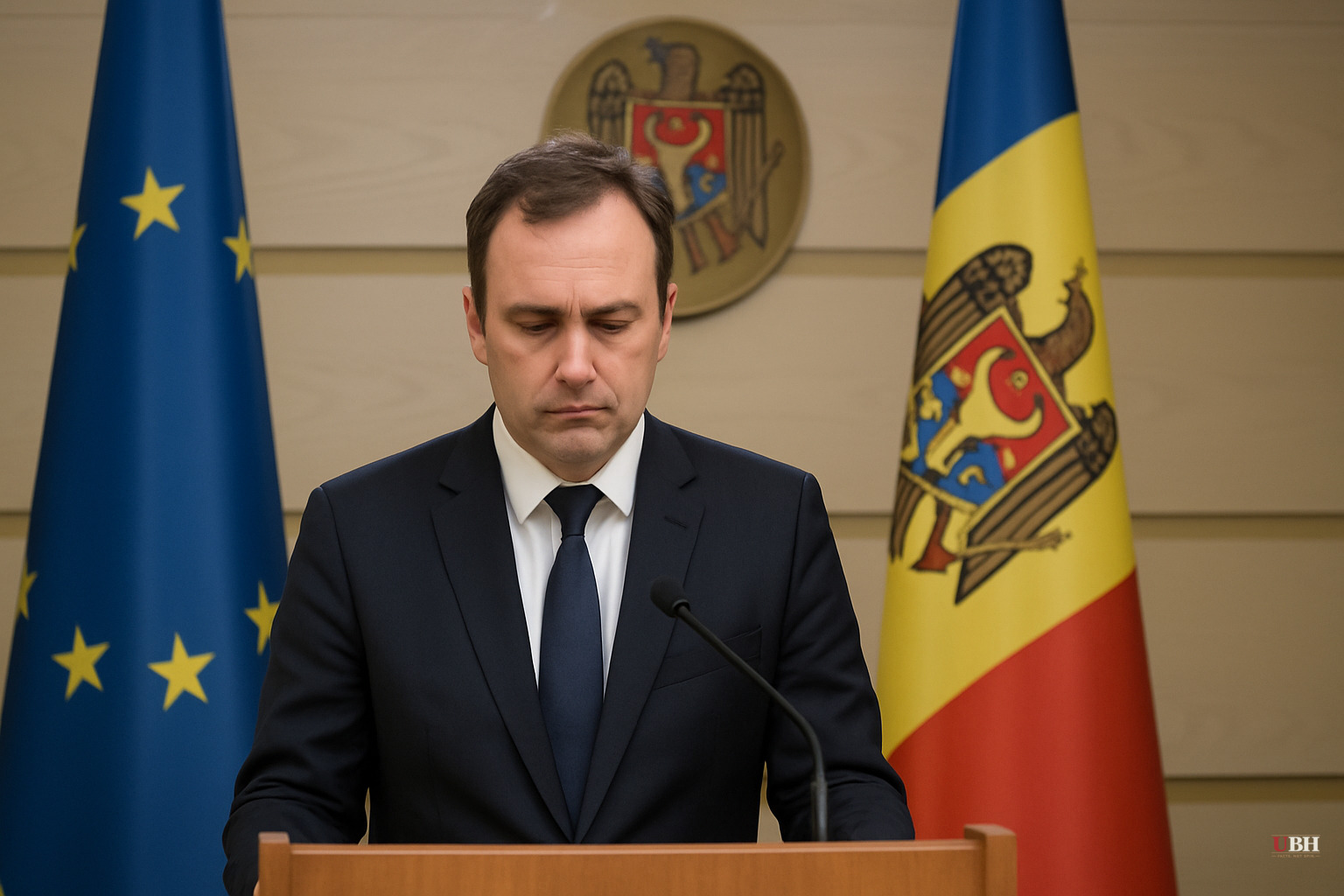
Moldova's Prime Minister Munteanu Resigns Over State-Owned Company Scandal, Bringing Down Entire Government
What Happened
Moldovan Prime Minister Alexandru Munteanu announced his resignation on Friday, citing a personal ethical line he was no longer willing to cross.
"I accepted the proposal to be prime minister with great responsibility and with the firm belief that I can contribute to changing things for the better," Munteanu wrote in a statement posted to Facebook. "The moment I understood that I could no longer exercise my mandate in accordance with the principles and beliefs I have, I chose to leave."
Under Moldova's constitutional framework, a prime minister's resignation automatically brings down the entire government.
The Scandal Behind the Collapse
The immediate catalyst was MoldATSA, the state-owned air navigation company, according to Anadolu Agency and AzerNews. Allegations centered on questionable appointments to senior management positions and governance failures at the enterprise.
The specifics of what was alleged at MoldATSA have not been fully detailed in available sourcing, but the political fallout was severe enough to prompt President Maia Sandu to publicly pledge a "general cleanup" of state institutions days before Munteanu's resignation.
On Thursday, July 2, Moldova's parliament established a special investigative committee to examine the management of state-owned enterprises broadly. The committee's mandate includes reviewing recruitment procedures for senior management, the composition of boards of directors, and cases where individuals simultaneously hold positions at multiple public institutions, according to Anadolu Agency.
That committee was established one day before the prime minister quit. Whether Munteanu's departure was a direct response to that parliamentary pressure, or whether it preceded expected findings, remains unclear.
Why This Matters for Moldova
Moldova is a candidate for European Union membership. Government stability is not just a domestic concern. It directly affects the country's EU accession timeline and credibility with Brussels.
A governing collapse over patronage and mismanagement at a state-owned company is exactly the kind of institutional weakness the EU scrutinizes in candidate nations. Moldova now enters a period of political uncertainty at a moment when stability is most needed.
State enterprise corruption is not a new problem in post-Soviet republics. Appointments to boards of state-owned companies have historically been used as political spoils, placing loyalists rather than competent managers in positions of authority. The fact that parliament felt compelled to form an investigative committee suggests the MoldATSA situation was the visible edge of a wider problem.
The Strongest Defense of the Outgoing Government
Munteanu's own statement frames his resignation as an act of integrity, not an admission of personal wrongdoing. His argument, stated plainly, is that he refused to remain in a position that required him to compromise his principles, which on its face is the opposite of a corrupt actor protecting himself.
Supporters of the outgoing government could reasonably argue that one scandal at a state-owned enterprise does not indict every policy decision made under Munteanu's tenure, and that a prime minister resigning rather than clinging to power is a healthier democratic response than the alternative. Whether that framing holds depends on what the parliamentary committee actually finds about who knew what and when.
What Comes Next
Moldova's government is now caretaker in status. A new prime minister will need to be nominated and confirmed, and the parliamentary investigative committee into state-owned enterprise management will continue its work regardless of who fills the executive seat.
The unresolved question is whether the MoldATSA scandal implicates figures beyond the government that just fell. The committee's review of individuals simultaneously holding positions across multiple public institutions suggests investigators are looking at a network, not a single appointment. Whether that inquiry reaches upward into political ranks or stops at bureaucratic-level scapegoats will determine whether Friday's resignation is the end of this story or the beginning of a longer one.
Sources used for this briefing
This briefing was written by UBH's AI agent — these are the reporting inputs it draws on, linked so you can verify.


