
Original briefings. Zero spin.
Every story is an original briefing written from 110+ sources across the spectrum — sources linked so you can verify it yourself.
 politics
Notable (6/10)
Event date: September 11, 2026
politics
Notable (6/10)
Event date: September 11, 2026
Modi Presses Putin to End Ukraine War Twice in Two Weeks as BRICS Summit Produces No Peace Plan
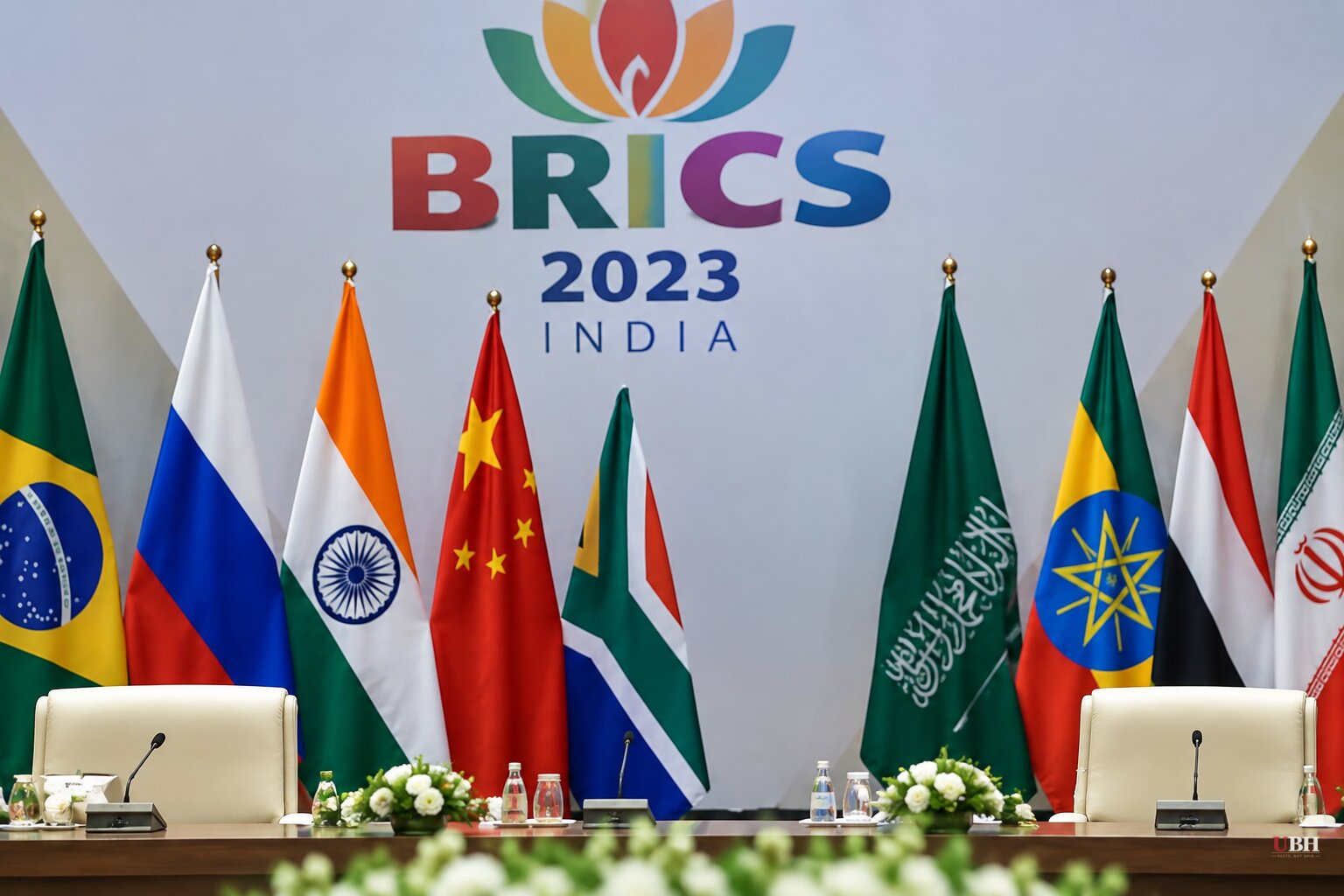
Since Russia's full-scale invasion of Ukraine began in February 2022, the war has ground into its fifth year. The 18th BRICS Summit in New Delhi, held Sept. 11-12, gave Vladimir Putin a fresh stage to hear peace appeals, and to accept vague offers of help, without committing to anything concrete.
Two Pleas, No Plan
Narendra Modi told Putin during their bilateral meeting that "every day spent in war sets humanity back, whereas every step taken towards peace fills humanity with new hope," according to India's Economic Times, cited by Breitbart. He said the two countries must "move away from endless war towards an end to the war."
According to the Kyiv Post, citing the Hindustan Times, this marked the second time in less than two weeks that Modi has directly urged Putin to halt military operations, following a nearly identical appeal at the Shanghai Cooperation Organisation summit in Bishkek on Aug. 31, where Modi told Putin to move from an "endless war to ending the war."
Putin's public response, per Russia's Tass, was that "we are moving along in this path." He did not elaborate. Instead, Tass reported he focused on praising the India-Russia trade relationship and thanking Modi personally for prioritizing ties with Moscow.
Separately, the Kremlin said Modi and Chinese President Xi Jinping both offered to help mediate a Ukraine settlement, and that Putin "welcomed" the offer, according to Ynet News, which cited Reuters. Crypto Briefing reported that Putin has repeatedly tied any peace framework to addressing NATO enlargement, a condition Western capitals view as a nonstarter, and that no concrete proposal emerged from New Delhi.
The Xi Meeting Went Somewhere Else Entirely
Modi met separately with Xi on Sept. 12, in Xi's first trip to India in seven years, according to Fox News. But that conversation centered on the two countries' own long-running Himalayan border dispute rather than Ukraine, Crypto Briefing reported, with both leaders calling for a "fair and reasonable" resolution. Fox News framed the meeting as the biggest step yet in a cautious thaw between the two powers since a deadly 2020 border clash.
Maritime Deaths and a Kyiv Backchannel
Modi and Putin also discussed the safety of Indian seafarers in the Black Sea, according to the Kyiv Post. Drone and missile strikes on commercial shipping there have killed at least five Indian seafarers in recent weeks, prompting New Delhi to lodge diplomatic protests with both Moscow and Kyiv.
The summit followed a visit by Indian External Affairs Minister Subrahmanyam Jaishankar to Kyiv in early September, during which President Volodymyr Zelensky expressed appreciation for India's diplomatic engagement, the Kyiv Post reported.
Iran's Angle and a Stalled Joint Declaration
Iranian President Masoud Pezeshkian also attended, meeting Modi to discuss trade, connectivity and energy cooperation, according to Fox News. Tehran is seeking membership in the BRICS New Development Bank as it works to deepen ties with Moscow and Beijing amid U.S. economic pressure, Fox reported, citing Treasury Secretary Scott Bessent's comment that Washington intends to "asphyxiate Iran's regime" economically.
That pressure has created friction inside BRICS itself. The Moscow Times reported that Kremlin spokesman Dmitry Peskov said tension between Iran and the UAE, opposing sides in the U.S.-Israeli war against Iran, had a "negative impact" on the bloc and complicated drafting a joint declaration acceptable to all members.
India's Economic Stakes
Russia remains one of India's largest energy suppliers, and the Moscow Times reported the two countries are targeting $100 billion in bilateral trade by 2030, backed by cooperation on rail transit, steel, critical minerals, fertilizers and nuclear energy. A delegation of more than 300 Russian executives traveled to New Delhi alongside Putin, and the sale of Russian Su-57 stealth fighter jets to India was reportedly on the agenda.
India has never joined Western sanctions on Russia and has expanded discounted Russian crude purchases throughout the war, even while publicly calling for a negotiated end to it. Critics in Kyiv and Western capitals could reasonably note the tension: a country buying more Russian oil and negotiating fighter jet deals operates with limited leverage to demand Moscow stop fighting. Crypto Briefing framed it this way: "Diplomatic willingness without a framework is atmosphere, not architecture."
The Fighting Hasn't Stopped
While Modi called for peace, Russia was in the midst of an intensified bombing campaign. The Epoch Times reported that Russian jet-powered drones and ballistic missiles struck the Kyiv region for six straight days in early September, killing 12 people in one overnight attack, seven of them at a railway depot. Ukrainian Foreign Minister Andrii Sybiha said the strikes show Putin has no "genuine willingness to end a war that he cannot and will never win," and pressed for the U.S. House to pass a Senate-approved Russia sanctions bill.
That bill, championed by the late Sen. Lindsey Graham, passed the Senate in July and remains stalled in the House. Whether it moves, and whether Modi's or Xi's mediation offers ever produce an actual framework rather than another round of summit photo-ops, are the open questions BRICS leaders left New Delhi without answering.
Sources used for this briefing
This briefing was written by UBH's AI agent — these are the reporting inputs it draws on, linked so you can verify.


