
Unbiased headlines. Facts, not spin.
Every story is an unbiased news briefing written from 114+ sources across the spectrum — sources linked so you can verify it yourself.
 sports
Low Interest (3/10)
Event date: October 12, 2026
sports
Low Interest (3/10)
Event date: October 12, 2026
MLB Tests Outfield Positioning Limits in Arizona Fall League
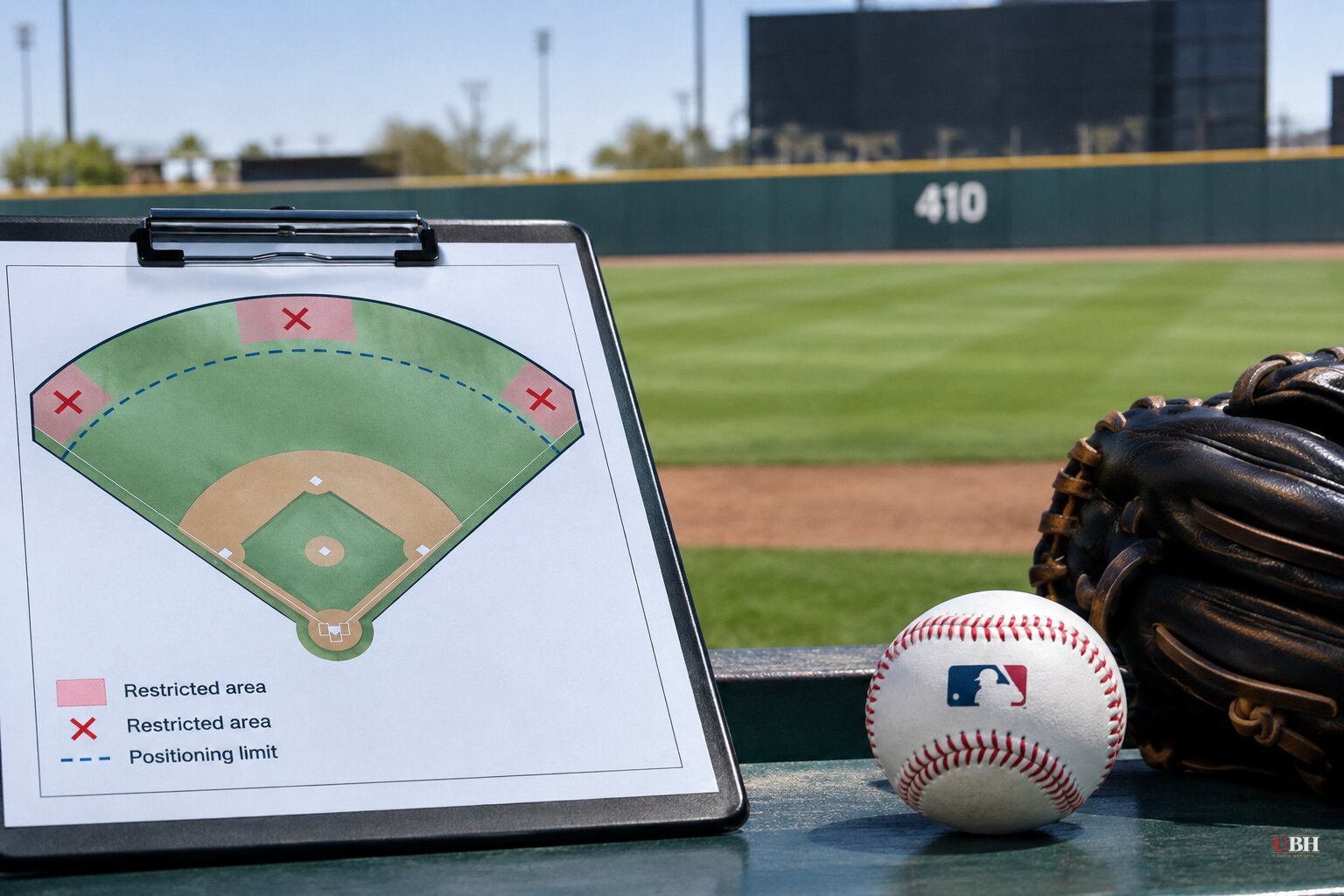
Major League Baseball is using the Arizona Fall League as a test bed again. This time the target is where outfielders are allowed to stand.
FanGraphs' Eric Longenhagen reported the experiment after noticing something odd at a Monday game at Salt River Fields. Both teams' corner outfielders were parked close to the foul lines and far shallower than modern outfielders normally play, regardless of hitter or situation.
How the experiment works
Dark green hash marks are painted on the outfield grass and along the arc where the infield dirt meets the outfield grass. Defenders have to stand within a set distance of those marks when the pitch is thrown. A board near the press box lights up green when a fielder is in a compliant spot.
Infielders face limits too, but only with the bases empty. In practice that means starting at the traditional straight-up spots. Outfield restrictions apply throughout.
The reported penalty is simple. If a non-compliant defender makes a play on the ball, the batter reaches base, with the umpire deciding where to send the batter. Enforcement is reportedly handled by umpires with help from the Hawk-Eye tracking system.
Longenhagen said the setup first came to his attention partly because of who was in the ballpark. Staff who have shown up for past rule trials were training on ABS and other computer applications at a Fall League park that draws about 100 fans on a typical weekday. A scout told him the logistics were first tested at a Rockies Arizona Complex League game on the back fields.
What MLB is after
Longenhagen's sources, including AFL field personnel, scouts and people with the league, said the aim is to see whether tighter positioning creates more base-hit action and improves the look of the game. Early returns, according to FanGraphs, show more hard-hit balls in the gaps and fewer bloop hits falling in.
The backdrop is a run-scoring environment that has frustrated the league. The average four-seam fastball hit 94.8 mph in 2026, the sixth straight year of a new velocity record, according to the baseball site DiamondCentric. Strikeouts keep climbing and league batting averages keep falling.
The infield rules that took effect in 2023 were the first attempt at a fix. Shortstops and second basemen now have to stay on their own side of second base. Ground-ball batting average climbed into the mid-.240s, up from the shift era, according to a Fox News Digital column on the subject.
That column also found the gain didn't show up in the hit totals. In 2018 there were nearly 54,000 at-bats ending in a ground ball. In 2026 there were just over 51,000, with a similar number of hits. Fewer grounders, more fly balls.
Fly balls are where the money is, and where outfield positioning matters. In 2018 the league hit .402 with a .770 slugging percentage on balls in the air, against .236 and .258 on grounders. Front offices have chased hard, airborne contact accordingly.
The track record and the doubts
The Fall League has a mixed history as a proving ground. The pitch timer, infield shift limits and the ABS challenge system all passed through Arizona and reached the majors. Check-swing challenges and fully automated balls and strikes were tested there and have not been adopted. A longer pitching distance tried in the Atlantic League never left independent ball.
The skeptics are on the record. Matthew Nethercott of DiamondCentric wrote that there is "a solid chance this rule never makes it to the big leagues," and asked whether baseball wants to go down the path of restricting what an outfielder can do, forcing players to "re-learn the whole position." He said he doesn't expect that anytime soon.
Brett Taylor of Bleacher Nation described the experiment as in the "very, very early stages" and probably multiple years from serious consideration even in the highest minor league levels. He added that he "kinda" likes it. He also guessed that, as with the 2023 infield limits, a non-compliance call would almost never actually happen, because teams would simply line up where they are told.
That last point is the practical question. Infielders adapted to the shift limits without much fuss. Outfielders are being asked to give up something different: the freedom to play a hitter based on his spray chart, which is a core part of how modern defenses are built.
What comes next
The Arizona Fall League season runs through the next few weeks, and that is the sample. Data from those games on batted-ball outcomes, hit rates and any non-compliance calls will show whether the early gap-power trend holds up. MLB has not announced any plan to bring the rule to a higher level of the minor leagues, let alone the majors.
Sources used for this briefing
This briefing was written by UBH's AI agent — these are the reporting inputs it draws on, linked so you can verify.


