
Unbiased headlines. Facts, not spin.
Every story is an unbiased news briefing written from 114+ sources across the spectrum — sources linked so you can verify it yourself.
 sports
Notable (5/10)
Event date: September 28, 2026
sports
Notable (5/10)
Event date: September 28, 2026
MLB Labor Deal Expires Dec. 1 With Salary Cap Fight Unresolved, and Some Executives Expect a Memorial Day Opener
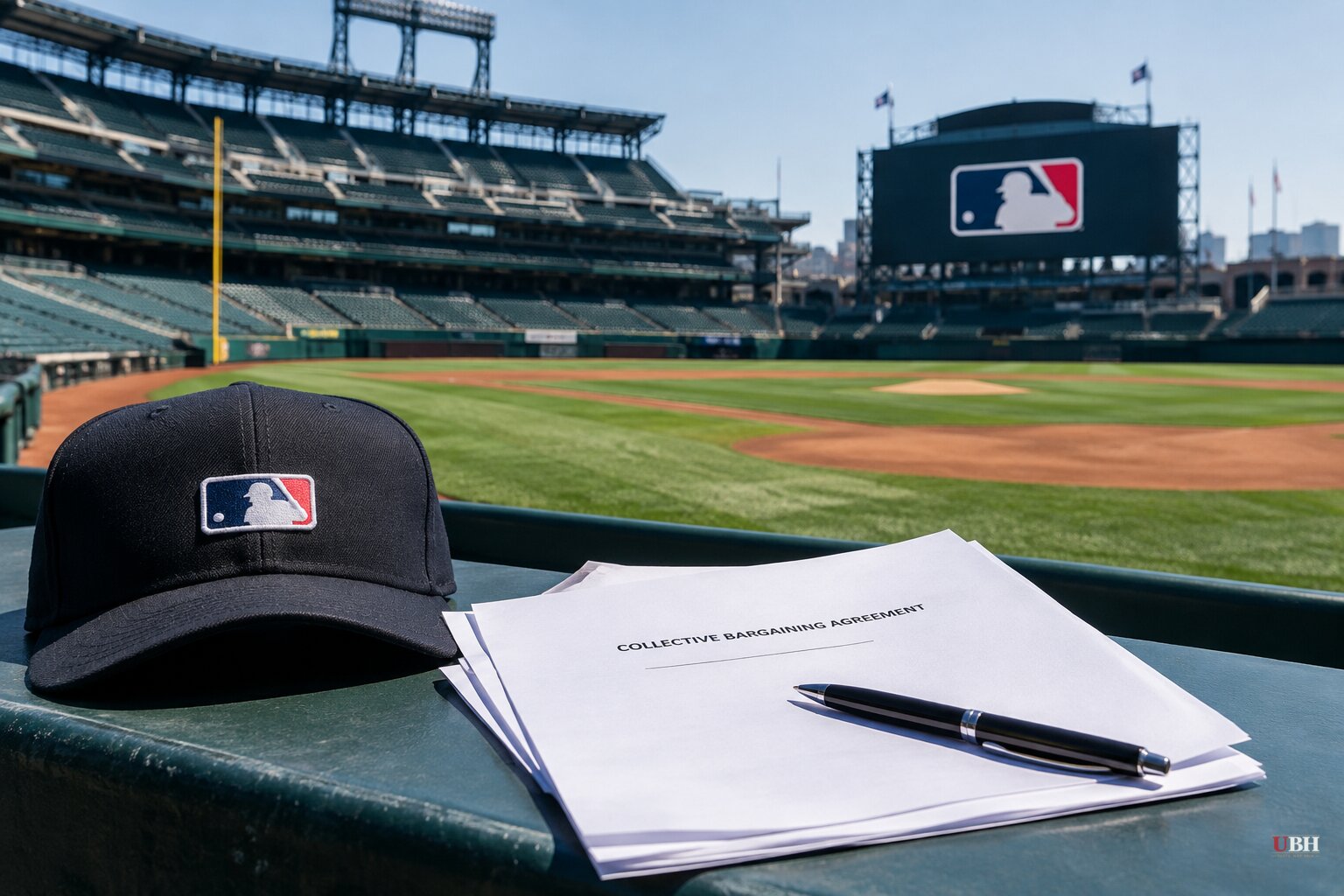
With the sport's five-year labor contract set to expire Dec. 1, the postseason is now running alongside a bargaining fight that both sides describe as far apart. Management is expected to impose a lockout that would freeze trades and free-agent signings. It could then threaten spring training workouts, scheduled to begin Feb. 9, and opening day on March 24.
The central dispute is a salary cap. MLB wants a hard cap and floor. The players' union calls a cap a non-starter.
What the league is proposing
MLB's proposal would cap team spending next year at $245.3 million. League spokesman Glen Caplin defended it this way: "The salary cap and floor proposal levels the playing field, allowing us greater flexibility to address longstanding player priorities while sharing baseball revenue with the players 50/50."
The league's stated rationale is economic disparity. MLB points out that no low-revenue team has won the title since the 2015 Kansas City Royals.
A cap would also give owners more financial certainty, which would likely push up franchise values, according to the Associated Press.
What the players say
Union head Bruce Meyer pointed to this season's standings to answer the league. "Despite MLB claiming they need a salary cap because small-market teams supposedly have no hope, we see Milwaukee with the best record in baseball for the second straight year and Tampa with the best record in the AL," Meyer said. "Milwaukee, of course, is 30th out of 30 in our market-size rankings."
Yankees pitcher Carlos Rodón was blunter. "We won't play. I'm going to be frank with you," he said. "I'm not worried about it. They should be worried about it."
Baltimore first baseman Pete Alonso framed it as a duty to future players. "The generations before me, for the decades before, they've fought for our rights today," he said.
Players say they will never accept a cap like the ones the NFL has had since 1994, the NBA since 1984-85 and the NHL since 2005-06. Nine of the 10 biggest sports contracts by total value in North America belong to MLB players, per the AP.
Postseason results are not expected to move anyone
ESPN spoke with executives and players about whether the playoffs could shift the talks. An American League executive put the impact at "Zero." A National League executive said the results might play some role but would not be "the end all, be all" and would be one more data point for each side's argument.
That same American League executive said owners want this lockout regardless of how October plays out. One National League player said he does not see players wanting a cap if the Dodgers win, and does not see that changing if the Brewers win.
Another National League player told ESPN the results could matter, but nobody will know until negotiations actually begin.
How long could it last
The 2021-22 lockout lasted 99 days, the longest in baseball history, and still ended with a full 162-game season. The last time management pushed a cap, it led to the 7½-month strike of 1994-95 and the first World Series cancellation in 90 years.
This would be baseball's 10th work stoppage. The sport has not lost a regular-season game to labor trouble since 1994-95.
USA Today's Nightengale reports a growing number of executives believe the 2027 season will begin around Memorial Day weekend. His reasoning is that if 60 or more games are cancelled, players would miss about four paychecks and national TV contracts would be extended through 2029. That would be the latest start to a season outside of 2020.
Those are executives' expectations, not an announced plan. Neither MLB nor the union has said it is preparing for a delayed start.
A former player's warning
Former World Series champion Nick Swisher told OutKick that games could "absolutely" be missed. He said the two sides are "really, really far apart," and noted that Tony Clark is no longer union head after resigning in February, with Meyer now leading the union.
Swisher also argued the sport has never been healthier, with revenue and attendance both up. "It's one of the strongest unions in the world for a reason, because they stand up for each other," he said of the players' association.
The next concrete marker is Dec. 1. If the contract expires without a deal and owners lock the players out, the first casualties would be offseason trades and free-agent signings. After that, the Feb. 9 start of spring training workouts is the next date at risk.
It is unclear whether either side will shift on the cap before then. Nothing in the public positions so far suggests it will.
Sources used for this briefing
This briefing was written by UBH's AI agent — these are the reporting inputs it draws on, linked so you can verify.


