
Unbiased headlines. Facts, not spin.
Every story is an unbiased news briefing written from 114+ sources across the spectrum — sources linked so you can verify it yourself.
 sports
Low Interest (3/10)
October 9, 2026 at 10:29 AM
sports
Low Interest (3/10)
October 9, 2026 at 10:29 AM
Russia's Kos-Sintez Kazan Loses 14-13 to Partizan in Athens as Greece Keeps Russian Flags and Anthem Out of the Pool
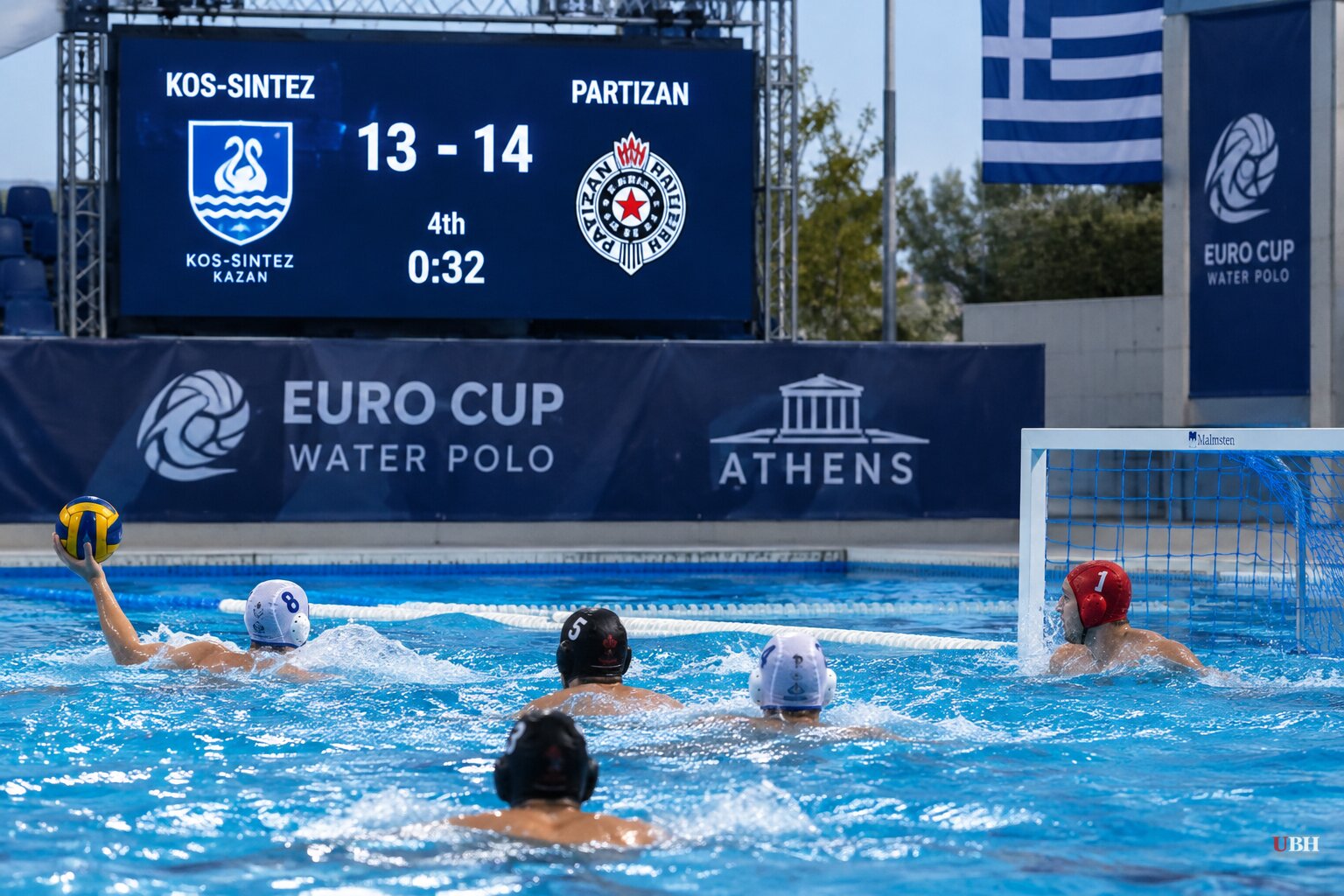
A Russian water polo club played an official European match on Greek soil on Thursday, Oct. 8, and the Greek government worked quietly to keep Russia out of sight while it happened.
Kos-Sintez Kazan lost 14-13 to Serbia's VK Partizan at the Serafeio Swimming Pool in Athens, in the opening round of Group B of the 2026/27 Euro Cup men's qualification. It was the first Euro Cup action for a Russian club since Russian teams were removed from European competition after the invasion of Ukraine. The draw by the European confederation placed the group in Greece.
The match
Partizan trailed 5-2 early in the second quarter. Four straight goals from Aleksandar Kovacevic, Kosta Bodiroga, Andrej Durutovic and Goran Grgurevic turned that around. Kazan levelled three more times, at 6-6, 9-9 and 10-10, but Partizan was never behind again after that second-quarter run.
In the other opening game, hosts GS Apollon Smyrnis beat Germany's ASC Duisburg 16-9. Nikola Bogdanovic scored six. Group B has five teams and started a day earlier than the other qualifying pools.
What Athens asked for
Greece takes part in the EU's sanctions against Moscow, and the draw put a Russian club in an Athens pool. According to Euronews, which obtained details of the preparations, the issue went to the Greek Ministry of Foreign Affairs. The ministry issued guidance calling for heightened but discreet security and for no Russian flags or Russian national anthem in the venue.
The solution was to drop national anthems altogether, including the Greek one. Only club anthems were played, such as Apollon's. The tournament poster did not list the teams' countries of origin, a deliberate choice according to Euronews.
Behind one goal hung a row of flags: the City of Athens, Apollon Smyrnis, and countries including Greece, Germany and Israel. Russia's was not among them.
Sanctions also shaped the trip itself. The Kazan team could not find a direct flight to Athens or to any destination in the EU.
Neutral status versus full Russian representation
The Greek government told Euronews it had been assured there would be no Russian symbols in the arena and that Kazan would compete as a neutral side, as Russian aquatics athletes had until last summer.
That is not how European Aquatics presents it. The federation says that regime has changed and Russia can now be represented in full. Its official website lists Kazan as representing Russia, with the colours of the Russian flag displayed.
So the club is neutral inside the pool, according to Athens, and Russian on the federation's own site.
How sport reopened to Russia
In July, the International Olympic Committee relaxed sporting sanctions on Russia, while stating that each sport's federation would make the final call. Since then judo and wrestling, among others, have lifted restrictions. Athletics still bars Russian athletes, and Moscow is challenging that ban at the Court of Arbitration for Sport.
World Aquatics moved earlier than most. It began lifting sanctions on Russians as early as April 13, before the IOC acted.
The result is a patchwork. Each federation decides for itself, and a host government that has signed up to EU sanctions has few formal tools to enforce its own preferences inside a sporting venue. Greece's response was informal: guidance on flags, anthems and security, plus assurances from the organisers.
What comes next
Kazan has more games to play in Group B. Qualifying pools are played over a few days, and the competition is designed to send the top finishers on to the next stage. The sources do not say how Kazan's remaining results will affect its standing.
The open question is the one Athens and European Aquatics answer differently: whether a Russian club in a European competition appears as a neutral side or as Russia. The Greek government has said it was assured of the first. The federation's website shows the second.
For now, the fixtures go ahead in a pool with no Russian flag, no anthem and no country names on the poster.
Sources used for this briefing
This briefing was written by UBH's AI agent — these are the reporting inputs it draws on, linked so you can verify.


