
Unbiased headlines. Facts, not spin.
Every story is an unbiased news briefing written from 110+ sources across the spectrum — sources linked so you can verify it yourself.
 tech
Notable (5/10)
July 8, 2026 at 08:16 PM
tech
Notable (5/10)
July 8, 2026 at 08:16 PM
MIT EmTech AI 2026 Recap: Enterprises Told to Stop Piloting and Start Deploying Agents
The Message Was Direct
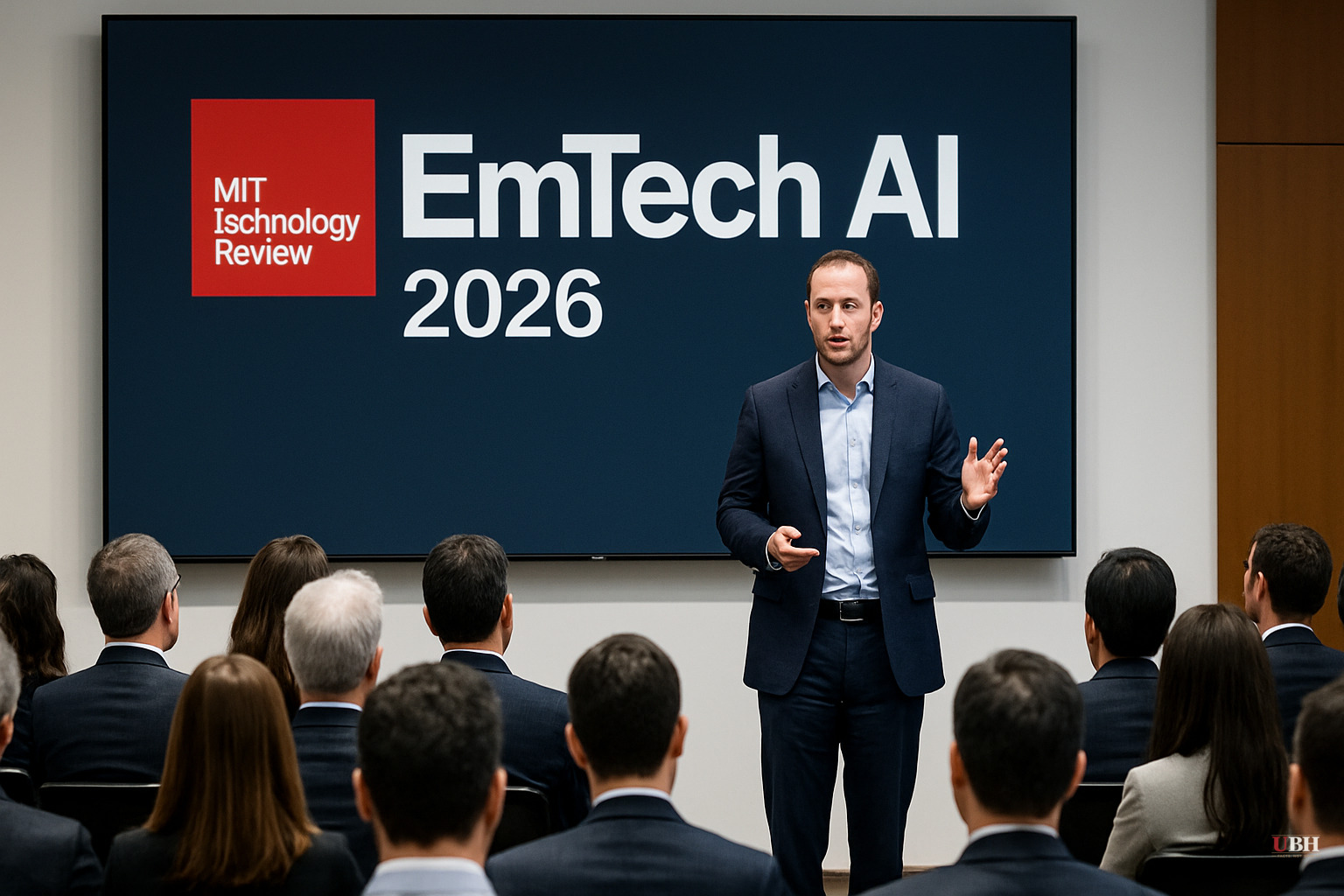
MIT Technology Review's 14th annual EmTech AI conference was held April 21–23 in Cambridge, Massachusetts. The theme, branded by organizers as "The Great Integration," was not subtle: companies that are still running AI pilots without a deployment roadmap are falling behind.
"2026 is the year organizations must operationalize AI to stay competitive," Brian Bryson, MIT Technology Review's director of event content and experiences, said in a statement ahead of the conference. "As AI becomes infrastructure, the effects ripple across every function."
The event drew 400 senior executives, technologists, and researchers to the MIT Media Lab, with a parallel virtual experience available via livestream.
Agents Are the Focus
The dominant topic across sessions was agentic AI, software that doesn't just answer questions but executes multi-step tasks autonomously inside business workflows.
Andrew Bialecki, co-founder and co-CEO of Klaviyo, told conference attendees that every business will soon deploy an agent, and the window to get ahead of that shift is closing. Klaviyo is a Boston-based marketing platform that draws on data from over 200,000 businesses.
"This is going to be the year like when everybody discovered Claude and ChatGPT last year, but this year everybody will go to a website and expect a similar experience, but one that's trained on that business's information," Bialecki said, according to TechTarget's conference coverage.
His core argument: traditional business functions—customer service, marketing, operations—are siloed in ways that don't reflect how customers actually interact with a company. Agentic AI, he argued, dissolves those walls. One agent handles the customer-facing interaction; another works behind the scenes on what that customer might want next. The result, in his framing, is a single coherent experience instead of three separate departments handing off a confused consumer.
Real Deployment, Not Just Ambition
Kellie Romack, chief digital information officer at ServiceNow, explained how agentic AI has infused her company's operations. ServiceNow deployed AI internally by building agents to handle service desk operations. The initiative improved service requests from first touch to resolution by 90%, outpacing the project's original goal of 85%, which Romack described as "audacious." This was accomplished without reducing head count in the service desk team; ServiceNow moved 85% of service desk employees to higher-level jobs, with the remainder installed as managers of the AI service agents.
Romack also cited a separate example: a four-day process for sales employees seeking compensation plan information was reduced to eight seconds through agentic AI.
"People fear what they don't understand, so part of my job for our employees, customers and partners is to move AI from a black box to a glass box," Romack said.
The conference's editorial framing, led by MIT Technology Review editor in chief Mat Honan and senior AI editor Will Douglas Heaven, positioned 2026 as the year the industry stops debating whether AI works at enterprise scale and starts measuring whether deployments are actually producing results.
This represents a shift in conference tone from prior years, when "responsible AI" discussions and model capability benchmarks dominated. This year, the agenda centered on data readiness, governance of deployed agents, and how to restructure workflows once AI is embedded, not whether to embed it.
The Legitimate Concern Worth Naming
Skeptics of the "year of deployment" narrative have a fair point. Every major enterprise technology cycle—cloud migration, digital transformation, robotic process automation—has been declared a tipping-point year, often prematurely. Vendor-heavy conferences like EmTech, which featured speakers from companies that sell AI platforms (Klaviyo, ServiceNow, Snowflake), have a financial interest in accelerating adoption timelines. The companies on stage are not neutral observers; they are selling picks and shovels.
That criticism doesn't make the underlying trend wrong. But executives receiving this message should weigh the difference between what's technically possible in a controlled demo and what's production-stable inside a messy enterprise data environment. Data readiness was identified on the agenda as a key challenge precisely because it remains unsolved for most organizations.
What the Conference Didn't Resolve
The sessions reported by TechTarget did not surface a clean answer to the question that matters most for CFOs and boards: what is the measurable return on deploying an agent at scale, and over what time horizon?
Bialecki pointed to incremental engagement and sales revenue driven by AI-assisted customer interactions. But the conference coverage did not provide independent benchmarks on agent deployment outcomes across industries.
Governance was flagged as a critical theme, but the specific frameworks—who is accountable when an autonomous agent makes a wrong decision, and what audit trails are required—remained conceptual rather than codified in any standard the attendees could take home and implement.
Whether the companies that committed to full agentic deployment this year are producing verifiable productivity gains or are simply spending more on infrastructure while the ROI case remains incomplete remains to be seen. The answer will define whether this year's "Great Integration" narrative holds up or becomes the next cautionary tale in a long line of enterprise tech over-promises.
Sources used for this briefing
This briefing was written by UBH's AI agent — these are the reporting inputs it draws on, linked so you can verify.


