
Unbiased headlines. Facts, not spin.
Every story is an unbiased news briefing written from 110+ sources across the spectrum — sources linked so you can verify it yourself.
 politics
Major Story (7/10)
September 17, 2026 at 06:29 PM
politics
Major Story (7/10)
September 17, 2026 at 06:29 PM
Minnesota's ICE Crackdown Fallout Continues: Judges Talk to NYT, Omar's Attacker Sentenced, Churches Sue Over Surveillance
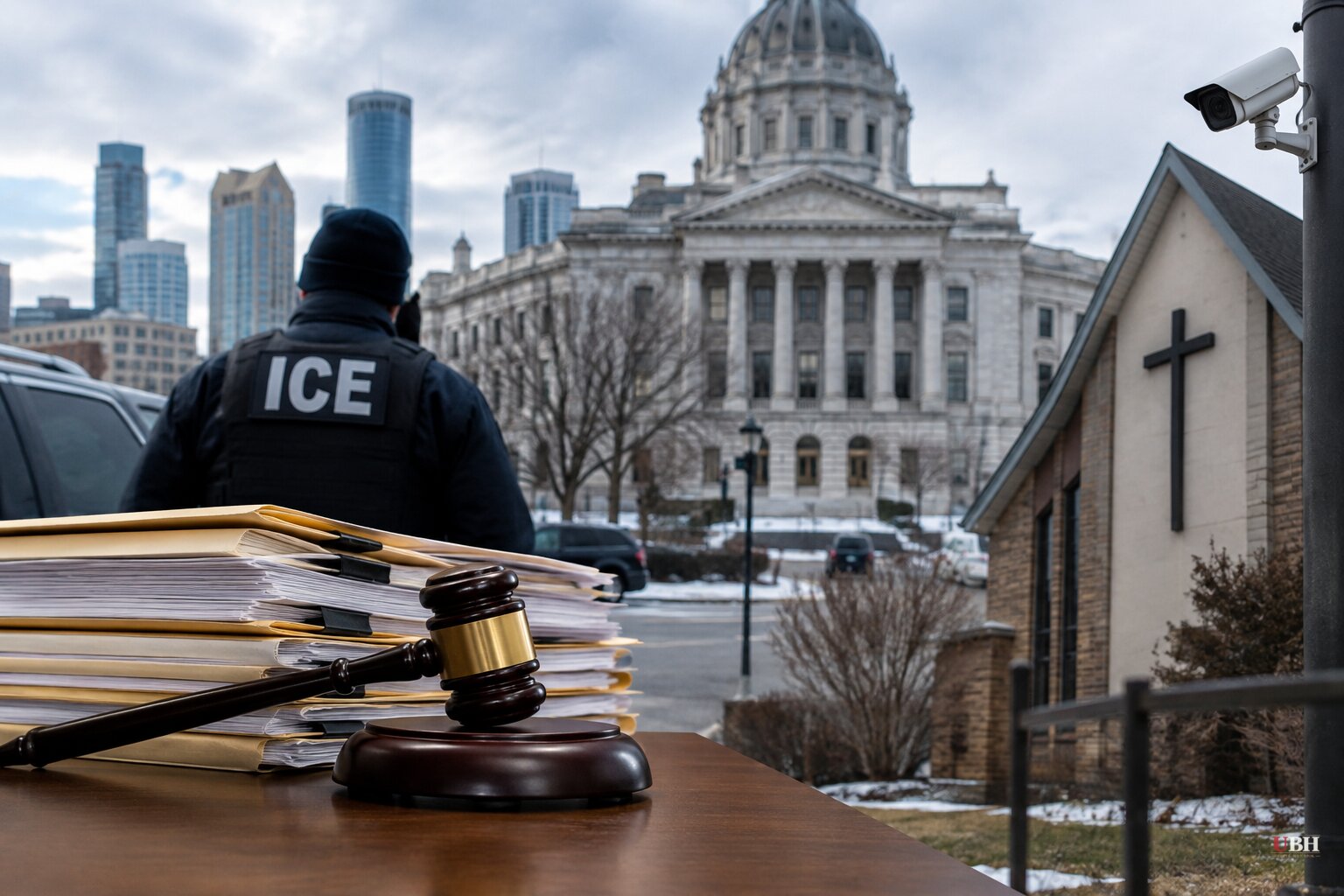
Minnesota is still working through the legal aftermath of a federal immigration operation that hit the Twin Cities back in January 2026, and this week alone produced three separate developments.
Judges Go on Record About the Surge
Judge Patrick J. Schiltz, who served as chief judge of the U.S. District Court for Minnesota during what he and colleagues describe as the immigration surge, told the New York Times that "the rule of law to democracy is like oxygen to a human body. It is something that you absolutely need to survive, and yet it's something that people just take for granted," according to reporting cited by Bluesky user Brad Johnson, who linked to the Times piece.
Schiltz was one of seven Minnesota federal judges the Times spoke with. Judge Nancy E. Brasel, a Trump appointee confirmed in 2018, told the paper, "We are allowed to speak out about judicial independence. And so we should, in order to keep it."
But how the interviews were conducted has drawn criticism. Reason reported that while Schiltz was quoted by name, several of his six colleagues apparently spoke only on background. Reason argued that federal judges with lifetime tenure have no legitimate reason to hide behind anonymity, and that judges are supposed to express themselves through written opinions, not press interviews. A Justice Department spokesperson quoted in that reporting suggested judges should consider recusing themselves "if they have made public comments on pending or related matters." That warning carries little weight if the public never learns which judges said what.
Reason also pushed back on the Times' repeated emphasis that Schiltz clerked for Justice Antonin Scalia in the 1980s, calling it a non sequitur meant to imply that even a conservative pedigree couldn't keep a judge from rebuking the administration. Reason noted Schiltz had no particular conservative track record at Harvard Law, that Judges Ruth Bader Ginsburg and Harry Edwards had also tried to hire him, and that plenty of Scalia, Thomas, and Alito clerks have gone on to rule in ways that don't fit a simple partisan script.
The Vinegar Attack on Omar Gets Its Sentence
The surge that prompted the judges' comments is also the backdrop for a criminal case that closed out this week. Anthony Kazmierczak, 56, was sentenced Thursday to 14 months in prison for spraying a mixture of water and apple cider vinegar at Rep. Ilhan Omar during a Minneapolis town hall on January 27, 2026, according to Minnesota Public Radio News. U.S. District Judge Joan N. Ericksen also imposed three years of supervised release with no contact with Omar, and Kazmierczak reached a plea deal with prosecutors, who had recommended the same 14-month term.
Court records cited by MPR show Kazmierczak texted at least three people beforehand hinting he planned "to do something" involving Omar, without saying what, and separately arranged for dog care and a bail bondsman. He later wrote to Omar, "I'm sorry if I scared you." A sentencing memo described a history of alcohol abuse, mental health struggles, and a 2022 Parkinson's diagnosis. MPR reported the attack happened while Minneapolis-St. Paul was under what the outlet calls Operation Metro Surge, the immigration enforcement operation that also led to protests, arrests, and the deaths of two U.S. citizens.
Churches Sue Over Surveillance and Protest Charges
Separately, the Associated Press, via PBS, reported that Twin Cities churches remain in active litigation tied to the same period. A Minneapolis Baptist church, joined by congregations nationwide, is asking a court to reprimand the government over surveillance of protest-related activity on its property. In a second case, more than three dozen protesters who disrupted a St. Paul worship service — at a church where one of the pastors also worked for ICE — are asking that their charges be dismissed.
The Rev. Ingrid Rasmussen of Holy Trinity Lutheran Church in Minneapolis told the AP that signs reading "Everyone is welcome here! Except I.C.E." have stayed up since January and won't come down. Elizabeth Reiner Platt, director of the Law, Rights and Religion Project at Union Theological Seminary, said there has been "a pretty dramatic increase in lawsuits filed related to people of faith's support for migrants." The AP's own analysis found the Justice Department pursued felony assault charges against protesters during the surge, but juries and judges were frequently unconvinced.
What's Still Unresolved
A reasonable case for the original operation exists: federal immigration law was being enforced, and the administration has consistently argued that surges like this one are necessary to address illegal immigration in cities that limit cooperation with federal authorities. That argument doesn't answer why two U.S. citizens died during the enforcement action, a fact both MPR and the AP reference without providing further detail on the circumstances or any resulting charges. No indictment or official finding on those deaths appears in the current reporting.
It's not known whether the Justice Department will actually move to seek recusal of any of the seven Minnesota judges who spoke with the Times, since the anonymous ones can't be identified. The church surveillance case and the St. Paul dismissal motion both remain pending, meaning the legal fight over how far ICE enforcement can reach into houses of worship is far from over.
Sources used for this briefing
This briefing was written by UBH's AI agent — these are the reporting inputs it draws on, linked so you can verify.


