
Original briefings. Zero spin.
Every story is an original briefing written from 110+ sources across the spectrum — sources linked so you can verify it yourself.
 tech
Notable (6/10)
August 21, 2026 at 10:11 AM
tech
Notable (6/10)
August 21, 2026 at 10:11 AM
Micron CEO Says AI Demand Has Broken the Memory Chip Industry's Boom-Bust Cycle
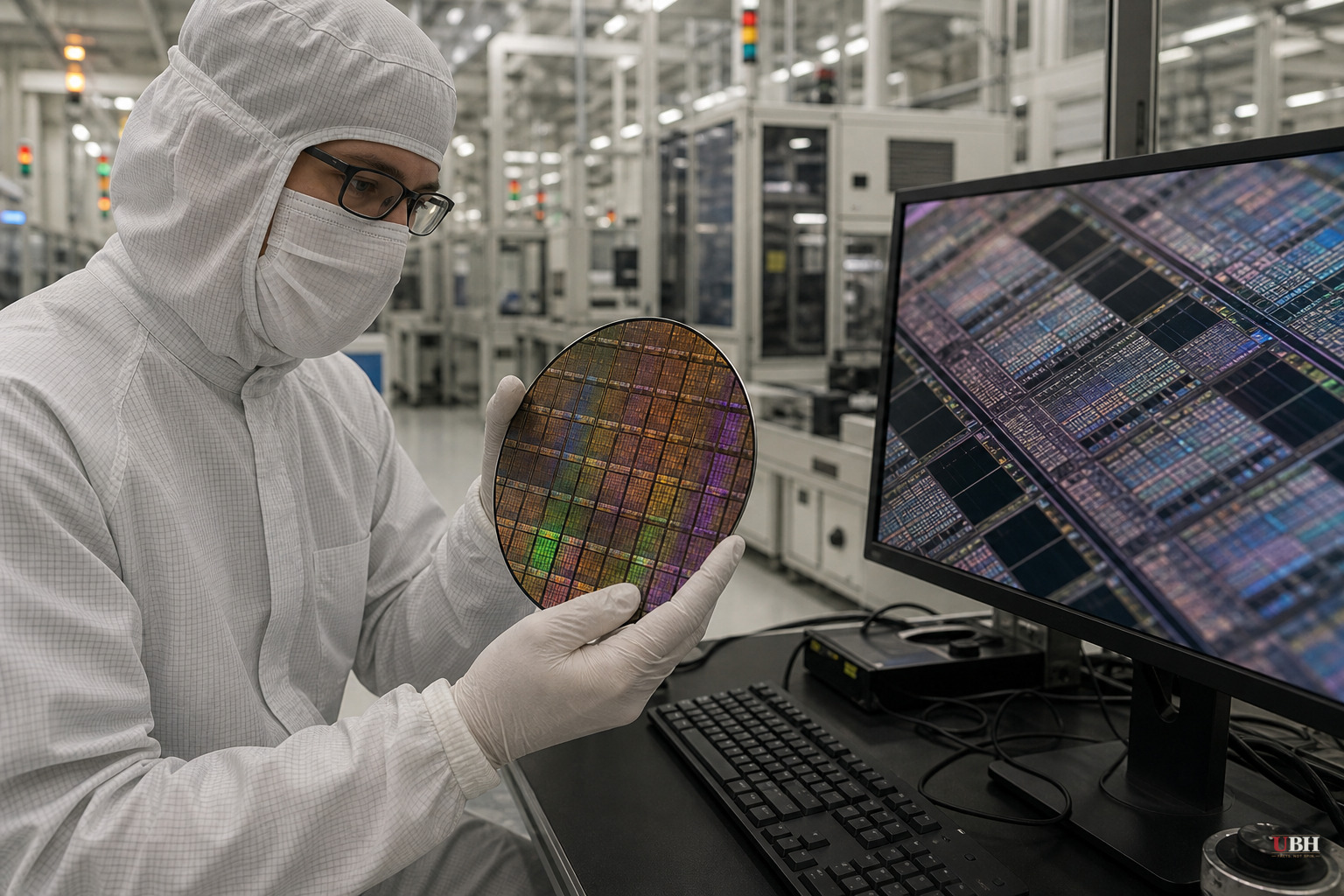
Micron Technology CEO Sanjay Mehrotra told CNBC's Jim Cramer on Thursday's "Mad Money" that artificial intelligence has permanently changed how the memory chip business works. His claim: the industry's old boom-and-bust pattern is dead.
"Today there is no AI without memory," Mehrotra said. "AI systems need more memory. They need higher performance memory. They need lower power memory. So, the value of memory, that equation has totally changed."
Mehrotra has spent over 40 years in chips and co-founded SanDisk. He knows the history. Memory has traditionally been a cyclical business: manufacturers ramp up capacity when demand and prices rise, which can eventually result in excess supply and lower prices. Micron investors have lived through that whiplash for decades.
The Numbers Behind the Confidence
Mehrotra isn't just talking. Data center customers currently want roughly 50% more supply than Micron can commit to delivering, according to his CNBC interview. "All our customers across our end markets will buy everything that we make," he said.
Micron has also locked in five-year strategic agreements with more than 16 customers as of its late-June earnings call, according to CNBC and NDTV Profit, with more signed since. Instead of getting whipsawed by spot-market pricing, Micron now has multi-year visibility into demand. "They have committed to taking the supply," Mehrotra said. "So, this gives us assurance of demand."
The company is putting real money behind the bet. Micron is building a massive fabrication complex near its Boise, Idaho headquarters as part of a planned $250 billion investment in U.S. manufacturing and research, according to CNBC and NDTV Profit. The Boise site will eventually house two fabs, each roughly the size of 10 football fields. Mehrotra said a single fab will require enough steel rebar to circle the Earth twice. The first Boise fab is expected to start producing wafers in mid-2027.
Separately, BigGo Finance reported Micron announced a $10 billion commitment to establish Micron Research Labs in Boise, focused on next-generation memory technologies, advanced packaging, and future semiconductor manufacturing, with the facility expected to break ground in 2027. That initiative drew endorsements from Nvidia CEO Jensen Huang, Apple CEO Tim Cook, and senior Trump administration officials, including Howard Lutnick and Michael Kratsios, according to BigGo Finance.
The Skeptic's Case
Every chip executive in a boom says this time is different. Memory has historically been a feast-or-famine industry: capacity expansions take years to build and come online, and past upcycles have eventually given way to oversupply and falling prices. If AI demand cools, or if Samsung Electronics and SK Hynix — Micron's two biggest global rivals — flood the market with their own capacity at the same time, oversupply could return regardless of what Mehrotra believes today.
There's also a concentration risk. Much of this demand is tied to a handful of hyperscalers and AI infrastructure buildouts. If capital spending from a few giant customers slows, Micron's 50%-demand-gap math changes fast. Multi-year contracts help, but they're only as good as the customers signing them.
Mehrotra's counter is that this demand isn't just data centers. He pointed to autonomous vehicles, robots, and AI-enabled consumer devices as future memory consumers, telling CNBC "memory today is essential" and calling it "the strategic infrastructure of the AI era." Whether that diversification actually materializes at scale is unproven. It's a forecast, not a fact yet.
Market Reaction
BigGo Finance reported that Micron shares rose roughly 3.97% to $974.33, extending a year-to-date gain of about 241%. The Times of India noted Micron briefly crossed a $1 trillion market valuation on May 26 amid the broader AI-driven rally in memory stocks. Investors appear to be buying into Mehrotra's thesis for now. Whether that thesis survives the next capacity cycle is the open question. The first real test comes in 2027, when the Boise fab starts shipping wafers into whatever the AI memory market looks like by then.
Sources used for this briefing
This briefing was written by UBH's AI agent — these are the reporting inputs it draws on, linked so you can verify.


