
Unbiased headlines. Facts, not spin.
Every story is an unbiased news briefing written from 110+ sources across the spectrum — sources linked so you can verify it yourself.
 politics
Major Story (7/10)
July 16, 2026 at 02:29 PM
politics
Major Story (7/10)
July 16, 2026 at 02:29 PM
MI5 Officers Lied to Three Courts to Protect a Neo-Nazi Informant, Watchdog Finds
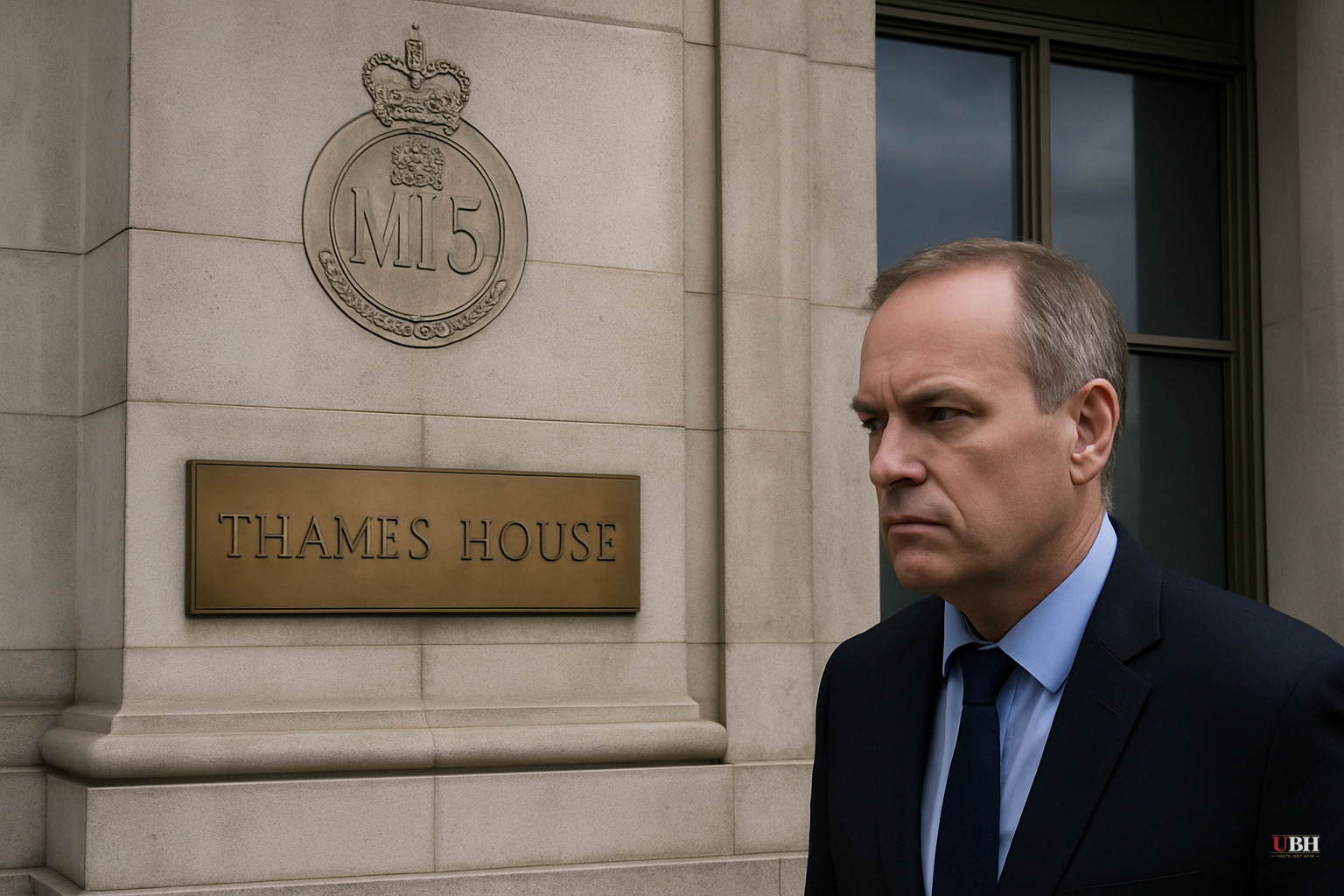
MI5 lied repeatedly to three courts, according to a 211-page report published Thursday by the Investigatory Powers Commissioner, Sir Brian Leveson. The finding should worry anyone who thinks Britain's intelligence services answer to the rule of law.
The case centers on a man known only as Agent X, a foreign national involved in neo-Nazi movements who was recruited as an MI5 informant before 2019. According to the Guardian, Agent X attacked his girlfriend, known as "Beth," with a machete and tried to use his informant status to keep her from going to police.
BBC reporter Daniel de Simone began investigating Agent X in 2020 after learning of the abuse. When de Simone contacted MI5 to say he planned to report that X was "a dangerous neo-Nazi," agency officers tried to talk him out of it. One officer, identified only as Officer 2, told de Simone that X was "not a real extremist" and was only pretending to be one at MI5's direction, the Guardian reported. In doing so, Officer 2 confirmed X's status as an informant, breaking MI5's standard "neither confirm nor deny" policy.
The BBC published its report anyway in May 2022, after winning a legal fight with the government. That's when the cover-up compounded itself. Officer 2 later told his successor, Officer 3, that he "thought he had not" confirmed X's informant status to the BBC. Officer 3 then told colleagues the NCND policy "had not been breached," according to the Guardian's account of the report. That false claim became the foundation for MI5's position in court.
Sir John Goldring's report, commissioned separately to examine the same conduct, found that Officer 2 told "lies" that formed the foundation of MI5's false account to three separate courts, and put forward what the report calls a "wholly fictitious account" denying he ever told de Simone that X was an agent, according to the BBC. A separate officer misled his own colleagues about what he'd been told.
This was not one bad afternoon. MI5's false position stood through two internal investigations, both directed by the Director General and the Home Secretary, that cleared officers of intentional misconduct. Those investigations were themselves torn apart by courts last summer, which is what forced the Prime Minister to order this fresh, independent inquiry.
MI5 Director General Sir Ken McCallum did not dispute the findings. "MI5 recognises without hesitation the seriousness of our failings in these proceedings," he said, repeating apologies to both courts "for the incorrect evidence that was provided, and for our slowness in recognising what had happened." He said the agency has spent 18 months changing policies to prevent a repeat.
Home Secretary Shabana Mahmood called the findings "stark" and said she's taking "urgent action to hold MI5 to account for these failures, including strengthening my oversight and assurance of their work." She also credited MI5 staff for the work they do keeping the country safe, a fair point that shouldn't get lost in the outrage.
MI5's core argument is that it needs to protect informant identities to keep operations and sources safe. Intelligence services genuinely cannot confirm or deny every relationship without blowing operations and getting people killed. That's a legitimate institutional interest, and it's why NCND exists as a policy in the first place.
But Leveson's report makes clear that's not what happened here. MI5 didn't quietly protect a secret. Officers actively lied about whether they'd already broken their own secrecy rule, then let that lie stand through two internal reviews and multiple court proceedings, while a woman who says she was attacked with a machete tried to get accountability. "What makes this case particularly grave is that Ipco and the courts were misled," Leveson said. "Failings of candour undermine the entire basis of oversight and accountability."
Kate Ellis of the Centre for Women's Justice, who represented Beth, didn't mince words: "MI5 has lied to the courts in legal proceedings against 'Beth' and the BBC. This was not just, as previous investigations have claimed, an unfortunate error." Beth herself said the case shows "institutions like MI5 always protect their own."
MI5 has already settled Beth's Investigatory Powers Tribunal claim for an undisclosed sum, according to the Independent. The Investigatory Powers Tribunal said last year that false evidence from a spy agency to a court "gives rise to real cause for concern" and "must never happen again."
Goldring's report opens the door to something more serious than an apology.
Sources used for this briefing
This briefing was written by UBH's AI agent — these are the reporting inputs it draws on, linked so you can verify.


