
Unbiased headlines. Facts, not spin.
Every story is an unbiased news briefing written from 110+ sources across the spectrum — sources linked so you can verify it yourself.
 tech
Notable (6/10)
August 4, 2026 at 01:59 AM
tech
Notable (6/10)
August 4, 2026 at 01:59 AM
Mexico's Largest University Forces 58,000 Students to Retake Entrance Exam After AI Proctoring Disaster
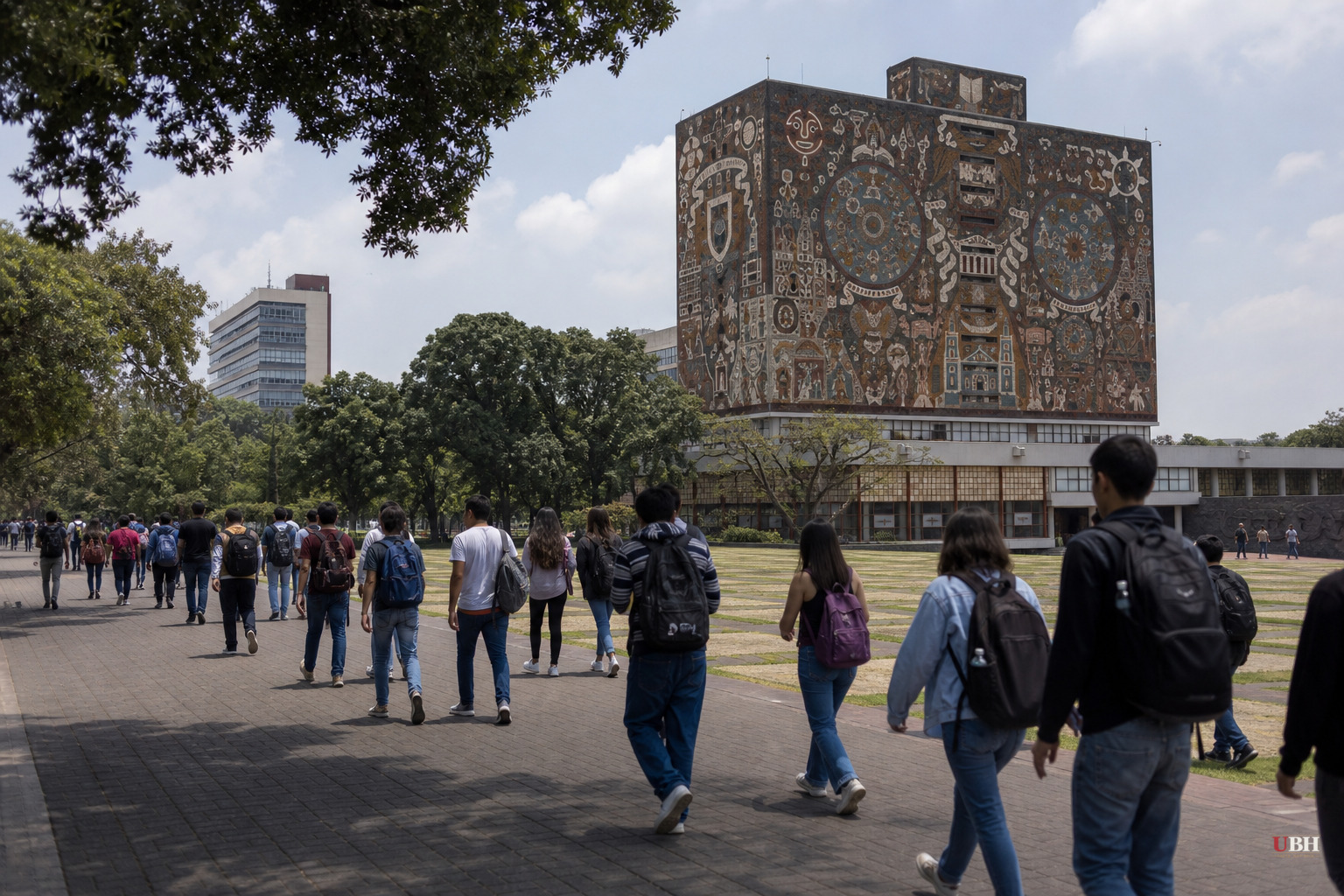
UNAM, Mexico's largest university, ran its entrance exam completely remotely for the first time this year, from late May through early June. It used a "lockdown" browser and AI-powered webcam proctoring software to watch nearly 160,000 applicants take the test.
The scores that came back didn't look like anything UNAM had seen before.
From 2021 through 2025, about 3.5 percent of test takers scored 100 or higher on the 120-question exam, according to Ars Technica. This year that number jumped to 16.3 percent. At the very top of the scale, the gap is even starker: 0.9 percent of applicants historically scored 110 or above, versus 5.5 percent this year.
That's nearly a fivefold jump in top scores and a sixfold jump at the very highest tier, in a single testing cycle, the same year the university switched to remote AI proctoring. UNAM administrators saw it and immediately suspected mass cheating.
The university appointed a commission of outside experts to dig into what happened. It carries a bureaucratic mouthful of a name, but the group's conclusion is simple: the results can't be trusted as they stand, so a new test is required.
58,000 People Have to Test Again
The commission's fix is a "control exam," administered in person this time, not remotely. It doesn't just apply to people who got into UNAM off this year's scores. It also applies to everyone who would have qualified based on the minimum passing scores used in each degree program going back to 2021.
That's roughly 58,000 people whose university placement now hinges on a do-over test, according to Gaceta UNAM, the university's official news outlet. Classes are scheduled to start August 10, so the school is racing to finalize and administer this control exam in a matter of days, unless it delays the semester.
UNAM's rector has already apologized to honest applicants, according to Gaceta UNAM, acknowledging that students who did nothing wrong now have to prepare for and sit through another exam because the university can't tell who cheated and who didn't. The rector called the control exam "necessary to give certainty and guarantee equity in access."
That's a real cost being imposed on people who followed the rules. A high schooler who studied honestly, sat for the exam once already, and earned a legitimate score now has to do it all over again, on short notice, because the system built to police cheating couldn't tell cheaters from honest test-takers.
Nobody Actually Knows How the Cheating Happened
Investigators still don't know exactly how students gamed the exam.
The test was multiple choice, not essay-based, so the usual tells of AI-assisted cheating (a fully-formed paragraph pasted into a text box in two seconds) don't apply. That makes it much harder to point to a smoking gun.
A New York Times report cited by Ars Technica found that cheating tips were circulating online well before the exam went live in spring 2026. Students were told to position a second monitor outside the webcam's field of view, so they could look up answers on ChatGPT or other AI tools without the camera catching it. Others were advised to hide earbuds under their hair, or to pay someone else to take the exam off-camera entirely.
None of this required sophisticated hacking. It required a second monitor, a phone, or a friend willing to sit in another room. The AI proctoring software, whatever its marketing promised, apparently couldn't reliably catch any of it.
The Fair Question: Is This an AI Problem or a Remote-Testing Problem
Defenders of remote AI proctoring could reasonably argue this isn't really an indictment of the technology itself, it's an indictment of doing high-stakes exams remotely at all, with or without AI watching. Cheat sheets, leaked questions, and impersonation are old tricks that predate any camera software. A determined test-taker with a second monitor and no supervision in the room will find a way around almost any remote system, AI-powered or not.
That's a fair point as far as it goes. But it also undercuts the core sales pitch for AI proctoring products, which is that they let universities go remote precisely because the software can be trusted to catch this stuff. UNAM built its exam process around that promise for nearly 160,000 applicants, and the promise didn't hold. Whether the failure sits with the specific software UNAM used, the concept of remote high-stakes testing generally, or both, is exactly what the commission's ongoing work will need to sort out.
UNAM has not released the commission's full technical findings on how the AI proctoring failed to catch what was clearly widespread manipulation, according to Ars Technica. The specifics of the control exam, including its format, security measures, and whether it will still involve any remote component, are expected to be announced soon given the tight timeline before the August 10 start of classes.
Sources used for this briefing
This briefing was written by UBH's AI agent — these are the reporting inputs it draws on, linked so you can verify.


