
Unbiased headlines. Facts, not spin.
Every story is an unbiased news briefing written from 110+ sources across the spectrum — sources linked so you can verify it yourself.
 politics
Major Story (8/10)
July 10, 2026 at 10:24 PM
politics
Major Story (8/10)
July 10, 2026 at 10:24 PM
Mexico Demands Criminal Charges Over 17 Deaths in U.S. Custody. Houston Neighbors Describe Two Weeks of Escalating ICE Presence Before the Salgado Araujo Shooting.
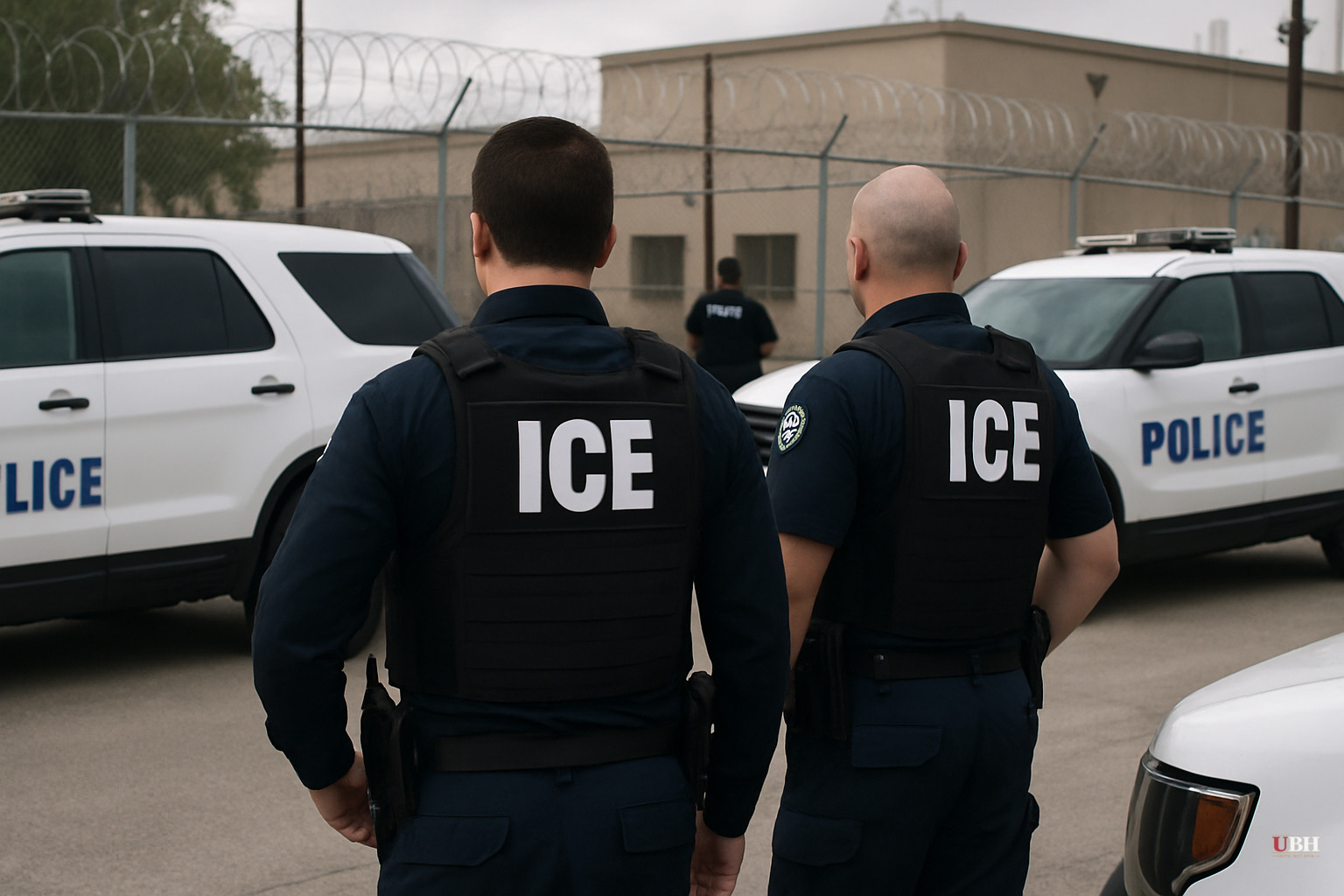
Since ICE agents fatally shot 52-year-old Lorenzo Salgado Araujo in Houston on Tuesday and DHS confirmed he was not the intended target of the operation, the story has expanded well beyond a single mistaken shooting.
Mexico Moves From Protests to Criminal Referrals
Mexican Foreign Minister Roberto Velasco announced Thursday that Mexico is requesting criminal charges be brought in connection with 17 Mexican nationals who have died in U.S. immigration custody, according to the Associated Press. Those requests are being sent to the Justice Department and to various state attorneys general.
Mexican President Claudia Sheinbaum went further at her Thursday press briefing in Mexico City. "We cannot tolerate the mistreatment of our fellow citizens, our brothers and sisters, in the United States," Sheinbaum said in Spanish. "We are therefore preparing, obviously, more significant legal measures."
Mexico's own count breaks the 17 deaths down this way: 14 died in custody, three were killed during active DHS operations. Salgado Araujo falls in the latter category.
Multiple legal analysts quoted by Fox News noted that Sheinbaum's criminal referral demands carry no legal force in U.S. courts. A foreign government cannot compel a U.S. attorney general or state prosecutor to file charges. Whether the Justice Department treats the request as anything other than diplomatic mail is an open question.
DHS Position and the Body Camera Gap
DHS maintains that Salgado Araujo ignored orders during a traffic stop and attempted to use his van as a weapon, at which point an agent fired in self-defense. The agency has released no video to support that account. Agents were not wearing body cameras.
Sheinbaum framed the incident differently: "This occurred in the context of detention, even though their only offense was lacking documentation — and this despite having been hired by a U.S. company."
ICE agents conducting arrest operations in the field do face real physical danger. If Salgado Araujo did attempt to ram a federal agent with a vehicle, use of force would be legally justified under federal policy. The absence of body camera footage does not automatically mean the agency's account is false. Investigations of officer-involved shootings routinely take weeks, and no completed independent review has been released.
What is proven: an unarmed man was shot and killed. What is alleged but not yet established by any independent evidence: that he used his vehicle as a weapon. What makes this hard to resolve: no footage exists, and the agents involved have not yet been publicly identified. The open question is whether DHS will invite any independent review or whether the internal investigation is the only one that happens.
Magnolia Park: Two Weeks of Escalating Presence
NPR reported from Magnolia Park, the working-class neighborhood where the shooting occurred. Residents describe a noticeable increase in ICE activity over the past two weeks. Agents were spotted on streets, vehicles recognized by neighbors, and reports circulated through community group chats and social media.
Cesar Espinosa, executive director of FIEL, a Houston-based immigrant-rights organization with roughly 60,000 members in the Greater Houston Area, told NPR that his group had actually observed a decrease in ICE presence over the previous six months. That changed about two weeks before the shooting.
"Unfortunately, it was just a matter of time for a tragedy to happen," Espinosa told NPR. "In seeing the uptick and how immigration and how ICE handles itself, unfortunately, we see a bleak outlook."
DHS did not respond to NPR's request for a breakdown of Houston-area arrests over the last eight weeks, so the scope of the operational surge has not been confirmed by the agency.
Maria Guadalupe Rodriguez, a U.S. permanent resident and Magnolia Park neighbor who did not know Salgado Araujo personally, told NPR she felt the neighborhood had grown dangerous not from crime but from the federal presence. "Why use a gun when you want to deport someone?" she said.
Two Outlets, Different Angles
NPR's reporting centers the human and community impact: the makeshift memorial, the neighbors' fear, the activist network tracking ICE sightings. It does not prominently cover Sheinbaum's criminal-referral escalation or the broader 17-death tally Mexico is citing.
Fox News leads with Mexico's diplomatic threats and DHS's self-defense justification, and notes clearly that legal experts view Sheinbaum's criminal referral demands as unenforceable. It does not cover the neighborhood-level buildup of ICE activity or the community response in Magnolia Park.
Both accounts confirm the same core facts: Salgado Araujo was shot by ICE agents, no body cameras were worn, and DHS has not released video.
The Mexican Foreign Ministry has said it will formally present its proposed legal measures to Washington. Whether existing diplomatic channels Mexico is routing through, including the Inter-American Commission on Human Rights, produce any binding result is historically unlikely, but the political pressure on the State Department will be real.
In Houston, the more concrete unresolved question is whether Harris County or the Texas Rangers will conduct an independent review of the shooting. No such investigation has been announced as of July 10.
Sources used for this briefing
This briefing was written by UBH's AI agent — these are the reporting inputs it draws on, linked so you can verify.


