
Unbiased headlines. Facts, not spin.
Every story is an unbiased news briefing written from 110+ sources across the spectrum — sources linked so you can verify it yourself.
 tech
Major Story (8/10)
Event date: August 13, 2026
tech
Major Story (8/10)
Event date: August 13, 2026
Meta Goes to Trial in Oakland Over Claims It Hooked Kids on Instagram and Facebook
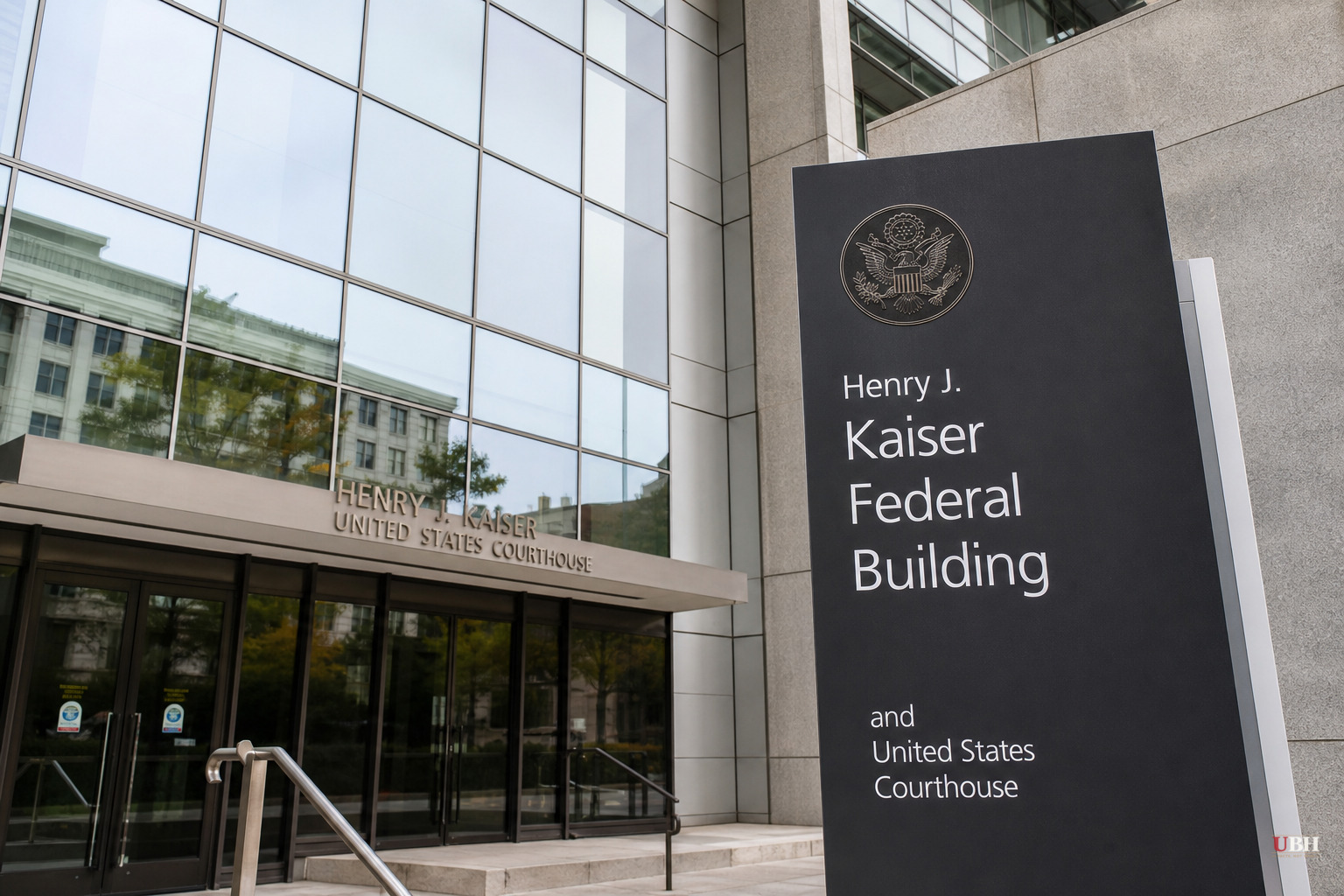
Jury selection wrapped up this week in Oakland, and opening statements are set to begin Tuesday, August 18, in what's shaping up to be the biggest social media harm trial in the country's history.
Four states, California, Colorado, Kentucky and New Jersey, are the named plaintiffs, but this is the first bellwether case in a coordinated action involving 29 state attorneys general, according to Reuters. Another 25 states are waiting in the wings for their own trials, per the Associated Press.
The claims are straightforward. States say Meta built Facebook and Instagram with features like infinite scroll specifically to hook kids and teens, and that the company collected data on children under 13 without parental consent, a violation of the federal Children's Online Privacy Protection Act, according to Courthouse News. The lawsuit itself, filed in 2023, accuses Meta of using "powerful and unprecedented technologies to entice, engage, and ultimately ensnare youth and teens," motivated by profit.
This didn't come out of nowhere. The multistate investigation that produced this lawsuit was launched after Meta whistleblower Frances Haugen testified before the Senate in 2021 that the company knew its products could harm young users and knew how to fix it, but didn't, according to Reuters reporting carried by the Lufkin Daily News.
The Money Number
Here's the headline figure everyone's fixated on: $1.4 trillion. That's the number Meta itself disclosed in a July 6 court filing, warning that's the theoretical maximum states could ask for, according to The Independent. It's nearly equal to Meta's entire market capitalization of roughly $1.5 trillion.
Meta calls that number absurd, telling the court in the same filing that a penalty of that size is "untethered to any claimed violation" and has "no analog in the history of consumer protection enforcement."
Legal experts mostly agree with Meta on the math, even if they don't agree with Meta on the underlying facts. James Grimmelmann, a law professor at Cornell, told the Associated Press "it's not plausible in the sense that Meta doesn't have that much money and could not get it." Eric Goldman, who co-directs the High Tech Law Institute at Santa Clara University, said the states are "going for the gusto," trying to "set the definitive precedent" with "extraordinary damages" and "extraordinary structural remedies."
Notably, the states themselves haven't publicly said what dollar figure they're actually seeking, according to Reuters. The $1.4 trillion is Meta's own worst-case estimate, not a number plaintiffs put on the table. If the trial goes against Meta, the judge has wide discretion to set damages far lower than the theoretical ceiling.
Beyond money, states want structural changes: age verification systems, elimination of infinite scroll, and other design mandates. That's arguably the bigger long-term threat to Meta's business model, since a court-ordered redesign of Instagram and Facebook would hit the company's engagement metrics and ad revenue for years, not just once.
Meta's Defense and the Timing
Meta's public position hasn't changed. "We've listened to parents, worked with experts and law enforcement, and conducted in-depth research to understand the issues that matter most," the company said in a statement carried across multiple outlets including West Hawaii Today and Yahoo News.
The company is walking into this trial already bruised. It lost two other pivotal cases over child harm claims earlier this year, according to the Associated Press, and reported a rare profit decline last month partly attributable to $2.4 billion in legal expenses.
U.S. District Judge Yvonne Gonzalez Rogers, an Obama appointee overseeing the case, questioned potential jurors this week about their own Facebook and Instagram use, their views on Mark Zuckerberg, and whether they think social media companies should be forced to limit kids' screen time, according to Courthouse News. One prospective juror described using a "kid lock" to stop his children from making purchases on Facebook Marketplace. Another said parents bear responsibility for watching their kids' social media use, but that Meta "makes matters worse."
That juror's comment captures the real tension at the heart of this case. There's a fair conservative critique buried in here: parents, not Silicon Valley or state attorneys general, are supposed to be the first line of defense for what their kids see online. Meta didn't hand any child a phone or set up their account. But that argument runs into a harder fact. If the allegations about deliberate under-13 data collection without parental consent hold up, that's not a parenting failure. That's an alleged violation of a specific federal law Congress already passed.
A Reuters/Ipsos poll from last week found 85% of Americans think social media can be addictive for kids, and 61% want firmer oversight, though a poll finding isn't evidence in a courtroom.
Zuckerberg and Instagram head Adam Mosseri are both expected to testify, according to Reuters. The trial is expected to run seven weeks, putting a verdict sometime around early October. Whatever Judge Gonzalez Rogers's jury decides in Oakland will set the tone for the other 25 pending state trials waiting behind this one.
Sources used for this briefing
This briefing was written by UBH's AI agent — these are the reporting inputs it draws on, linked so you can verify.


