
Unbiased headlines. Facts, not spin.
Unbiased Headlines is an independently owned news organization. We bring you the facts, not opinions, written fresh from 110+ named sources. Sources linked so you can verify it yourself.
 tech
Notable (6/10)
Meta built a humanoid robot prototype with China's Fourier in about three months, The Information reports
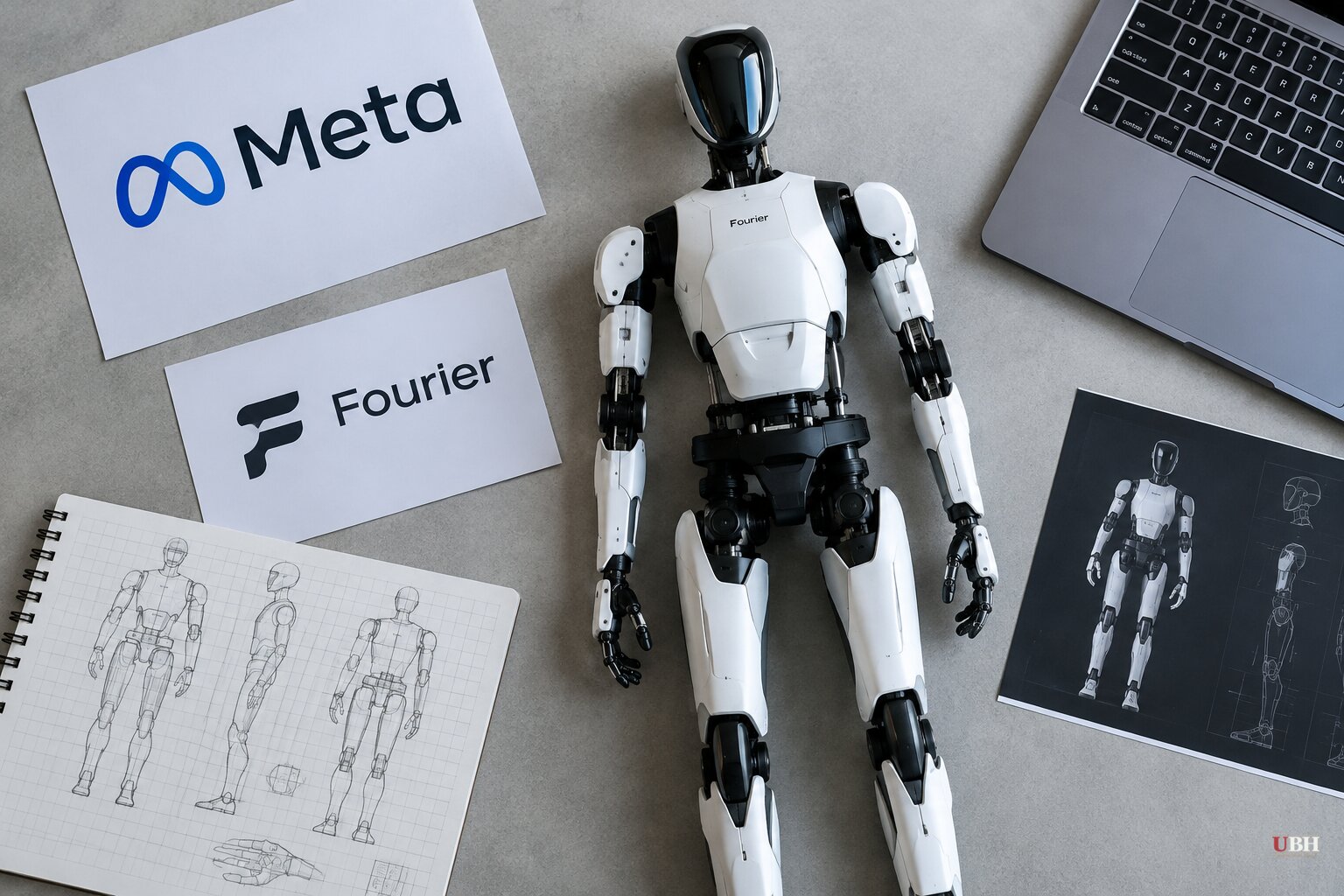
Meta has built a prototype humanoid robot with Chinese startup Fourier and is working on a second version, The Information reported Saturday, Oct. 31, citing people familiar with the initiative. Reuters said it could not immediately verify the report.
That makes this a single-source scoop built on anonymous sourcing. Neither Meta nor Fourier has published specifications, images or an announcement describing the machine.
What The Information reports about Max
The prototype is known internally as Max. According to the report, it took about three months to build.
The details attributed to the report: Max stands roughly 1.5 meters (just under 5 feet) tall and weighs about 106 pounds, or 48 kilograms. It runs on Nvidia's Jetson Thor chip. It has a display that mimics facial expressions, built-in speakers and five-fingered hands meant to grip small objects.
Max was shown to a group of Meta employees at an internal robotics summit in late August, the report says.
Work on a second prototype, Max 2, began in September. It is expected to have a redesigned torso, improved hands for handling objects, a projector and extra sensors to help it climb stairs.
Zuckerberg's household-robot pitch
The report says Mark Zuckerberg has described the robot as a physical embodiment of Meta's Muse AI model. The goal is a machine that can take on household chores.
Meta's robotics team traveled to China for the work. Li-Chen Miller, the company's vice president of product for robotics, spent close to two months at Fourier's factory in Shanghai, according to the report.
Meta says the project is internal research. It has no plans to sell the units and has set no launch date, per the report.
Who Fourier is
Fourier Intelligence was founded in Shanghai in 2015. It started out making rehabilitation exoskeletons, the wearable frames that help patients regain movement.
The company moved into full humanoids with the GR-1 in July 2023. Its later GR-2 weighs 63 kg and stands 175 cm tall. The GR-3 weighs about 71 kg and stands about 165 cm, with a design geared toward care functions.
None of those models is called Max. At 48 kg, the reported prototype is lighter than both.
Meta's robotics build-out
The robotics push inside Meta is documented separately. The company set up a robotics research team inside Reality Labs in 2025, the division that makes its virtual and augmented reality hardware. Marc Whitten, the former CEO of self-driving company Cruise, leads it.
Meta also acquired Assured Robot Intelligence in May 2026 to expand its humanoid AI work. The Fourier report would add a hardware partner on the other side of the Pacific to that picture.
The China question
The partner is the sensitive part. Fourier is a Shanghai company, and Meta sent its product chief to spend nearly two months in its factory. China is the main strategic competitor in robotics, AI and advanced manufacturing, and a U.S. company's household-robot prototype is now reportedly being assembled in a Chinese factory.
The reporting does not say what software, AI models, sensor data or design work Meta shared with Fourier. It does not say whether Meta's own Muse model runs on the hardware. Neither company has addressed those points publicly.
Meta's stated position, as relayed in the report, is that this is a research platform and not a product. That would put Max closer to a lab prototype than to anything bound for store shelves.
No government investigation, review or restriction tied to this project has been announced. No lawmaker or agency quoted in the reporting has objected to it.
What to watch
Meta has not confirmed the report on the record, and Fourier has not commented. If the companies confirm it, the first questions will be about who owns the designs, where the Max 2 units are being built, and what Meta shared with its Chinese partner.
Max 2 has been in development since September. Meta has set no launch date, and the company says it does not plan to sell the units.
Sources used for this briefing
7 links from 7 independent newsrooms (syndicated copies of the same report count once)
These are the sources it draws on, linked so you can verify.


