
Unbiased headlines. Facts, not spin.
Unbiased Headlines is an independently owned news organization. We bring you the facts, not opinions, written fresh from 110+ named sources. Sources linked so you can verify it yourself.
 finance
Notable (6/10)
Event date: November 7, 2026 ·
Merkley and Waters Prepare Prediction Market Bills After Kalshi and Polymarket Priced Democratic Sweep
Kalshi and Polymarket are heading into a Congress controlled by the party that has filed most of the prediction market bills introduced since 2025.
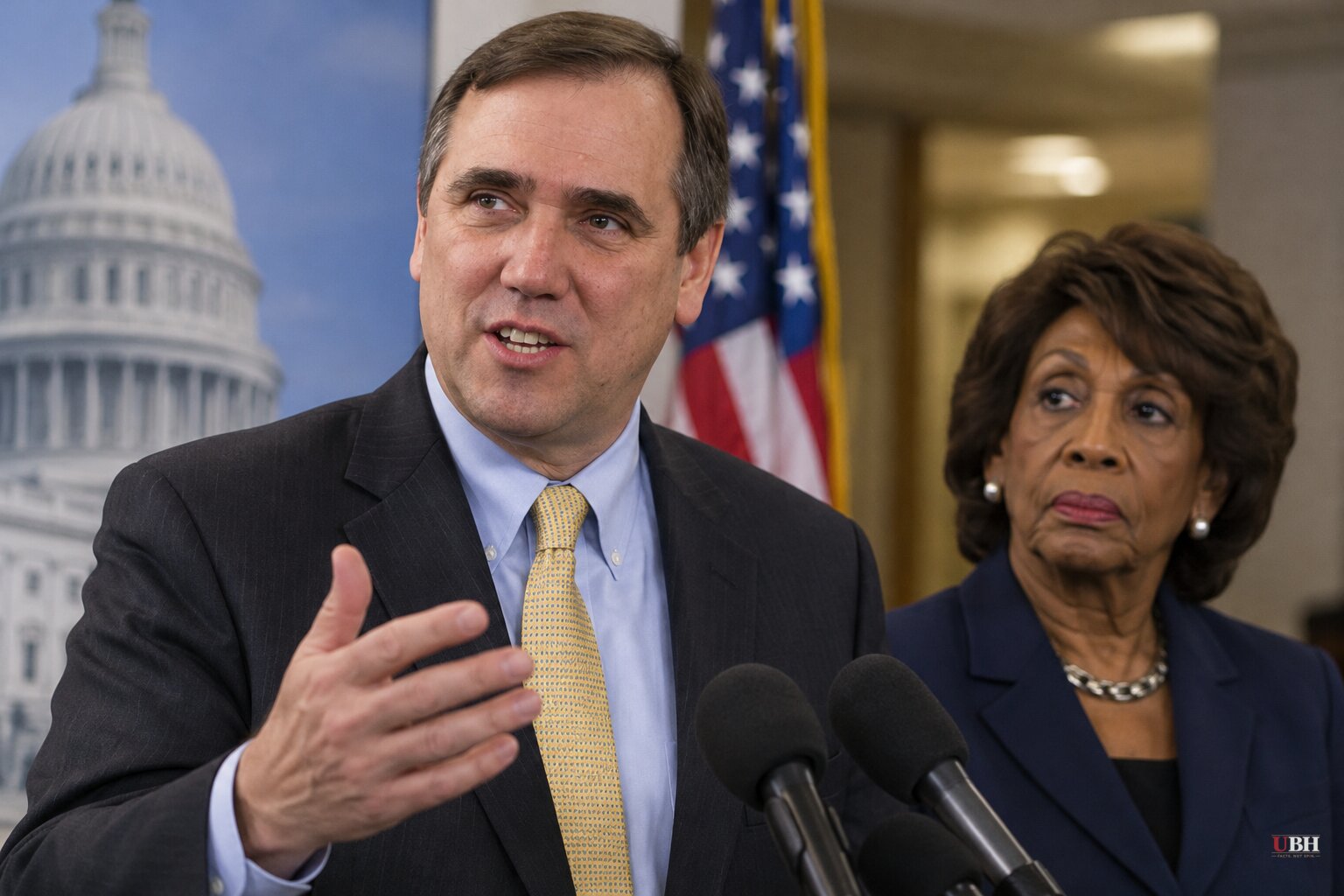
Sen. Jeff Merkley and Rep. Maxine Waters, both Democrats, are preparing legislative action. Merkley has objected to wagering on elections, wars, assassinations, terrorism and government policy, and says Congress needs to act. Waters is seeking the chair of the House Financial Services Committee and has said she would push for tighter regulation of the platforms.
What the markets got right
On Election Day, Kalshi priced a Democratic House majority at 93% to 94.5% and a Senate majority at 73.5% to 76%. Both happened.
Kalshi's own data show the market favorite won 479 of the first 487 races decided. Kalshi has also said its prices were well calibrated across 2,243,741 resolved markets since its 2021 launch: events priced at 30 cents happened about 30% of the time, and those at 90 cents about 90% of the time. A study in the Proceedings of the National Academy of Sciences, covering more than 1 million resolved forecasts across four platforms, found events happened about as often as their prices said they would.
Polymarket said that in 10 key races its odds hit 99% a median of 31 minutes before the AP, CNN and Fox News called them. Kalshi's cofounder said the platform showed near-total confidence on both chambers before the New York Times needle went live. Those are company claims. Prediction market odds show where traders put money. They are not race calls.
Where they missed
The record in close races was uneven. A New York magazine analysis found that a week out, Kalshi traders favored Republican Darline Graham in South Carolina, Ashley Hinson in Iowa and Roger Marshall in Kansas. According to that analysis, Democrats flipped those seats. The same analysis found a New York Times/Siena poll was closer on several of the races the markets mispriced. Bloomingbit also reported that the platforms failed to correctly call some races, including the gubernatorial contests in South Carolina and Texas.
Analysts told Bloomberg the markets' election record is mixed overall, with odds often tracking the polls they claim to beat. One expert said the markets undershot the size of the Democratic wave. Critics also note that many races were not competitive and that thin liquidity in narrower contests can amplify errors.
The trading volume figures vary. Estimates for election-related contracts run from about $1.3 billion to nearly $1.9 billion. Crypto Briefing put the combined Kalshi and Polymarket total above $3 billion, with Kalshi alone above $2.5 billion.
The case for tighter rules
Democrats' stated concerns are insider trading, manipulation and the idea of betting on war and terrorism at all. The insider-trading worry is simple: someone with nonpublic information about an election, a policy decision or a military action could profit.
The push is not purely partisan. Before the election, Democratic Sen. Elizabeth Warren and Republican Sen. John Curtis sent a letter to the chief executives of Kalshi and Polymarket questioning the legality of election-related prediction markets and the regulatory framework around them, and asking what measures they have to prevent insider trading.
Public opinion leans that way too. A Brennan Center-funded survey found 87% of voters want prediction markets regulated more tightly or banned outright. A recent Brennan Center-funded survey also found the markets strongly swayed people's views of which candidates are electable.
Trump family ties add another layer. Donald Trump Jr. is an adviser to both Kalshi and Polymarket, and his investment firm has invested in Polymarket. Democrats are preparing to broaden investigations into crypto companies linked to the Trump family. The Trump administration has generally supported the industry, though a handful of congressional Republicans have raised concerns about election betting.
The industry's answer
Fox News commentator Stu Burguiere argued the markets "won the midterms" in a year when more than $12.8 billion was spent on political advertising. His case is that money-backed odds are a more honest signal than campaign claims.
Kalshi's head of federal government relations, John Bivona, said in October that "regulation that keeps prediction markets safe for consumers and allows them to grow in America isn't a partisan issue." A Polymarket spokesperson said the company engages "with all sides of the debate." In a Nov. 2 letter, Kalshi's government relations head wrote that the company had conducted more than 12 investigations into election-related trading and had procedures in place to prevent insider trading and market manipulation. Kalshi CEO Tarek Mansour said he would follow the proper process if asked to appear before Congress.
Political giving is part of that engagement. Kalshi, Polymarket and their founders gave at least $5 million combined to political groups this cycle, according to campaign finance records and a remittance document seen by Reuters. Republicans received $2.7 million and Democrats the rest. That includes a previously unreported $1 million Polymarket donation to a Democratic nonprofit that does not disclose its donors. University of Rochester political scientist David Primo said that if the companies do not engage with politicians, "other people are going to be writing these regulations."
The legal fights already underway
States are moving faster than Congress. Utah filed criminal charges against Kalshi and its cofounders in late October. A growing number of other states have sued, fined or sent cease-and-desist letters to prediction market operators. The U.S. Supreme Court is weighing whether to hear a case on oversight authority over the markets.
Prediction market expert Dustin Gouker expects "a lot of congressional hearings." The Utah case, the Supreme Court's decision on whether to take up the oversight dispute, and the text of whatever Merkley and Waters introduce will show how far this goes. Waters' bid for the Financial Services gavel will help determine who runs those hearings in the House.
Sources used for this briefing
7 links from 7 independent newsrooms (syndicated copies of the same report count once)
These are the sources it draws on, linked so you can verify.


