
Unbiased headlines. Facts, not spin.
Unbiased Headlines is an independently owned news organization. We bring you the facts, not opinions, written fresh from 110+ named sources. Sources linked so you can verify it yourself.
 finance
Major Story (7/10)
Event date: November 23, 2026 ·
Bessent Says Security Patches Caused Bank Outages and Compares Them to a Vaccine; JPMorgan Cites a Software Bug
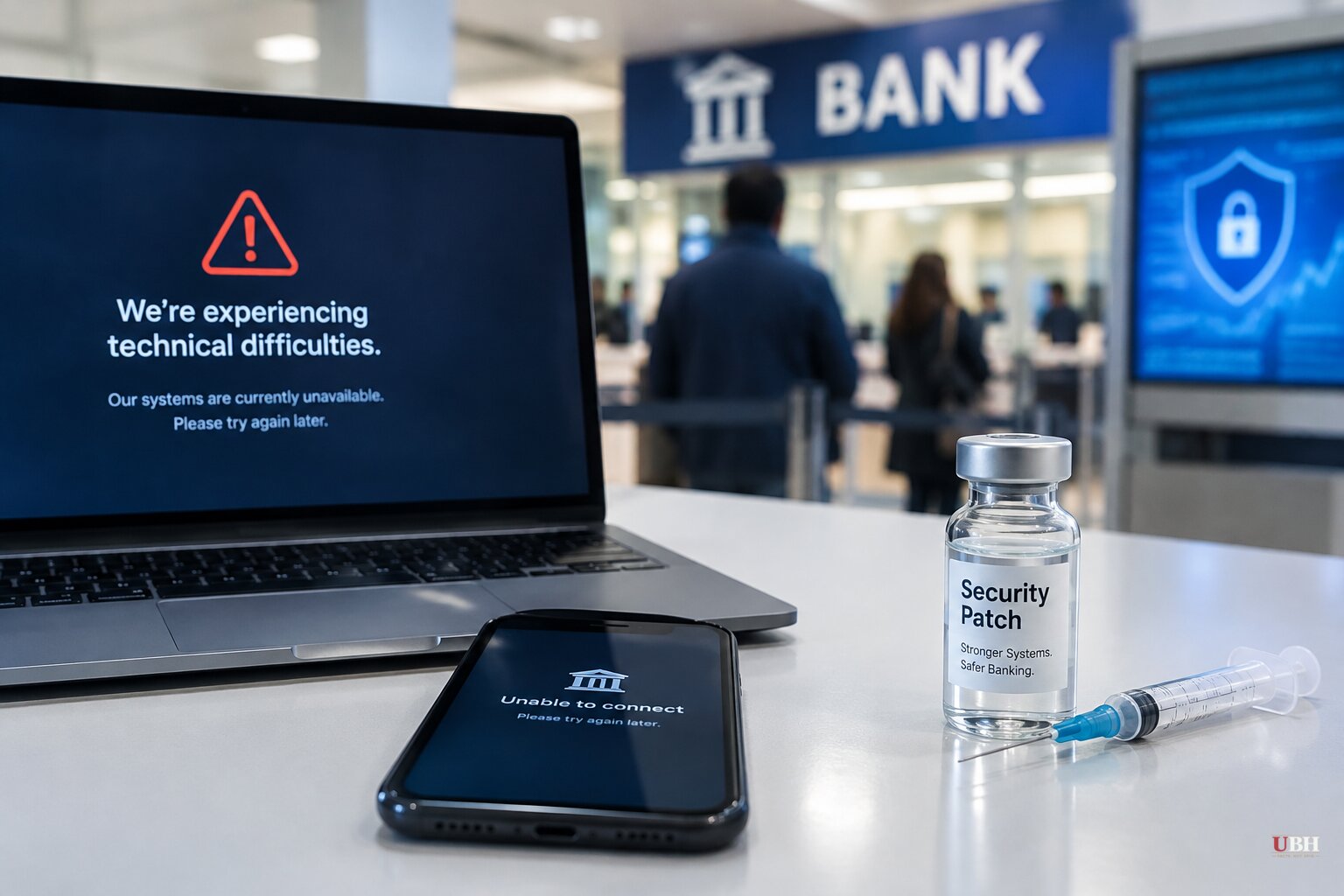
Since banks including JPMorgan Chase, Wells Fargo and Bank of America reported service problems starting Nov. 16, the administration's explanation has been that patching and system upgrades, not a coordinated attack, are behind the disruptions. Treasury Secretary Scott Bessent added a new line to that message on Sunday.
Bessent's 'vaccine' answer
On CBS's "Face the Nation," host Margaret Brennan asked whether Americans should worry about their financial institutions, noting that thousands of customers had trouble at big banks last week and that some pulled out cash.
"No, they shouldn't," Bessent said. "The banks have been at the forefront of cybersecurity for decades. They experience attacks every day, every week, every month, and they are by far the most resilient companies in the U.S. economy."
He said that as banks patch their systems, "the patches may cause a glitch, which is what happened last week." He tied the patching to "the SI," the administration's term for superintelligence.
"J.P. Morgan went in, and I think the American people should think of it as a vaccine," Bessent said. "Your arm may hurt, you may feel a little bad the next day, but it increases your long-term immunity and resiliency."
What the banks have said
JPMorgan's own account is narrower. The bank attributed its delays to a software bug affecting on-premises hardware. "There is no evidence it is cyber-related," a JPMorgan spokesperson said. The bank said the problem was not systemic and that customers could still reach their accounts and funds.
U.S. Bank said its own systems were not directly affected, though some Zelle transactions involving other institutions could be delayed.
JPMorgan's statement cited a software bug. It did not describe the problem as a security patch. Bessent's patch explanation matches what Director of National Intelligence Jay Clayton and Secretary of State Marco Rubio said on Nov. 18, when they described the outages as separate events caused by companies patching vulnerabilities and upgrading outdated systems. "We are not under systemic attack," Rubio said.
The Epoch Times reported that JPMorgan later said third-party vendors were targeted in a cyberattack. According to that report, the bank said the attack was unrelated to the outage.
Warnings that outages may continue
Clayton said on CNN's "State of the Union" on Sunday that disruptions could continue as businesses and federal agencies overhaul their systems. "Any time there is a step change in technology, a step change in both compute and applications, there will be bumps in the road," he said.
Federal Reserve board member Michael Barr raised a different concern on Nov. 16. "Where customers once needed to execute transfers, AI agents could instantaneously detect yield differentials or stability signals and autonomously move funds at high speed, potentially accelerating runs that unfold in minutes, overwhelming traditional liquidity management and regulatory intervention timelines," he said.
The argument for Bessent's framing is straightforward. Patching old systems does cause short-term breakage, and Clayton made the same point separately. JPMorgan said customers could still access their accounts and funds.
Reaction to the analogy
The comparison drew immediate pushback online. One user wrote that "nothing about a cyber attack is like a vaccine," and The Independent reported that critics pointed to the administration's past skepticism about vaccines. The Independent also reported that Vice President JD Vance and Homeland Security Secretary Markwayne Mullin faced criticism for how they handled the disruptions. Rubio's response was more reassuring, treating prompt reporting of vulnerabilities as a sign of corporate transparency.
The analogy glosses over one gap. A vaccine is a deliberate, tested exposure. A glitch that delays transactions is a failure that was not planned. JPMorgan itself called its problem a software bug, not a controlled upgrade.
Markets and the Fed
Brennan also pressed Bessent on the stock market sell-off over the past week and on Nvidia's role in financing AI demand. Bessent said Nvidia remains "fantastically profitable" with "near unlimited demand for their chips worldwide."
He said the sell-off began as Democrats moved ahead in the polls and accelerated after Election Day. In his words, "the Democratic position on the SI buildout has spooked a lot of investors in terms of slowing it down." He also pointed to "very hawkish remarks from the Federal Reserve," saying "many people believe that they may be making a policy mistake if they over-tighten." Those are Bessent's explanations; he said the sell-off was "a combination of these things."
What comes next
The outages come alongside Microsoft's nearly 24-hour Outlook and Teams disruption, which Microsoft President Brad Smith also addressed on the same CBS broadcast, ruling out AI and a cyberattack as causes. Clayton's warning that Americans should expect more "bumps in the road" leaves open whether more bank disruptions are coming as patching continues.
Sources used for this briefing
7 links from 7 independent newsrooms (syndicated copies of the same report count once)
These are the sources it draws on, linked so you can verify.


