
Unbiased headlines. Facts, not spin.
Every story is an unbiased news briefing written from 110+ sources across the spectrum — sources linked so you can verify it yourself.
 politics
Major Story (7/10)
July 9, 2026 at 04:21 PM
politics
Major Story (7/10)
July 9, 2026 at 04:21 PM
Meloni Holds the Line on Iran Base Access as NATO Summit Closes, Rejecting Trump's Pressure
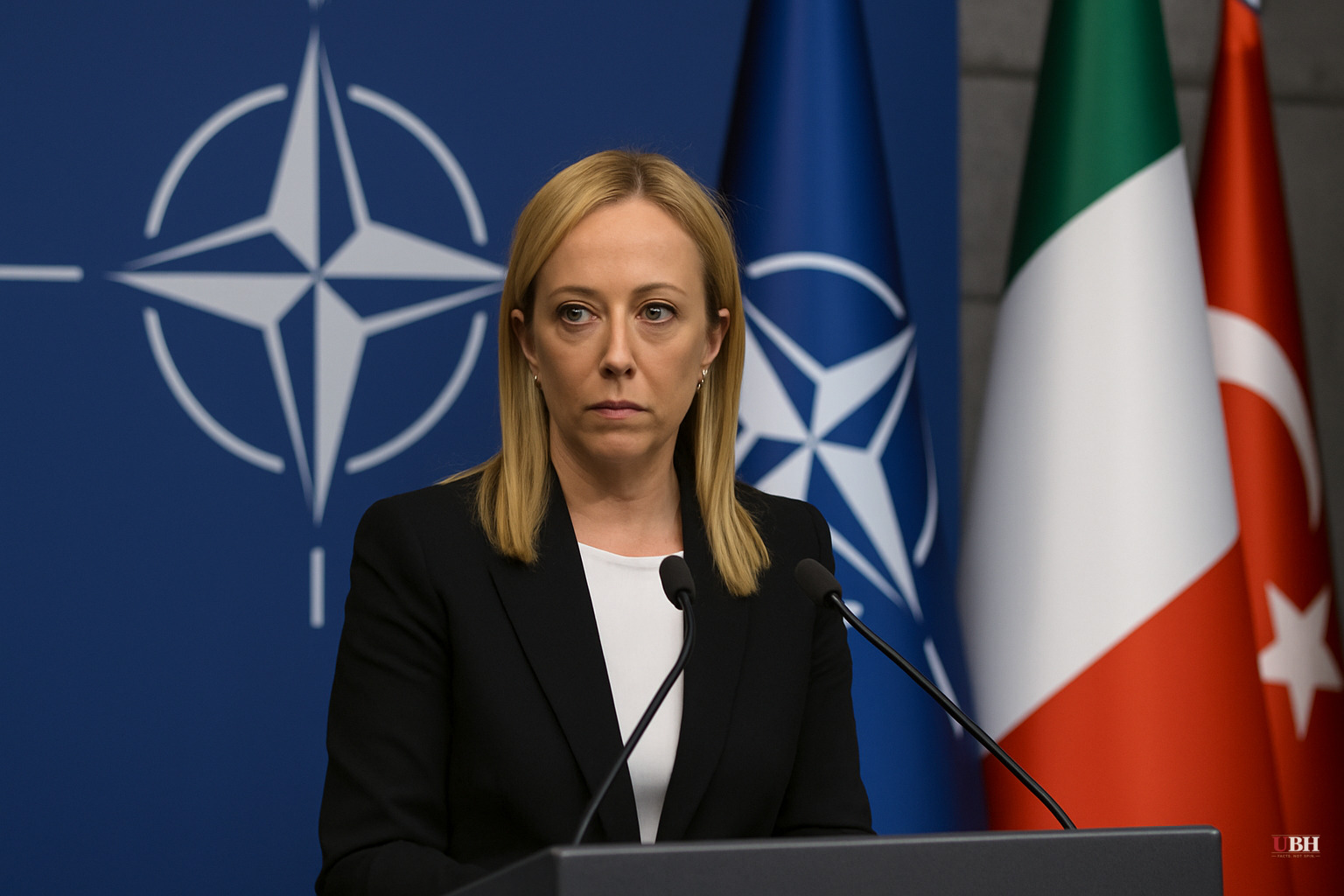
Since the U.S. restarted its bombing campaign against Iran and Trump publicly called out Italy, Germany, and France by name at the Ankara summit, Meloni has held her ground without blinking.
The Policy Line Hasn't Moved
Speaking to reporters on the closing night of the NATO Summit in Ankara, Meloni was unambiguous: "We are not participating in attacks against Iran, and we will not participate in attacks against Iran," according to Breaking Defense. She framed it not as a pivot but as consistency, telling reporters her government has maintained "a very clear line since the beginning of the conflict."
The legal architecture behind that position is real. Use of American military facilities on Italian soil is governed by bilateral defense agreements dating back more than 50 years. Under Italian law, technical authorizations for U.S. forces cover logistical and non-kinetic activities, assessed case by case. That framework, Breaking Defense notes, is what Rome cited in March when it reportedly refused a U.S. aircraft permission to land at Naval Air Station Sigonella in Sicily before flying on to the Middle East.
Meloni's refusal is therefore not improvised defiance. It is a legal posture, a domestic political calculation, and a reflection of Italian public opinion, which polling cited by TIME shows is broadly opposed to both Trump and the U.S.-led war in Iran.
A Personal Relationship That Has Curdled
The policy dispute would be complicated enough on its own. The personal dimension has made it worse.
On June 18, Trump told the U.S. correspondent for Italian broadcaster LA7 that Meloni had "begged" for a photo with him at the G7 and that he "felt sorry" for her, according to the National Catholic Register. Italian Foreign Minister Antonio Tajani canceled a planned trip to Washington in response. An unnamed source close to Meloni dismissed the remark as a "delirium."
Meloni recorded a short video on X calling Trump's account "completely fabricated" and saying she was "stunned" by his behavior. She also invited Trump to focus on his own approval numbers rather than hers.
Trump escalated on Truth Social, attacking Meloni's poll numbers, criticizing her refusal to allow use of Italian runways, and saying, "Now, after the United States defeated Iran militarily, she wants to be friends again in order to get her 'numbers up.' No thanks!!!" according to TIME.
At the Ankara summit itself, Trump shared a Truth Social image of Meloni with the words "restraining order needed" printed over it, per TIME. Italian Defense Minister Guido Crosetto said he "didn't react at all" and was focused on maintaining Italy's relationship with a "vital ally." Interior Minister Matteo Salvini told reporters he "won't comment on these things anymore."
Meloni, for her part, said at the summit's closing press conference that she does not regret her decisions and that her investment in transatlantic unity predates Trump. "It is not a strategy I adopted with Donald Trump's arrival," she said, per Breaking Defense.
The Strongest Case for Trump's Position
Trump's frustration is not without logic. Italy hosts U.S. military infrastructure, benefits from American defense spending, and the U.S. treated the Iran nuclear threat as an existential one. From Washington's standpoint, a close ally refusing even logistical support, not combat missions, while American forces run the operational risk is a legitimate grievance. Trump said explicitly he was "testing" allied loyalty, and Italy, Germany, and France all came back the same way.
The counterpoint Meloni has consistently advanced is that Italian law and her domestic mandate do not allow combat-adjacent base use, and that signing on to a war Italian voters oppose would be politically and constitutionally untenable. Whether that distinction between logistical support and combat participation is meaningful or merely convenient is a question alliance lawyers, not op-ed writers, will need to settle.
Meloni's Domestic Position Adds Context
Trump's claims about Meloni's sagging popularity are grounded in something real, even if his tone is gratuitous. The National Catholic Register reports that Meloni suffered a significant defeat at a referendum earlier this year over a constitutional amendment her coalition had passed to reform the judicial system. Opposition parties refused to support it, forced the referendum, and won. That loss added to a string of setbacks that have complicated her standing at home.
The tensions with Washington compound an already difficult period. Meloni had previously defended Pope Leo XIV after Trump criticized him, which the National Catholic Register notes prompted Trump to say he was "shocked" and that he'd been wrong to think she was a brave leader. Secretary of State Marco Rubio traveled to Rome in May specifically to smooth things over with the Italian government and the Vatican, but the June photo dispute undid whatever goodwill that trip produced.
What Comes Next
The National Catholic Register raises an unresolved question: whether Meloni risks the same political fate as Hungary's Viktor Orbán, who has faced sustained pressure from U.S. conservatives despite his values alignment with the American right, and whose political position has grown increasingly complicated. Meloni faces a general election in 2027. How the Ankara summit fallout lands with Italian voters, who are already skeptical of Trump, and whether Trump's public hostility helps or hurts her at home, will shape the answer.
Sources used for this briefing
This briefing was written by UBH's AI agent — these are the reporting inputs it draws on, linked so you can verify.


