
Unbiased headlines. Facts, not spin.
Unbiased Headlines is an independently owned news organization. We bring you the facts, not opinions, written fresh from 110+ named sources. Sources linked so you can verify it yourself.
 tech
Notable (6/10)
tech
Notable (6/10)
MapQuest Adds Map Layer Showing Flock and 10 Other License Plate Reader Brands
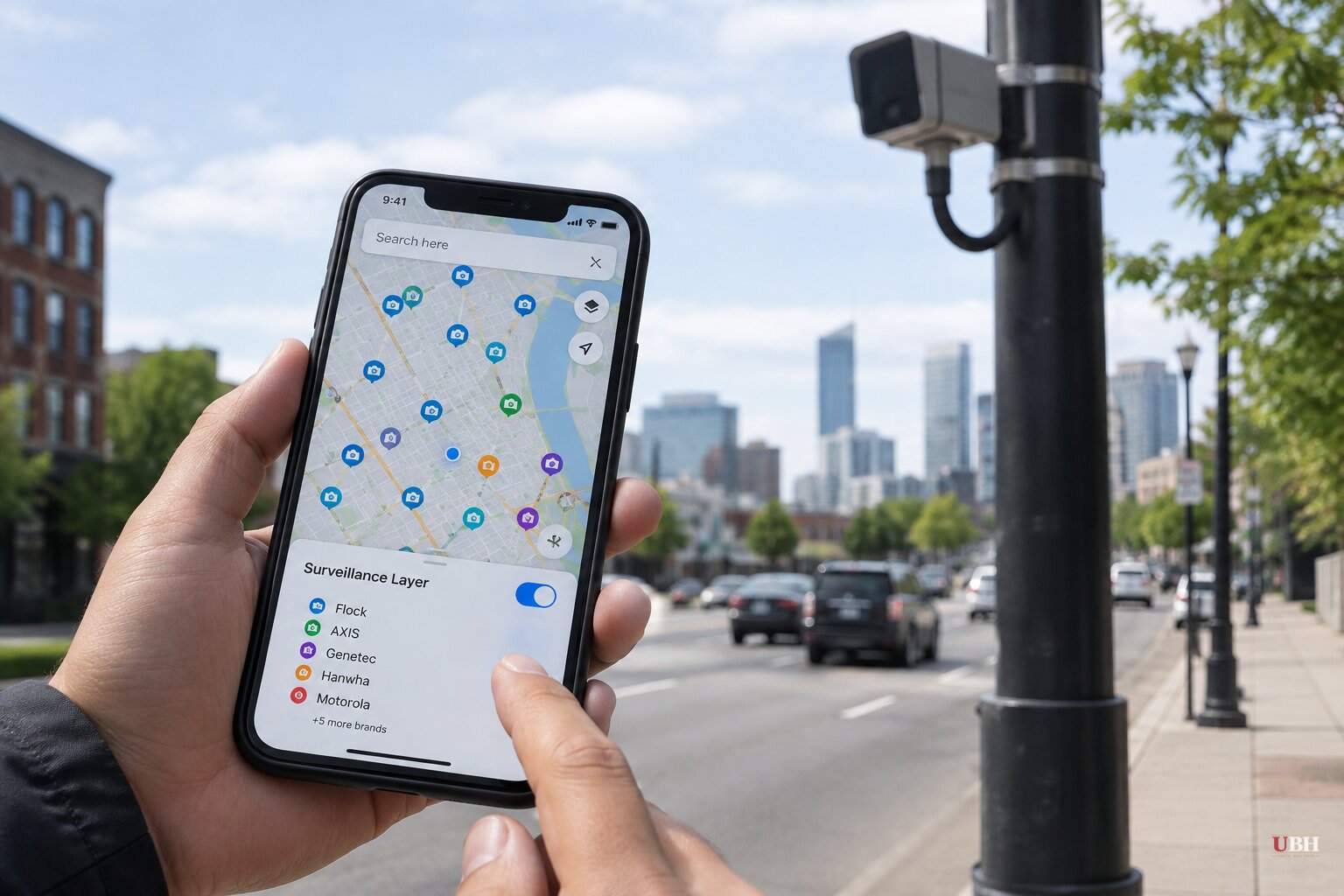
MapQuest added an optional "Surveillance Layer" to its mobile app this week. It shows the known locations of automated license plate readers (ALPRs) and other outdoor surveillance cameras along a driver's route.
"The Roads Have Eyes!" the company wrote in its Bluesky announcement. The layer covers readers from Flock Safety, Motorola Solutions (Vigilant), Genetec, Axis Communications, Axon, Leonardo (ELSAG), Neology, Rekor, PlateSmart, Ubicquia and Verkada, plus "other outdoor surveillance cameras."
How the feature works
Users open the app, tap the Layers or Map Options icon and switch on "Surveillance." Eye-shaped markers then appear on the map. Tapping one shows the type of reader, such as dome or fixed, and its coordinates.
The layer does not reroute drivers around cameras. It does not stop anything from recording a passing car. It only provides information.
According to MapQuest's terms, the data comes from OpenStreetMap contributors, a community-maintained mapping database. That means coverage depends on what volunteers have reported. A road with no markers could still have a camera on it.
MapQuest is not the first to do this. DeFlock, FlockHopper, Pelican and LPR Maps already map the devices, and some of them also rely on crowdsourcing.
MapQuest General Manager Doug Berger said the company built the feature because drivers asked for it. "We build around what drivers ask for, and showing surveillance camera locations is one of our users' top three requests," Berger said in a statement to Business Insider.
Why the cameras are under pressure
Flock alone operates more than 120,000 cameras across the country. Its readers log more than a plate number. They record what the company calls a "vehicle signature," which includes make, model, color and distinguishing features like bumper stickers and decals. Flock says it does not use facial recognition or biometric data.
Misuse is documented. A Washington Post investigation found more than 50 officers had been accused, charged with or convicted of using Flock or other plate readers to spy on exes or romantic interests. Critics also point to data being shared with federal immigration officials and to people wrongly pulled over and accused of stealing their own cars.
The pushback has reached city halls. Tempe, Arizona, said in August it had shut down its Flock network and planned to terminate its contract. "These cameras have helped our police officers do their jobs, and we don't discount that," Mayor Corey Woods said. "But the risk of misuse is too great."
Washington weighs in
Progressive lawmakers introduced the Ban Flock Act earlier this month. It would bar federal agencies from using ALPRs, pause federal grants to state and local governments with ALPR contracts, and let Americans sue the federal government over their use.
The concern is not confined to one party. Last month Sens. Raphael Warnock (D-Ga.) and Katie Britt (R-Ala.) wrote to Attorney General Todd Blanche. They asked him to disclose any Justice Department use of ALPRs and to issue guidance to state and local police to prevent misuse.
A privately built database of where ordinary Americans drive, searchable by police across jurisdictions, raises an obvious Fourth Amendment question. Warnock and Britt are asking it together.
Flock's response
Flock defends the technology. The company argues the readers are crime-prevention tools that cover far more ground than officers can on their own and help dispatch resources more effectively. It says customers, meaning the agencies and businesses that install the cameras, control access to and sharing of the data.
Flock's CEO has said only a small number of bad actors have abused the system. Spokesperson Andrew Smith told The Hill the company "strongly supports legislation establishing guardrails governing license plate reader use." Flock has also tightened its privacy safeguards amid the backlash.
Plate readers are not only a police tool. They also handle electronic toll collection, traffic enforcement, parking enforcement, vehicle repossession and gate access. CNET counts more than 140,000 readers nationwide.
MapQuest's moment
The app has been drawing new users since it declined to rename Lake Ontario "Lake America" after President Trump signed an executive order changing the name. It took a similar approach in 2025, when Trump renamed the Gulf of Mexico the "Gulf of America" and MapQuest let users call the water whatever they wanted. MapQuest said hundreds of thousands of downloads followed the Lake Ontario decision.
Whether the surveillance layer sustains that momentum is unclear. What Congress does with the Ban Flock Act and the Warnock-Britt request is the larger open question. Flock says it wants guardrails, but no bill has defined them.
Sources used for this briefing
8 links from 8 independent newsrooms (syndicated copies of the same report count once)
These are the sources it draws on, linked so you can verify.


