
Unbiased headlines. Facts, not spin.
Every story is an unbiased news briefing written from 110+ sources across the spectrum — sources linked so you can verify it yourself.
 politics
Major Story (7/10)
July 6, 2026 at 01:52 AM
politics
Major Story (7/10)
July 6, 2026 at 01:52 AM
Mallory McMorrow Drops Out of Michigan Senate Primary, Leaving Stevens vs. El-Sayed Showdown for August 4 Vote
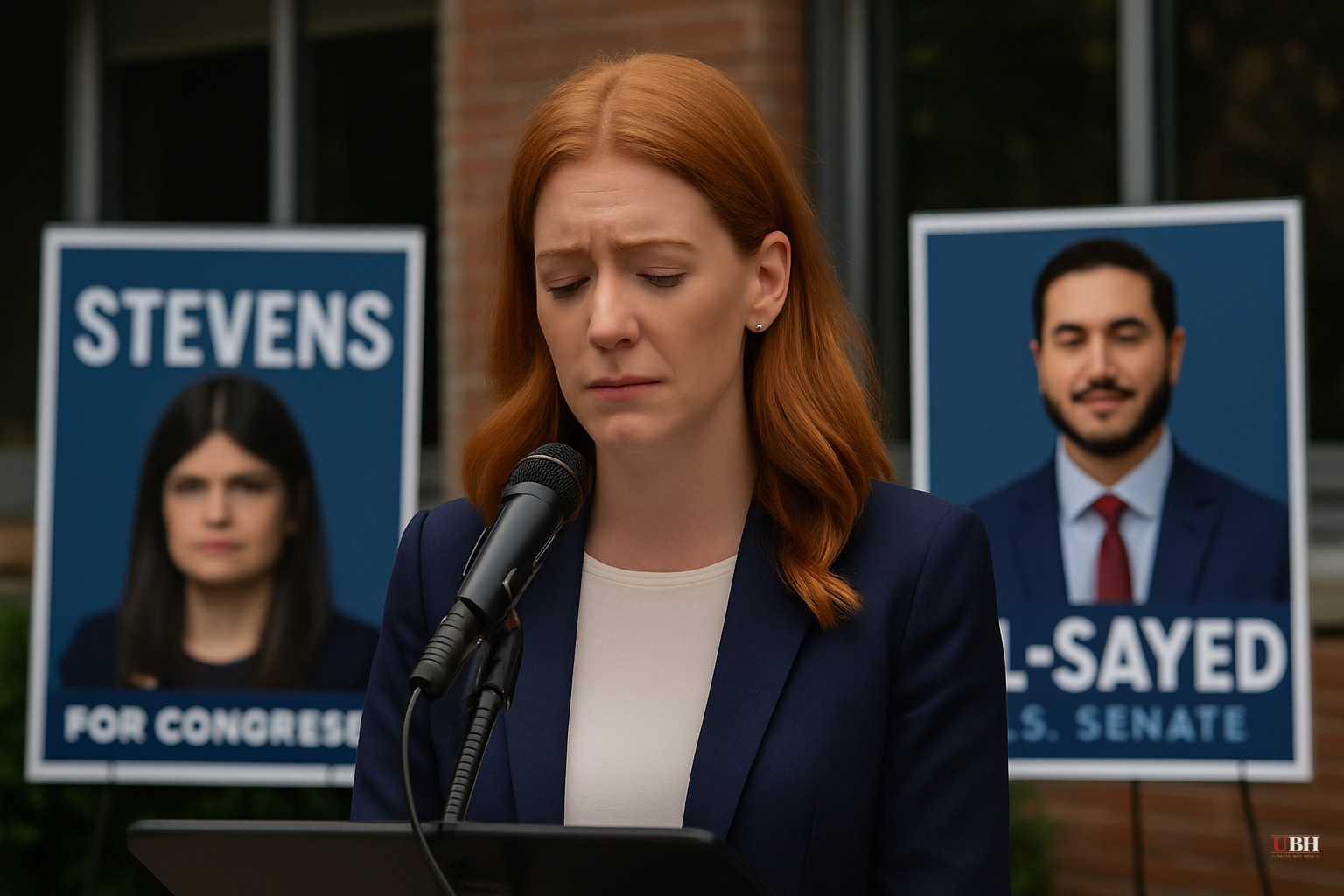
Since the Michigan Democratic primary field took shape after Sen. Gary Peters announced he would not seek reelection, the race has steadily narrowed. As of July 5, it is now a straight two-person contest.
Mallory McMorrow announced Sunday she is suspending her Senate campaign, ending a bid that had once drawn national attention but lost altitude over the past several weeks as outside money reshaped the race. Her exit leaves Rep. Haley Stevens and former Michigan Health Director Abdul El-Sayed to fight for the Democratic nomination ahead of the August 4 primary.
McMorrow made the announcement via a video and post on X. "I may be suspending this campaign, but I am not leaving the fight," she said. "When regular people get in the fight, things can change."
What Pushed Her Out
A person with direct knowledge of her decision, speaking anonymously to the Associated Press, said the decisive factor was the surge of outside spending backing Stevens. The American Israel Public Affairs Committee has poured millions into pro-Stevens advertising, leaving both McMorrow and El-Sayed unable to match the spending pace. McMorrow had run explicitly on zero corporate PAC dollars, which was a point of pride and ultimately a ceiling.
According to The Guardian, Super PACs have spent more than $16 million on Stevens' campaign overall. AIPAC's involvement is directly tied to El-Sayed's refusal to affirm Israel's right to exist as a Jewish state. On CNN, El-Sayed said, "Israel exists. The question is whether or not we want a politics where our money is sent over to Israel to do genocide and apartheid, instead of investing in our own kids."
McMorrow's standing in the race had also slipped following her public criticism of El-Sayed for campaigning with Hasan Piker, a left-wing online streamer who once said America "deserved" the September 11 attacks. Piker later apologized for the comment and described it as a bad joke. That criticism drew backlash from progressives who had been potential McMorrow supporters.
The Race Now
Stevens carries the endorsement of Senate Democratic Leader Chuck Schumer and most of the party establishment apparatus. El-Sayed has the backing of Sen. Bernie Sanders and Rep. Alexandria Ocasio-Cortez, who endorsed him last week, according to CBS News.
Stevens and El-Sayed are scheduled to debate on Tuesday, their first head-to-head matchup since McMorrow's exit. During a May debate, El-Sayed went aggressively on offense while Stevens largely declined to engage him directly, according to the AP.
El-Sayed responded to McMorrow's departure by appealing to her supporters while accusing "party insiders" of "bullying anyone who opposes their chosen candidate." Stevens took a notably different tone, calling McMorrow's candidacy worthy of respect and saying she looks forward to working with her.
What Each Side Argues
The progressive case for El-Sayed is straightforward. Democrats have watched insurgent left-wing candidates beat establishment picks in recent primaries in New York and Colorado, and nominating a centrist has not always insulated the party from losses. El-Sayed would be the first Muslim U.S. senator, a historic candidacy with genuine grassroots energy. Sanders and Ocasio-Cortez are not minor figures; their endorsements carry real organizational weight.
The establishment case for Stevens is also serious. Michigan is a genuine toss-up state, one that has swung between parties in consecutive presidential cycles. Republican Mike Rogers, the likely general election opponent, lost the state's other Senate seat to Sen. Elissa Slotkin by only a narrow margin in 2024. Democrats holding the Senate majority requires holding Michigan, and some party strategists believe El-Sayed's positions, particularly on Israel and Medicare for All, create vulnerabilities Rogers would exploit in November.
McMorrow has no plans to endorse either candidate, according to the AP source. That leaves a meaningful bloc of her supporters without direction heading into the final weeks of the primary.
What's at Stake
Republicans currently hold 53 Senate seats. Democrats would need to flip four seats while defending their own vulnerable ones to reclaim the majority, making Michigan central to that math. Cook Political Report rates the Michigan general election a toss-up regardless of which Democrat wins the primary.
The unresolved question heading into August 4 is whether McMorrow's voters migrate toward Stevens out of electability concerns, or toward El-Sayed as the more ideologically aligned candidate. The Tuesday debate will be the first real test of how both remaining candidates position themselves for that audience.
Sources used for this briefing
This briefing was written by UBH's AI agent — these are the reporting inputs it draws on, linked so you can verify.


