
Unbiased headlines. Facts, not spin.
Unbiased Headlines is an independently owned news organization. We bring you the facts, not opinions, written fresh from 110+ named sources. Sources linked so you can verify it yourself.
 finance
Notable (6/10)
Event date: November 3, 2026 ·
Major U.S. Banks Restrict Third-Party AI Agents in Customer Accounts, Axios Reports
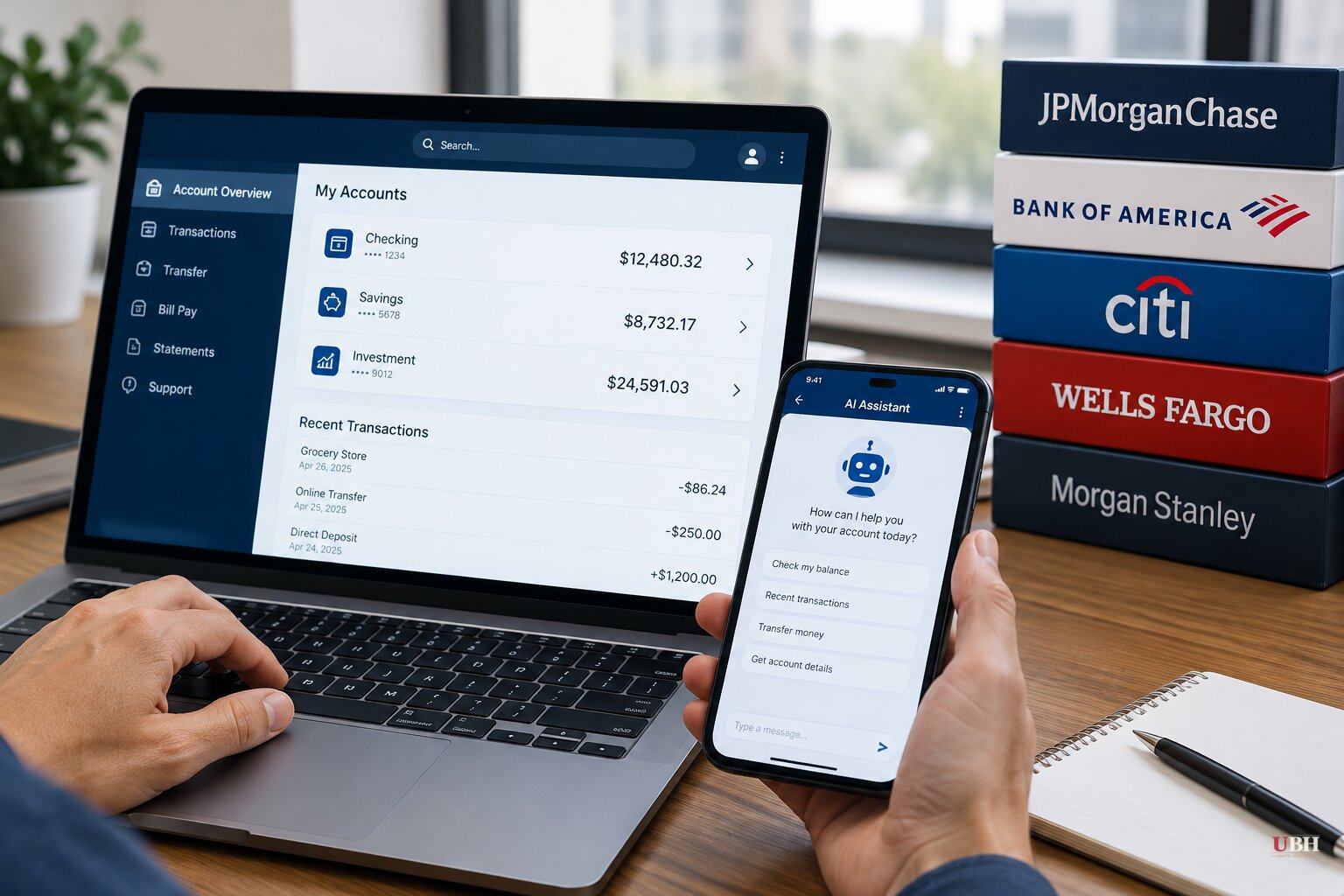
Large U.S. banks are finding AI agents inside customer accounts and cannot always say who told them to be there.
Axios reported that Morgan Stanley, Bank of America, JPMorgan, Wells Fargo and other big lenders have found agents in accounts that, in some cases, appear to be taking actions the account holder never directed. Axios cited bank officials who described the situation as "horrifying" and said they have "grave concerns" about agents gaining access and taking steps that could affect customers' finances.
How agents get in
The usual path starts with the customer. Someone hands login credentials to an AI assistant so it can manage part of their financial life. That already breaks the rules at most banks, which require a human to log in directly.
The risk grows when the user has also authorized the agent to make purchases or move money. Login access plus spending permission lets an agent act with nobody watching.
Banks told Axios they have tracked agents contacting call centers and taking actions that did not come from direct user instructions. One bank executive described the core problem this way: banks struggle to tell agents apart, and to tell whether an agent was authorized by a user or went rogue and gained access to an account.
What the banks are doing
Axios reported that Morgan Stanley has started blocking third-party agents from its platforms outright. JPMorgan, Bank of America and Citi are restricting agent access.
A Morgan Stanley spokesperson pushed back on the characterization, denying reports of rogue AI agents accessing its platforms.
Most banks have landed on, or are moving toward, read-only access. An agent can view account information but cannot act on it. That is the same arrangement banks already give budgeting apps like Quicken, which see financial data but cannot execute transactions.
Behind the scenes, banks are running "day after" scenario planning so they can quickly lock down or restore customer access if an agent causes a problem. One source told Axios that money and manpower alone will not solve this, given how fast the technology is changing and exposing new weaknesses.
A Chase spokesperson put the basic rule plainly: customers should not give their usernames and passwords to anyone.
That is personal responsibility at its simplest. A bank cannot protect a password the customer has already given away, and a bank that cannot distinguish an authorized agent from an unauthorized one cannot easily sort out who owes what after something goes wrong. None of the banks has publicly said how liability would be handled in that case.
Cyber risk on the Moody's list for Greek banks
The agent problem is one piece of a wider operational-risk picture. In Greece, Moody's named four risks that could test the country's banks in the coming months: rising bad loans, capital quality, cyber threats and geopolitical uncertainty.
The agency said the risks remain manageable for the six Greek banks it covers, which hold about 93% of the system. The analysis followed the Bank of Greece's latest Financial Stability Report.
The credit numbers are moving the wrong way. In the first half of 2026, €1.7 billion of performing loans were reclassified as non-performing, while only €388 million of existing bad loans returned to performing status. The stock of non-performing loans grew 9.3% in six months. The NPL ratio was 3.4% in June, up from 3.3% at the end of 2025.
Very small businesses are hit hardest, with an NPL ratio of 11.2%. Small and medium-sized enterprises stand at 4.6%. Large companies sit at 0.9%.
Two European Central Bank rate increases pushed the average rate on new loans to non-financial corporations up 84 basis points to 4.5% at the end of August 2026. That makes repayment harder for weaker borrowers.
On capital quality, deferred tax credits made up 36% of Greek banks' CET1 capital in June 2026, down from about 40% at the end of 2025. A 0.5% countercyclical capital buffer took effect October 1, 2026. Moody's warned that banks face increasingly sophisticated cyber threats.
Bond losses and the Fed's stress-test changes
An analysis of rising bond yields presented in October 2026 and summarized by Essential Business argues that heavily indebted governments, falling bond values and choosier investors could strain banks. Banks hold large government bond portfolios. Those bonds are safe from default but not from market losses when rates rise, and the losses become real if a bank must sell quickly to meet deposit withdrawals. The 2023 U.S. bank failures remain the reference point.
In Washington, the Federal Reserve Board finalized two rules changing its annual stress tests. The Board says the changes will increase transparency and accountability and cut year-to-year swings in stress-related capital requirements by roughly 50%, without materially changing aggregate capital levels.
Under the rules, the Fed will invite public comment each year on stress test scenarios and material model changes. Banks with large trading books will face two global market shock components annually, and the one producing larger losses will set the result. Stress capital buffer requirements will average the two most recent tests for firms in both years, starting in 2028.
The 50% figure is the Board's own estimate.
The Fed's proposed 2027 scenarios, both macroeconomic and global market shock, will be published after January 1, 2027. The Board has also asked for comment on a revised noninterest income model, with comments due 60 days after Federal Register publication.
For the AI agent problem, no regulator has announced a rule, and the banks are setting their own limits.
Sources used for this briefing
6 links from 6 independent newsrooms (syndicated copies of the same report count once)
These are the sources it draws on, linked so you can verify.


