
Unbiased headlines. Facts, not spin.
Every story is an unbiased news briefing written from 110+ sources across the spectrum — sources linked so you can verify it yourself.
 politics
Major Story (7/10)
July 22, 2026 at 06:38 AM
politics
Major Story (7/10)
July 22, 2026 at 06:38 AM
Maduro Back in Manhattan Court, Both Sides Propose June 2027 Trial Date
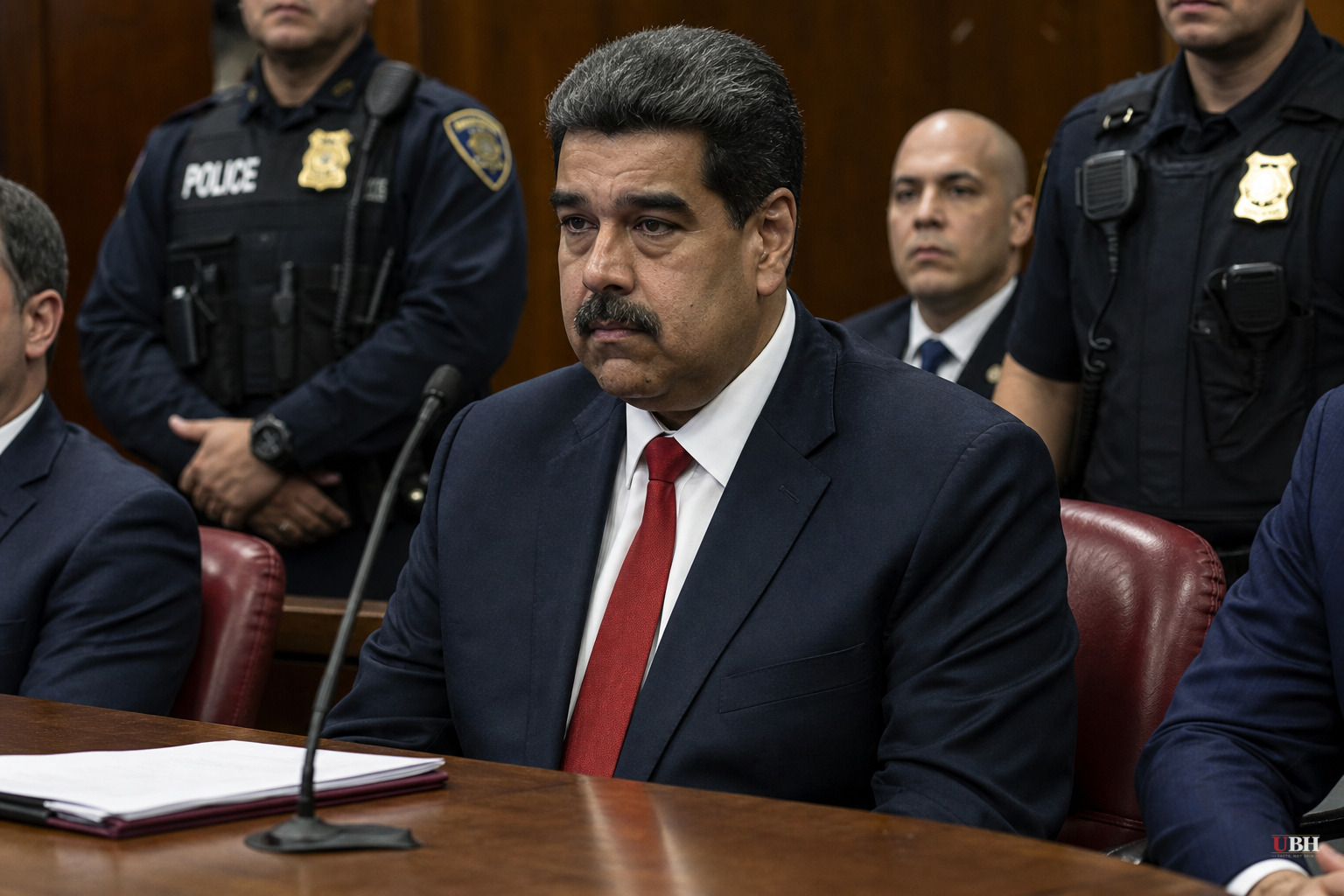
Nicolás Maduro is set to appear in a Manhattan federal courtroom Wednesday, still fighting the legality of the operation that put him there in the first place.
U.S. District Judge Alvin Hellerstein is scheduled to hold a pretrial hearing at 12 p.m. EDT, according to the Jerusalem Post. It's the latest step in a criminal case that dates back to an indictment first filed in 2011 and unsealed in 2020, according to Wikipedia's case record. The case only became a live courtroom drama after January of this year.
That's when U.S. Special Forces captured Maduro, 63, and his wife Cilia Flores, 69, in a nighttime raid on their Caracas home, according to the Associated Press and news4jax. Both were flown to New York and have been held at a federal jail in Brooklyn ever since. Both pleaded not guilty at their January 5 arraignment.
The June 2027 Trial Proposal
On Tuesday, prosecutors and Maduro's defense team filed a joint proposal asking Judge Hellerstein to set a trial start date in June 2027, according to the Jerusalem Post. That's roughly a year and a half after Maduro's capture, and it reflects how complicated this case is expected to get.
The filing lays out a rough schedule. Maduro's lawyers would file their first round of motions to dismiss the case by September 2, according to the Jerusalem Post's reporting on the court filing. That's expected to include an argument that Maduro should be immune from U.S. prosecution as a sitting head of state.
A second round of motions would follow by January 11, after prosecutors turn over classified evidence for the defense to review. Both sides noted in the filing that they may still seek changes to that schedule. Judge Hellerstein has final say and has not yet locked in an actual trial date.
Maduro's Defense: Kidnapping, Not Arrest
Maduro's lawyer, Barry Pollack, has said he intends to contest the legality of what he calls Maduro's "military abduction," according to news4jax. Maduro himself has repeatedly called his capture a kidnapping and described himself as a "prisoner of war."
At his January arraignment, Maduro said in Spanish: "I am not guilty. I am a decent man, the constitutional president of my country," according to news4jax.
Whether a foreign head of state can be forcibly extracted by U.S. military force and tried in an American court, without any extradition process, is a genuinely unresolved legal question. Maduro's team is expected to lean hard on sovereign immunity doctrine, and how Judge Hellerstein rules on that motion in September will shape whether this case even reaches trial.
The Trump administration has taken the opposite view, describing the raid as a "surgical law enforcement operation" carried out under a criminal case that predates the current administration by years, according to news4jax. Neither Maduro nor Flores has requested bail, and both remain jailed in Brooklyn.
The Underlying Charges
Prosecutors allege Maduro ran a conspiracy to move thousands of tons of cocaine into the United States, working with Venezuelan law enforcement to help drug kingpins move product north, according to news4jax. If convicted, both Maduro and Flores face potential life sentences.
This isn't a standalone case against just two people. According to Wikipedia's documentation of the docket, the broader indictment names Diosdado Cabello Rondón, Ramón Rodríguez Chacín, Nicolás Ernesto Maduro Guerra, and Hector Rusthenford Guerrero Flores alongside Maduro and his wife. Two other co-defendants, Clíver Alcalá and Hugo Carvajal, have already pleaded guilty, in 2023 and 2025 respectively.
Washington has not recognized Maduro as Venezuela's legitimate president since 2019, according to the Jerusalem Post, accusing him of rigging elections in both 2018 and 2024 and running an economy into collapse through corruption and mismanagement. Maduro has long countered that the U.S. wants him gone to seize greater control over Venezuela's oil reserves, one of the largest proven reserves in the world.
Maduro's economic record in Venezuela shows hyperinflation, mass emigration, and widely disputed elections that are well documented and not seriously contested by outside observers. Whether oil access factors into U.S. strategic calculus is a separate question that the criminal case itself does not resolve.
The next real test comes September 2, when Maduro's lawyers file their motion to dismiss on immunity grounds. Judge Hellerstein's ruling on that motion will determine whether this case proceeds toward the proposed June 2027 trial date or gets kicked to an appeals court first. The underlying legal question remains unresolved: can a U.S. court try a man for crimes allegedly committed while he was a head of state, after seizing him without extradition?
Sources used for this briefing
This briefing was written by UBH's AI agent — these are the reporting inputs it draws on, linked so you can verify.


