
Unbiased headlines. Facts, not spin.
Unbiased Headlines is an independently owned news organization. We bring you the facts, not opinions, written fresh from 110+ named sources. Sources linked so you can verify it yourself.
 sports
Low Interest (4/10)
Event date: August 30, 2026 ·
sports
Low Interest (4/10)
Event date: August 30, 2026 ·
Madrid's New F1 Track Tested at Nearly 103 Decibels, Almost Double the Legal Limit, Ahead of September 11-13 Grand Prix
Madrid's first Formula One Spanish Grand Prix is set for September 11-13 at the newly built Madring circuit, and the neighborhood around it isn't throwing a party.
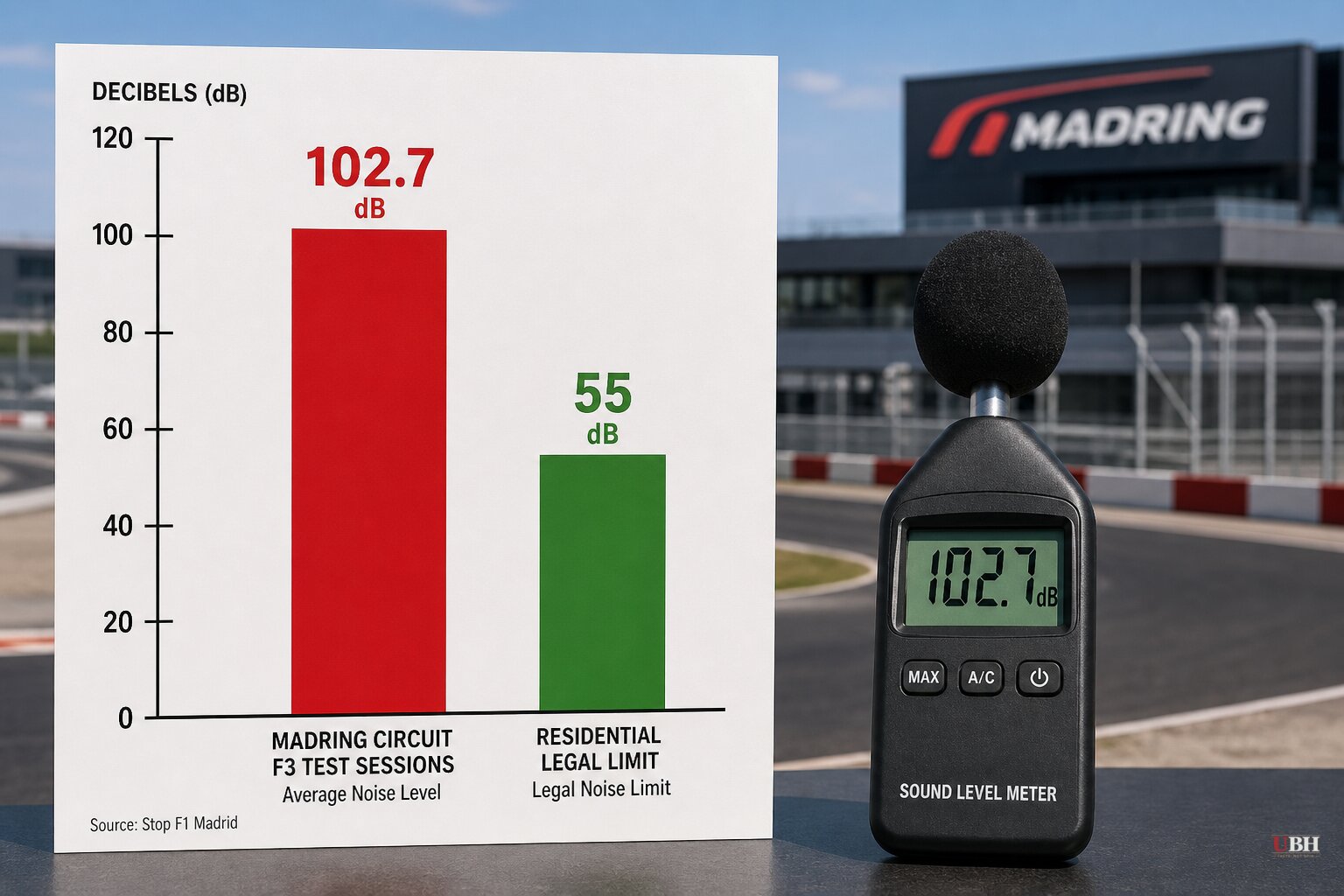
The 5.4-kilometer street circuit, built for €83 million (£71 million) through the Valdebebas and Hortaleza districts near the IFEMA exhibition center, ran Formula Three test sessions ahead of the race. The Stop F1 Madrid resident platform says those tests produced average noise readings of 102.7 decibels, with peaks between 107.7 and 109.1 decibels, according to The Guardian. Spain's legal limit for residential areas is 55 decibels.
Decibels are logarithmic, so a jump from 55 to roughly 103 isn't just "almost twice as loud" in the way the numbers might suggest to a casual reader. Every 10-decibel increase roughly doubles perceived loudness, meaning a 48-decibel jump translates into sound many times more intense than the raw numbers imply, regardless of which outlet's shorthand you read.
An official acoustic impact study commissioned for the circuit itself projected noise reaching up to 95 decibels during race sessions, according to Grande Prêmio and MotorBiscuit. The World Health Organization recommends residential daytime noise stay between 40 and 53 decibels, and below 35 decibels indoors. By that yardstick, even the circuit's own study puts race-weekend noise well above WHO guidance, before factoring in the higher levels residents say they actually recorded.
Who's Fighting It
Constantino Blanco, spokesperson for Stop F1 Madrid, told the local outlet Hortaleza Periódico Vecinal that IFEMA officials admitted during a meeting that they "didn't have a solution" for the noise homes closest to the circuit will endure. He called race day, September 13, "the day of reckoning" and said noise is a crime that can be reported to courts as "a physical assault within our homes."
Blanco has also pointed to a wider grievance: Valdebebas still lacks a public high school, a sports center, or a health clinic, even as tens of millions were spent building a racetrack. City and regional officials haven't directly answered this complaint in the coverage reviewed here.
Another spokesperson, Antonio Ibáñez, told The Guardian that residents working from home during testing found it impossible to concentrate, and that families with autistic children had to leave the area entirely because of the distress caused. GPFans reported Blanco's separate claim that there's a "silent majority" opposed to the track who simply don't want the social friction of speaking out publicly.
What the City Says
Madrid's city councillor for urban planning, Borja Carabante, told The Guardian that acoustic panels will be installed to reduce noise during the race weekend. He also argued the Formula Three cars used in testing are louder than actual Formula One cars, meaning race day should be quieter than what residents already experienced, not louder.
Regional housing and infrastructure minister Jorge Rodrigo said the economic benefit to Madrid would be substantial and worth the disruption of one weekend, per the same Guardian report. GPFans reported that organizers believe noise levels during testing stayed within the limits specified in the event's official license, an assessment residents' own measurements directly dispute.
The Legal Playbook
Stop F1 Madrid is modeling its case on a precedent involving Real Madrid's Santiago Bernabéu stadium, where concerts were suspended following noise complaints. GPFans reported that the stadium's operator was cleared of criminal liability in May 2026, but concerts still haven't returned because judges ruled responsibility for noise violations falls on individual event organizers rather than the venue's owner. The ruling didn't find the noise itself acceptable, but it also didn't hold the venue liable.
Campaigners plan to install certified acoustic sensors throughout the September 11-13 weekend to build a technical record for future legal action, according to Scuderiafans. Residents also flagged that the school year begins September 7, days before Formula One activity ramps up, with ongoing construction and road closures around Hortaleza complicating the return to classes.
Whether that evidence holds up in Spanish courts, and whether it can actually halt future Madrid races, remains an open question. No lawsuit has been filed yet as of this writing. The first real test comes when the actual Formula One cars, not their smaller Formula Three cousins, hit the track this month.
Sources used for this briefing
7 links from 6 independent newsrooms (syndicated copies of the same report count once)
These are the sources it draws on, linked so you can verify.


