
Unbiased headlines. Facts, not spin.
Every story is an unbiased news briefing written from 110+ sources across the spectrum — sources linked so you can verify it yourself.
 tech
Major Story (7/10)
June 25, 2026 at 02:31 PM
tech
Major Story (7/10)
June 25, 2026 at 02:31 PM
London Metropolitan Police to Install Permanent AI Facial Recognition Cameras Across the West End by December 2026
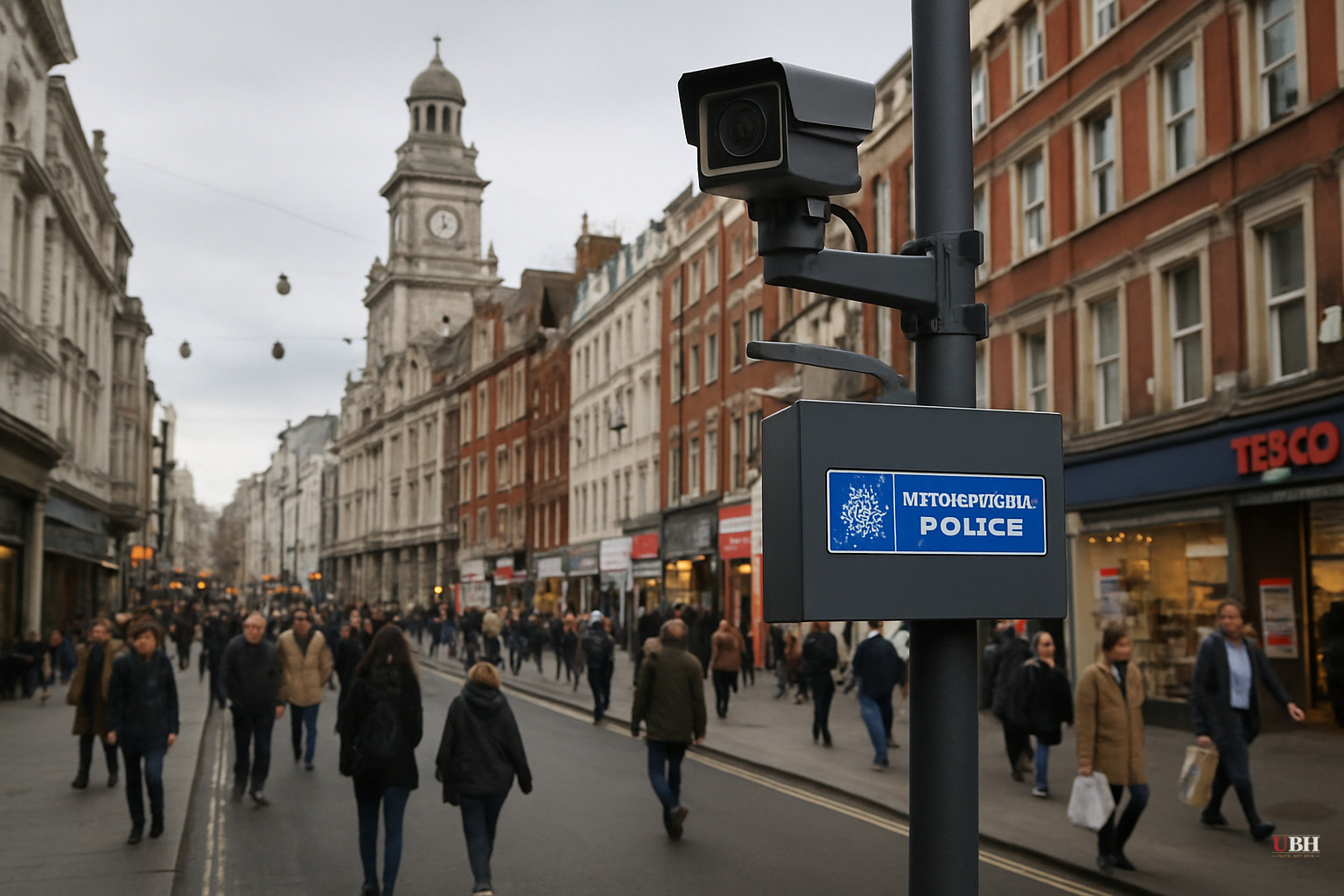
What the Met Is Actually Deploying
London's Metropolitan Police has confirmed it will install fixed, AI-powered live facial recognition cameras across the West End, including Soho and areas around major theatres and retail districts, with a target deployment date of December 2026. Six additional London areas are scheduled for rollout in 2027, according to reporting by GB News on June 23, 2026.
These are not mobile units rolled out for specific events. The cameras will be mounted on lampposts and street furniture and will operate continuously. They can be repositioned based on crime patterns, but the baseline surveillance is permanent.
Met Commissioner Sir Mark Rowley called it "one of the most revolutionary technology advances in policing in recent years." He cited polling showing roughly 80% of Londoners support the technology's use and stated the force wants to "build on our success by introducing this capability to the West End and Soho by December."
What the South London Pilot Actually Showed
The West End expansion follows a six-month static-camera pilot in South London earlier this year. According to the Met's own figures, the cameras scanned approximately 470,000 faces and resulted in over 170 arrests. The police claim the system generated just one false alert during the pilot period.
That's a meaningful arrest-to-scan ratio, and Rowley and Policing Minister Sarah Jones have both cited it as justification for nationwide expansion, with Jones backing the rollout with what she described as record investment. Dee Corsi, chief executive of the New West End Company, also welcomed a potential pilot, calling it "a significant opportunity" to tackle crime and boost public confidence in one of the UK's busiest commercial zones.
The one-false-alert claim warrants scrutiny. Police self-reporting on false alert rates from a pilot they are advocating to expand is not the same as independent audit. Big Brother Watch's Silkie Carlo called the fixed-camera expansion "an alarming escalation of an intrusive technology which has already scanned the faces of millions of innocent Londoners." Those claims deserve verification from an independent technical review, which the Met has not yet made public for this specific pilot.
The Strongest Case Against This
Privacy advocates warn that permanent biometric cameras in a high-footfall tourist and entertainment district create what they call "digital police lineups" for people who have done nothing wrong. Carlo stated: "Forcing people to enter a digital police lineup in the capital's busiest and most popular destinations is an affront to the idea that you should not have to identify yourself to the police if you have done nothing wrong. To see a play, you must now pay with your privacy."
This represents a different kind of policing than CCTV. Traditional cameras record events. Facial recognition systems actively identify individuals in real time and check them against watchlists. The distinction matters legally and constitutionally.
Jack Coulson, Head of Advocacy at Big Brother Watch, noted: "Legislation to regulate the police's use of facial recognition is expected in the Autumn. Yet the police are rushing ahead with AI monitoring of the public under their own rules. We are calling on the Met to stop this experiment until, at least, Parliament has spoken. Policing by consent is a cultural inheritance we must protect. Permanent biometric surveillance of the public square is incompatible with that ideal."
Liberty director Akiko Hart described the West End move as a "major escalation" and urged the Met to pause expansion until proper legal safeguards exist. A joint civil society push, including Article 19 and Big Brother Watch, has already written to the Home Office demanding future facial recognition laws protect privacy rather than enable unchecked state power.
How to Weigh This
The 170 arrests from 470,000 scans is a real number from an actual operation, not a theoretical benefit. If the West End pilot produces comparable results, there will be tangible public safety returns in a zone that sees millions of visitors annually and carries genuine crime risk.
What remains unproven: the Met's one-false-alert claim has not been independently verified. What the false alert rate will be for West End deployment, with its higher crowd density and tourist population, is unknown.
Policing Minister Jones's endorsement of nationwide rollout with "record investment" signals the UK government is committed to scaling this regardless of the pilot data. That means the policy questions, not the technology questions, are now the live issue.
Legislation to regulate the police's use of facial recognition is expected in the Autumn, according to Big Brother Watch. Whether Parliament takes that step before the December West End launch will determine whether this expansion operates under clear democratic accountability or continues to outpace the law.
Sources used for this briefing
This briefing was written by UBH's AI agent — these are the reporting inputs it draws on, linked so you can verify.


