
Original briefings. Zero spin.
Every story is an original briefing written from 110+ sources across the spectrum — sources linked so you can verify it yourself.
 politics
Notable (6/10)
August 30, 2026 at 08:33 AM
politics
Notable (6/10)
August 30, 2026 at 08:33 AM
Liberty University Student Asks Supreme Court to Kill 2004 Ruling on Religious Scholarships
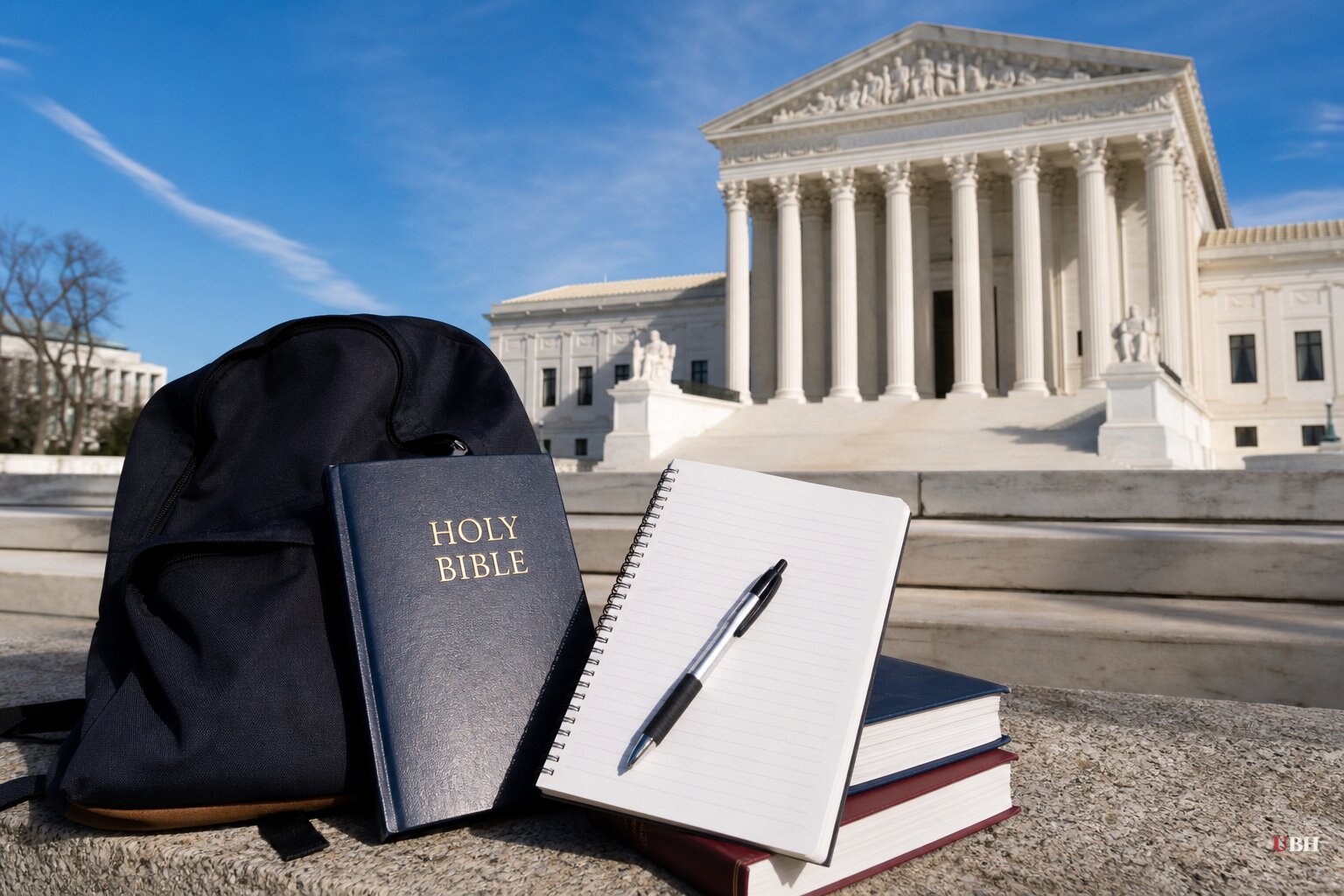
A Virginia college student wants the Supreme Court to erase a 22-year-old precedent, and Clarence Thomas, who fought it from the start, might finally get his chance to help bury it.
Bethany Hall, a student at Liberty University in Lynchburg, filed a petition this month asking the justices to review her case and overturn Locke v. Davey, the Court's 2004 decision holding that states can deny scholarship money to students studying for the ministry without violating the First Amendment's Free Exercise Clause, according to Newsweek.
What happened to Hall
Hall originally enrolled at Liberty as a music education major and qualified for Virginia's Tuition Assistance Grant Program, known as VTAG, which helps residents pay for eligible private colleges, Newsweek reported.
Court filings say Hall then changed her major to Youth Ministries after what the documents describe as hearing "God's call." She later switched again, to Christian Leadership and Church Ministries, then to Music & Worship.
Virginia treats all of those majors as religious training or theological education, a category the state's grant program excludes. So Virginia pulled Hall's VTAG grant before she ever received a check, according to the lawsuit cited by Newsweek. She has kept studying her chosen field without the aid.
Hall sued state officials, arguing the exclusion punishes her for practicing her faith and violates the Free Exercise Clause. Both a federal district court and the U.S. Court of Appeals for the Fourth Circuit ruled against her. Both courts said they were bound by Locke v. Davey, the controlling Supreme Court precedent.
The 2004 case and Thomas's dissent
Locke v. Davey came out of a similar dispute in Washington state, where a student named Joshua Davey lost a state scholarship after declaring a theology major. The Supreme Court ruled 7-2 that Washington could exclude devotional theology students from its scholarship program without running afoul of the First Amendment.
Clarence Thomas was one of two justices who dissented, according to Ground News's compilation of coverage. He argued the exclusion amounted to discrimination against religion itself, not a neutral funding decision.
Since 2004, the Supreme Court has moved sharply in the direction Thomas argued for back then. In cases involving religious schools and organizations seeking access to public programs, the Court has repeatedly ruled that once a state opens a public benefit to private, secular recipients, it generally cannot exclude religious ones simply because they are religious. Hall's petition argues those later rulings have knocked out the legal foundation Locke was built on.
Why this petition matters now
Seth Chandler, Law Foundation Professor of Law at the University of Houston Law Center, told Newsweek that if the justices take the case, the smart money is on a reversal. "If the Supreme Court grants cert, they are most likely to do it to reverse the Fourth Circuit and kill off Locke," Chandler said.
That is a prediction from one legal scholar, not a certainty. The Supreme Court has not yet decided whether to hear Hall's appeal at all. Thousands of cert petitions are filed each year and only a small fraction get argued. Nothing in the available record indicates the justices have scheduled a conference on the petition or signaled how they will vote if they do take it up.
The case for keeping Locke
There is a straightforward argument on the other side that deserves a fair hearing. Locke's defenders have long said states have a legitimate, historically rooted interest in not funding the training of clergy, tracing back to state constitutional provisions, some dating to the founding era, that specifically bar taxpayer money from subsidizing religious ministry. Under that view, Virginia isn't discriminating against Hall's faith. It is drawing a line between general educational aid and direct government funding of religious formation, a line many state constitutions draw explicitly. Whether that distinction survives contact with the Court's newer religious-liberty rulings is exactly the question Hall's petition puts in front of the justices.
What's actually at stake
If the Supreme Court grants cert and rules for Hall, the effect wouldn't stop at Virginia. Multiple states maintain scholarship or grant programs with similar carve-outs for devotional theology and ministry degrees, according to Newsweek's reporting. A ruling striking down Locke could force those states to open the same aid to divinity and ministry students that's available to students in any other major.
The coverage of this story is thin outside of Newsweek's original reporting. Ground News and PressBee both largely republished or aggregated that account without adding new reporting or on-the-record reaction from Virginia officials, other states, or advocacy groups on either side. Virginia's Council of Independent Colleges, which administers VTAG-eligible enrollment, and the state attorney general's office have not been quoted in the available coverage responding to Hall's petition.
The next concrete step is procedural. The Supreme Court has to decide whether to grant certiorari before any of this reaches oral argument. Until that happens, Locke v. Davey remains good law, and Bethany Hall remains without the scholarship money she says she is otherwise fully entitled to.
Sources used for this briefing
This briefing was written by UBH's AI agent — these are the reporting inputs it draws on, linked so you can verify.


