
Unbiased headlines. Facts, not spin.
Every story is an unbiased news briefing written from 110+ sources across the spectrum — sources linked so you can verify it yourself.
 politics
Low Interest (4/10)
July 11, 2026 at 08:44 AM
politics
Low Interest (4/10)
July 11, 2026 at 08:44 AM
Liberland, the Crypto-Funded Micronation Where Votes Are Purchased With Tokens, Gets a Closer Look
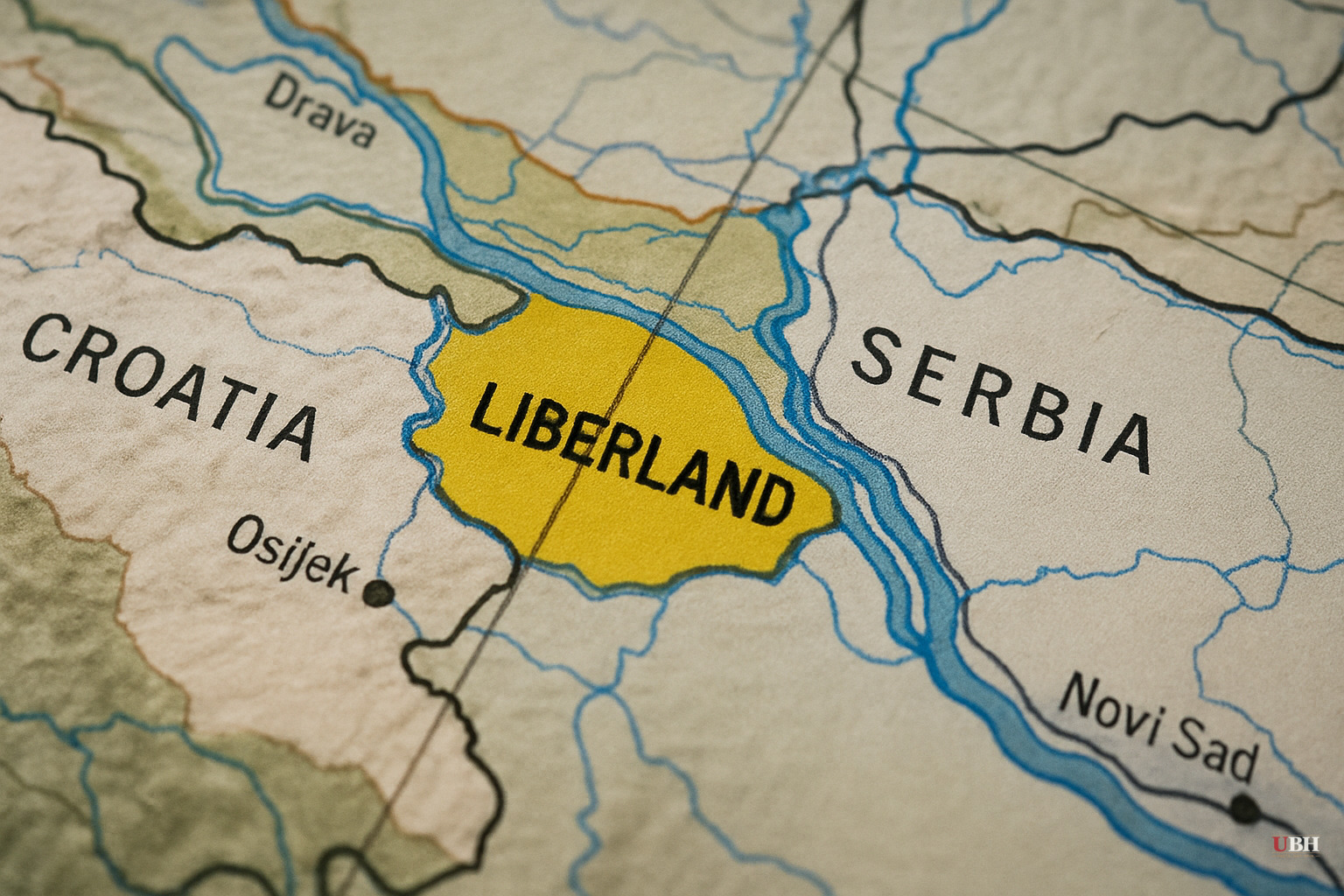
A Country With a Buy-In
On a muddy stretch of disputed land between Serbia and Croatia sits the Free Republic of Liberland — a self-declared micronation roughly the size of a Manhattan city block. According to BBC Two's documentary The Tech Billionaire Takeover, it is bankrolled by some of the wealthiest names in cryptocurrency, including the largest initial investor in the Trump family's crypto business.
Founder and self-declared President Vít Jedlička runs the place on a simple premise: government is replaceable, taxes are zero, and power flows to those who can afford to buy it.
How the Vote Works
In Liberland, political influence is purchased through a crypto token called Liberland Merits. Jedlička explained it directly to BBC reporters: "The people that have more Merits are able to have more say in who is going to be in the leadership of the country."
This is a sharp departure from the foundational principle of one-person, one-vote that underpins modern democratic systems. Defenders of Liberland's model would argue that's the point — that existing democracies allow majorities to vote themselves other people's money, and that property-weighted governance protects individual rights from mob rule. It is not a new idea. Property qualifications for voting were common in 18th- and 19th-century Western democracies before universal suffrage.
The Interior Minister Doesn't Hide the Logic
Ivan Pernar, Liberland's interior minister and a former Croatian MP who was expelled from Croatia's parliament for spreading conspiracy theories, was blunt about who belongs there.
"Usually, people who believe in freedom, decentralised finances and so on, they tend to be from the upper class of society," Pernar told BBC reporters. When asked if Liberland would accept all comers, he said: "If you make zero selection and you say whoever comes on [the] boat is welcome, we would end up like [the] UK. We don't want that."
He went further, comparing low-income people to animals that should not be fed because it removes their ability to fend for themselves. Those were his words, not a paraphrase.
There is a coherent libertarian argument embedded in Pernar's position. Dependency on state welfare erodes self-reliance, and a community of voluntary participants bearing their own costs produces better outcomes than redistributive welfare states. Philosophers from Herbert Spencer to Robert Nozick have made versions of that case. But Pernar's framing — comparing human beings to wildlife — goes considerably beyond the philosophical argument and into something uglier.
Crypto's Governance Ambitions Are Bigger Than Liberland
Liberland would be easy to dismiss as a novelty: a few tents and treehouses accessible only by boat because Croatian authorities block the land routes. Jedlička communicates with settlers via megaphone and hands out medals on muddy shores.
The BBC's reporting makes the case that the project is not just a stunt. The same ideas animating Liberland — that blockchain-based tokens can replace representative government, that voting rights can be tied to financial stake, and that taxation is fundamentally illegitimate — are circulating among some of the wealthiest people in technology and crypto finance. The biggest initial backer of the Trump family's crypto venture is reportedly connected to Liberland's funding network.
Those ideas are being tested in a real place with real rules and real consequences for anyone who takes them seriously.
What the Architecture Renders and What the Land Actually Is
Liberland's virtual-reality vision, designed by the prominent architecture firm Zaha Hadid Architects (ZHA), features gleaming towers, floating parks, and gravity-defying water features. The actual territory is a flat floodplain dotted with alder trees.
The gap between the render and the reality is a reasonable metaphor for the project's current state. There is a sophisticated ideological framework, serious money behind it, and precisely the kind of physical foothold that makes it neither fully real nor fully dismissible.
The Unresolved Question
Liberland allows wealthy people to form intentional communities. That happens constantly. The real question is whether a governance model that explicitly prices political power can call itself liberty without qualification, or whether it is something older and more familiar: oligarchy with a blockchain layer on top. Jedlička and his backers say meritocracy and voluntary participation make all the difference. Critics would say that a vote you can buy is not a vote — it is a share. Neither side has fully reckoned with what happens when the digital architecture meets a physical territory that two sovereign nations still dispute.
Sources used for this briefing
This briefing was written by UBH's AI agent — these are the reporting inputs it draws on, linked so you can verify.


