
Unbiased headlines. Facts, not spin.
Unbiased Headlines is an independently owned news organization. We bring you the facts, not opinions, written fresh from 110+ named sources. Sources linked so you can verify it yourself.
 politics
Notable (5/10)
Event date: November 9, 2026 ·
Le Pen Polls 34-36% for French Presidency as Mélenchon Draws 20,000 and Street Protests Shrink
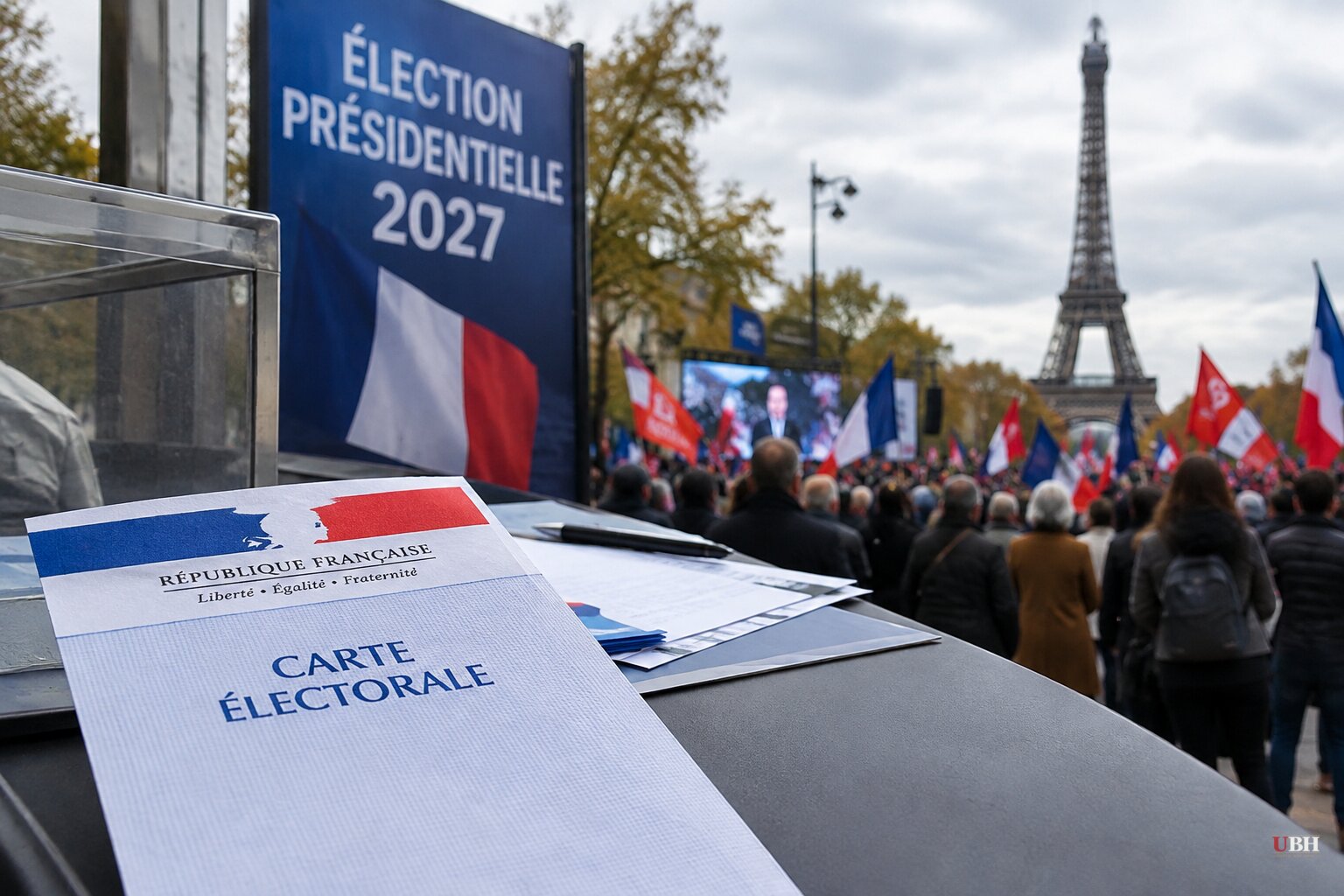
Marine Le Pen is the front-runner for France's presidency, and the American midterms have not changed that so far.
Toluna Harris Interactive surveyed voters November 3 to 5 and published results on Monday, November 9. Le Pen would take between 34% and 36% of the first-round vote, depending on which candidates are tested. A similar poll in October had her at 35% to 37%.
Jean-Luc Mélenchon, the far-left leader of La France Insoumise, reaches the runoff in all five scenarios with 18% or 19%. Le Pen beats him easily in the second round. The poll puts her at 68% against Mélenchon and 58% against former centrist Prime Minister Édouard Philippe.
The first round is about six months away.
The midterm question
Democrats won the U.S. House and Senate this month. Since April, voters have also removed Hungary's Viktor Orbán, ended Aleksandar Vucic's long hold on Serbia and blocked the Bolsonaro family's return in Brazil. Populists have also won presidencies in Poland, Chile and Colombia since mid-2025.
Péter Krekó, director of Budapest's Political Capital Institute, said that "when cracks in power become more visible, this can trigger a cascade effect."
Sciences Po political scientist Gilles Ivaldi sees it differently for France. "In France, the far right still has the wind in its sails," he said. Analysts say American voters may have punished Trump's economic record more than his "America First" ideas.
The National Rally's Jordan Bardella told RTL there is no direct link between the two elections. He did acknowledge that the war with Iran has hurt the purchasing power of French households.
Le Pen backed Trump in 2024. She has since criticized the U.S.-Israeli military action against Iran and attacks on other countries' sovereignty. Her party has never governed France, which Ivaldi's camp of analysts cites as part of its appeal to angry voters.
A president nobody likes
Emmanuel Macron is finishing his second and final term as an unpopular president. He leaves behind a weak economy and a hollowed-out political center.
The street shows the anger. The Interior Ministry counted 550,000 marchers nationwide on October 17, 410,000 on October 24 and 320,000 on October 31. On November 7, the fourth straight Saturday of protests, it counted 146,000. The left-wing youth union coalition that called the marches claimed 250,000.
Police made 232 arrests by 6 p.m. that day. The ministry reported clashes in Toulouse, Grenoble, Marseille, Nantes, Lyon, Bordeaux, Strasbourg and Dijon. Interior Minister Laurent Nuñez condemned "violence that nothing could justify." A police officer's home in Auch was burned to the ground overnight. Nuñez wrote that "everything suggests that this intolerable criminal act was committed because of the officer's profession."
On November 9, Prime Minister Sébastien Lecornu hosted unions and employers at a social conference on wages. He conceded an accelerated rise in the minimum wage. The union coalition has said the conference will determine the movement's next steps.
Mélenchon's pitch
More than 20,000 supporters filled an exhibition center in Le Bourget on November 7 to hear Mélenchon present his platform. "Everyone hates the Macronist regime," he said. "France has reached a boiling point."
The platform runs past 1,000 measures. It includes a €1,700 monthly minimum wage, a lower pension age, price freezes on gasoline and food, and a cap on inheritances at €12 million. It also includes a 2% annual "Zucman tax" on the largest fortunes.
France's budget deficit is well over 5% of GDP. The program depends on confronting EU fiscal rules, and Mélenchon has said so openly.
The left is not united behind him. Other contenders include Judo star Teddy Riner, who announced a bid on November 9 as "neither right-wing nor left-wing." On the center-right, Cannes mayor David Lisnard polls 9% where he appears, ahead of Republicans figure Bruno Retailleau. Lisnard has called for a primary among moderate parties.
Mélenchon has run for president three times, in 2012, 2017 and 2022, and never reached a runoff.
What a Le Pen win would mean abroad
The stakes reach past France. The winner would command the EU's only nuclear arsenal and hold a U.N. Security Council veto.
Political analyst Mujtaba Rahman argues in The Guardian that Le Pen would suspend French bilateral aid to Ukraine. He also says her opposition to a larger French contribution to the EU budget could imperil a proposed €100 billion Ukraine facility. He writes that she is threatening to veto the bloc's next seven-year budget.
Rahman adds that Le Pen has opposed Ukraine's EU accession and has advocated lifting EU sanctions on Russia since 2017. His is one analyst's reading of what a Le Pen presidency would do.
The court date
Le Pen's own path is not clear. France's highest court aims to rule on her appeal against an embezzlement conviction by early April, just weeks before the first round. AP reports that if the court rules against her, she could be barred from running, or could campaign wearing an electronic tag.
The ruling, and whether she appears on the ballot, is the biggest open question in the race.
Sources used for this briefing
6 links from 6 independent newsrooms (syndicated copies of the same report count once)
These are the sources it draws on, linked so you can verify.


