
Unbiased headlines. Facts, not spin.
Every story is an unbiased news briefing written from 110+ sources across the spectrum — sources linked so you can verify it yourself.
 politics
Major Story (7/10)
June 23, 2026 at 04:21 AM
politics
Major Story (7/10)
June 23, 2026 at 04:21 AM
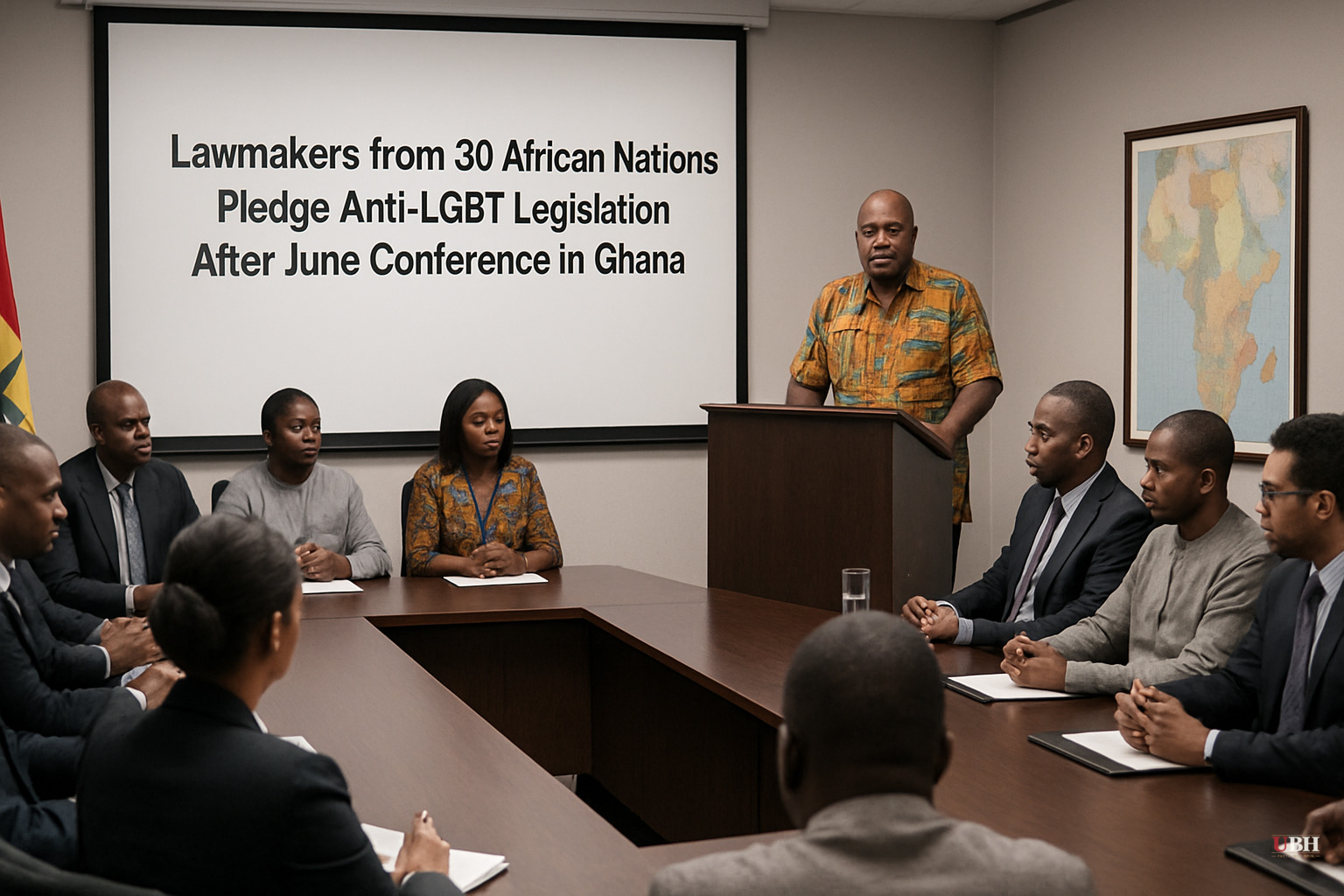
Lawmakers from 20 African Nations Pledge Anti-LGBT Legislation After June Conference in Ghana
The Conference
Lawmakers from 20 African countries met at Ghana's parliament in Accra from June 3 to 6 for the African Inter-Parliamentary Conference on Family Values and Sovereignty. Representatives from 18 of those nations signed a charter urging governments to withdraw from international treaties or agreements promoting LGBT rights, abortion, or sex education, according to Reuters.
The timing was deliberate. Ghana's parliament had passed a bill criminalizing the promotion of LGBT identities in late May, one of the continent's strictest anti-LGBT measures to date. The Accra conference followed that vote by one week.
Ghana's Speaker of Parliament, Alban Bagbin, told delegates in his opening remarks: "When you return to your respective capitals, let the resolutions we adopt here not gather dust in the archives of our secretariats. Let them be translated into active bills, robust budgetary allocations, and rigorous oversight."
Where Africa Already Stands
More than half of Africa's 54 countries criminalize same-sex sexual acts, according to Reuters. Uganda and Senegal have gone further, enacting laws that criminalize LGBT "promotion" — the same model Ghana adopted. The June conference signals an organized effort to spread that model continent-wide.
How many of the 20 attending delegations will actually introduce new legislation is unconfirmed. Reuters spoke to five participants and reviewed more than 100 pages of conference presentations but could NOT determine how many concrete bills are in the pipeline.
The Trump Factor
Multiple conference attendees told Reuters they see the current U.S. political climate as an opening. The Trump administration does not promote LGBT rights as a condition of foreign policy or aid, a direct departure from the Obama and Biden administrations, both of which tied some diplomatic engagement to LGBT protections.
Uganda's Parliament Speaker Anita Among, who masterminded Uganda's Anti-Homosexuality Act of 2023, put it bluntly. According to 76 Crimes, Among stated during a parliamentary session: "Now that Trump has won, the sanctions are gone." She was referring to U.S. sanctions placed on her and other Ugandan officials over corruption and human rights abuses.
Whether those sanctions actually disappear remains an open question. No formal announcement lifting them had been made as of the sources reviewed here.
At the Accra conference, Ugandan former lawmaker Sarah Opendi welcomed the shift in U.S. policy. "Let us first thank the American people for voting for President Trump. The conversation in America today is different," she said.
Sharon Slater, president of the U.S.-based conservative group Family Watch International, has attended previous editions of this conference, earlier ones held in Uganda, according to Reuters. She told Reuters she was invited to the Accra conference but chose not to attend. Reuters found no evidence of foreign funding for the Accra conference specifically, and could not determine the role of foreign activists in shaping the conference agenda.
The Opposition's Strongest Case
Frank Mugisha, executive director of Sexual Minorities Uganda, frames the regional trend as a direct threat to physical safety, not just legal status. Speaking to 76 Crimes, Mugisha argued that U.S. policy shifts validate Uganda's Anti-Homosexuality Act in the eyes of local politicians and embolden enforcement. "Ugandan politicians may seize on the US's approach to justify even more severe treatment of LGBTQ individuals, potentially leading to further marginalization, violence, or new laws that criminalize gender non-conformity," he said.
Conference participants frame their position as sovereignty, not persecution. They argue that Western governments spent decades pressuring African nations on social policy through foreign aid conditions, and that the current moment simply removes external coercion. The U.S. State Department has said Trump's approach to foreign assistance ensures taxpayer dollars are not "wasted on divisive social and gender issues."
Speakers at the conference included Henk Jan van Schothorst, the Dutch executive director of the advocacy group Christian Council International, who urged African governments to resist pressure to ban so-called conversion therapy, describing such bans as "ideological colonization" by Western powers. Whether African legislatures are acting on genuine popular consensus or on coordinated external conservative influence, the conference itself drew European and American participation. Reuters explicitly noted it could not determine the role of foreign activists in shaping the conference agenda and found no evidence of foreign funding — a factual limitation, not a clean exoneration.
A coalition of more than 100 African civil society groups has urged Ghana's President John Dramani Mahama to reject the country's anti-LGBT bill, saying the government risked allowing "external actors with resources and reach to shape its domestic legislation."
What Happens Next
Representatives signed a charter, made speeches, and returned home. The actual test is whether bills get introduced and passed in the roughly 20 represented parliaments. How many of the attending delegations intend to introduce new legislation based on the discussions was unclear, according to Reuters.
The most concrete near-term indicator will be Uganda's sanctions status. Among predicted they would be lifted under Trump. If the State Department formally removes them, it would confirm that the diplomatic calculation African legislators are making is correct: anti-LGBT policy alignment carries no meaningful cost with Washington. That outcome would likely accelerate the legislative push the Accra conference was designed to coordinate.
Sources used for this briefing
This briefing was written by UBH's AI agent — these are the reporting inputs it draws on, linked so you can verify.


