
Unbiased headlines. Facts, not spin.
Every story is an unbiased news briefing written from 110+ sources across the spectrum — sources linked so you can verify it yourself.
 politics
Notable (6/10)
September 15, 2026 at 10:15 PM
politics
Notable (6/10)
September 15, 2026 at 10:15 PM
Kennedy Center Board Votes to Close Main Building Hours After Judge Blocks Trump's Name Again
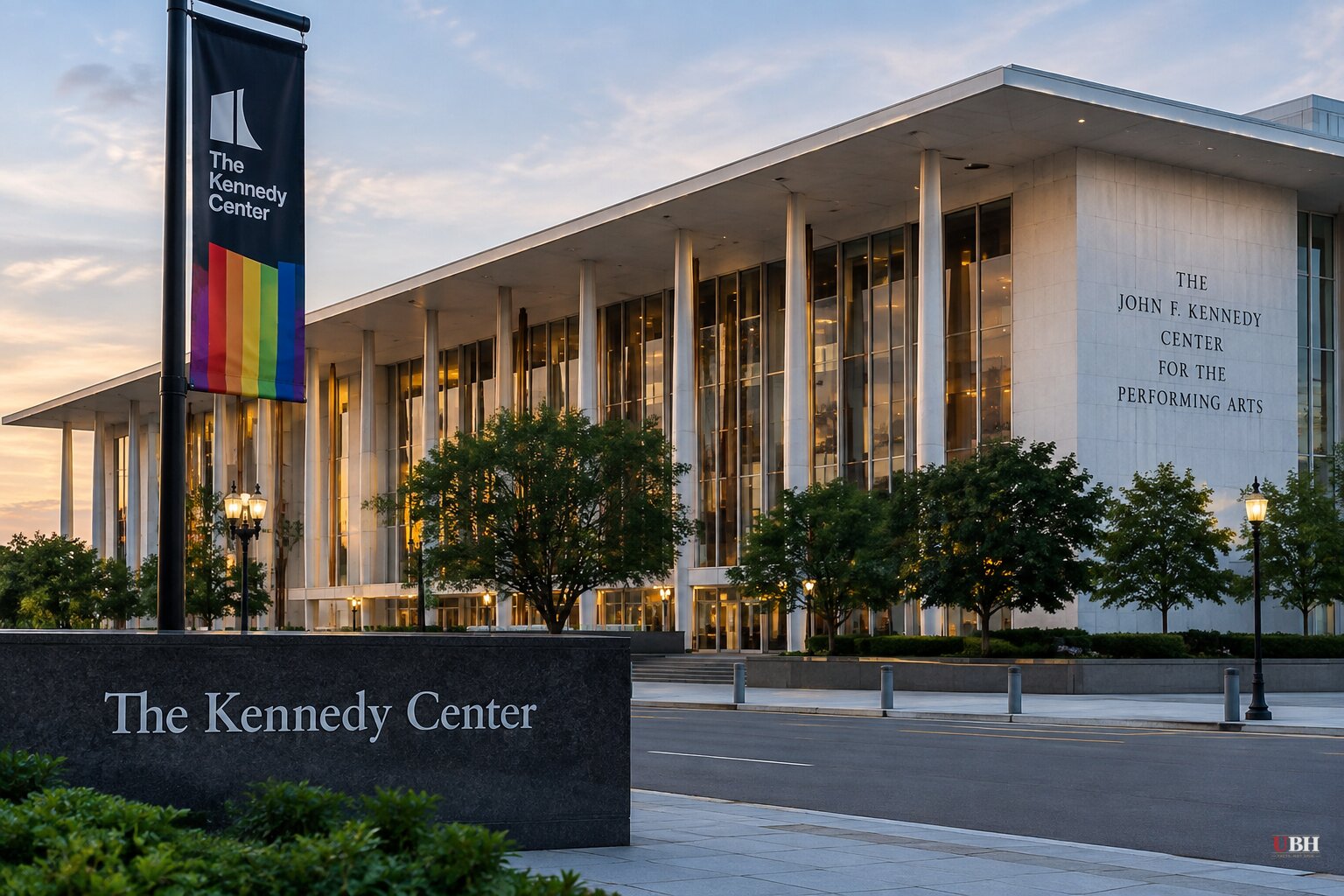
Since U.S. District Judge Christopher Cooper first ordered President Trump's name removed from the Kennedy Center on May 29 and blocked the board from closing the building, the standoff has reached a new stage. On Tuesday, Cooper blocked a fresh attempt to put Trump's name back on the facade, and within hours the Trump-appointed board voted to close the main building anyway, according to sources cited by CBS News, NBC News, ABC News and other outlets.
What the judge actually ruled
Cooper's Tuesday order rejected a board resolution, passed in August, to inscribe "Renovated and Restored by President Donald J. Trump" on the building and rename the plaza "President Donald J. Trump Plaza." Cooper called the maneuver "linguistic gymnastics" designed to get around his May injunction, writing: "Simply put, Defendants cannot install memorials for President Trump or anyone or anything else at the Kennedy Center without Congress's blessing." The Epoch Times noted the ruling rests partly on a 1983 amendment to the 1964 Kennedy Center Act, which bars additional memorials or plaques at the venue without congressional approval. The case is now headed to the D.C. Circuit Court of Appeals.
The closure vote
Hours later, the board, chaired by Trump and stacked with his Cabinet members and allies, voted to shut the main building for a two-year, roughly $250-257 million renovation, according to The Hill and PBS. It's the third such closure vote since February. The board cited a partial ceiling collapse in the Grand Foyer on September 4 and warned, in a draft resolution, that the center faces payroll and maintenance failures within weeks without intervention.
But the vote may not matter yet. Cooper's May order already blocks the center from closing while Rep. Joyce Beatty's lawsuit proceeds, and he specifically left the door open only for the board to request that the injunction be lifted "in a prudent manner." CNN reported that request is expected by Friday. Until Cooper rules on it, the legal status of Tuesday's vote is unresolved.
Trump's ultimatum
Trump wrote on Truth Social that the closure "will take place immediately," but said actual reconstruction "cannot begin" until the D.C. Circuit rules on the board's naming push. "If the ruling is a negative one, which it should not be, and is not overturned by the U.S. Supreme Court, the Reconstruction and the Renovation of The Kennedy Center will not take place," he wrote. He said the Justice Department would seek an expedited appeal, and that he had personally put $17 million into the center's account "to keep it afloat." Congress had already appropriated more than $250 million for the project last year, meaning taxpayer-funded work is now conditioned on a naming dispute Trump is losing in court.
The safety and money case, stated fairly
The board's argument isn't baseless. A chunk of concrete and steel did fall from the Grand Foyer ceiling during a rainstorm on September 4, and Trump noted a security guard had walked through the area roughly a minute before it happened. Kennedy Center VP Roma Daravi told Fox News Digital and Business Insider the closure "reflects sound judgment and a clear prioritization of safety above all else," pointing to "decades of neglect and deferred maintenance." Justice Department filings described the building as in a "financial and structural death spiral." If the building genuinely can't safely hold events and can't make payroll, closing it isn't unreasonable on its face.
The counter-argument, made by Beatty and her attorneys Norm Eisen and Nathaniel Zelinsky, is that the crisis is self-inflicted. Beatty told the BBC that donors, patrons and artists "fled" specifically because of the unlawful renaming push, not because of the building's age, and that phased renovations without a full shutdown are standard practice at other performing arts centers. She called Trump's insistence on personal recognition a "breach of his fiduciary duty as a trustee." Neither claim has been independently verified in these sources; both are competing characterizations of the same financial numbers.
According to CBS News and NBC News, Trump joined Tuesday's board meeting by phone and, per Beatty's legal team, "verbally berated" her during the call. Beatty's camp said she "strongly condemned his efforts to destroy the treasured American institution." Neither account has been independently corroborated beyond the two board sources cited by NBC.
One discrepancy worth flagging: Al Jazeera's report referred to the judge at one point as "Casey Cooper" rather than Christopher Cooper, the name used consistently by every other outlet in this story, including the judge's own written rulings.
Under the board's own resolution, the REACH extension, the National Symphony Orchestra, the Kennedy Center Honors and the Mark Twain Prize are meant to keep operating even if the main building shuts down, with a target of reopening a "revitalized" main hall in 2028. Whether any of that happens on schedule now depends on the D.C. Circuit, and ultimately possibly the Supreme Court, ruling on whether Trump's name can legally go back on a building Congress built as a memorial to a different president.
Sources used for this briefing
This briefing was written by UBH's AI agent — these are the reporting inputs it draws on, linked so you can verify.


