
Unbiased headlines. Facts, not spin.
Every story is an unbiased news briefing written from 110+ sources across the spectrum — sources linked so you can verify it yourself.
 politics
Major Story (7/10)
July 26, 2026 at 06:16 PM
politics
Major Story (7/10)
July 26, 2026 at 06:16 PM
Keiko Fujimori Wins Peru's Presidency. Beijing Still Owns the Port.
Keiko Fujimori is Peru's president-elect. Her father Alberto Fujimori opened the door to China 35 years ago with a trip to Beijing. Now she has to decide how far to walk back through it, according to Bloomberg reporting carried by the Japan Times.
She's not walking back far. Fujimori campaigned as U.S.-educated, market-friendly, tough on crime. Washington likes all of that. But she's also said Peru won't accept "automatic alignment with any power," calling instead for a "strategically balanced" position between the U.S. and China, per the Japan Times.
That's a problem for the Trump administration, which has made rolling back Chinese influence in Latin America a priority.
The Port at the Center of It
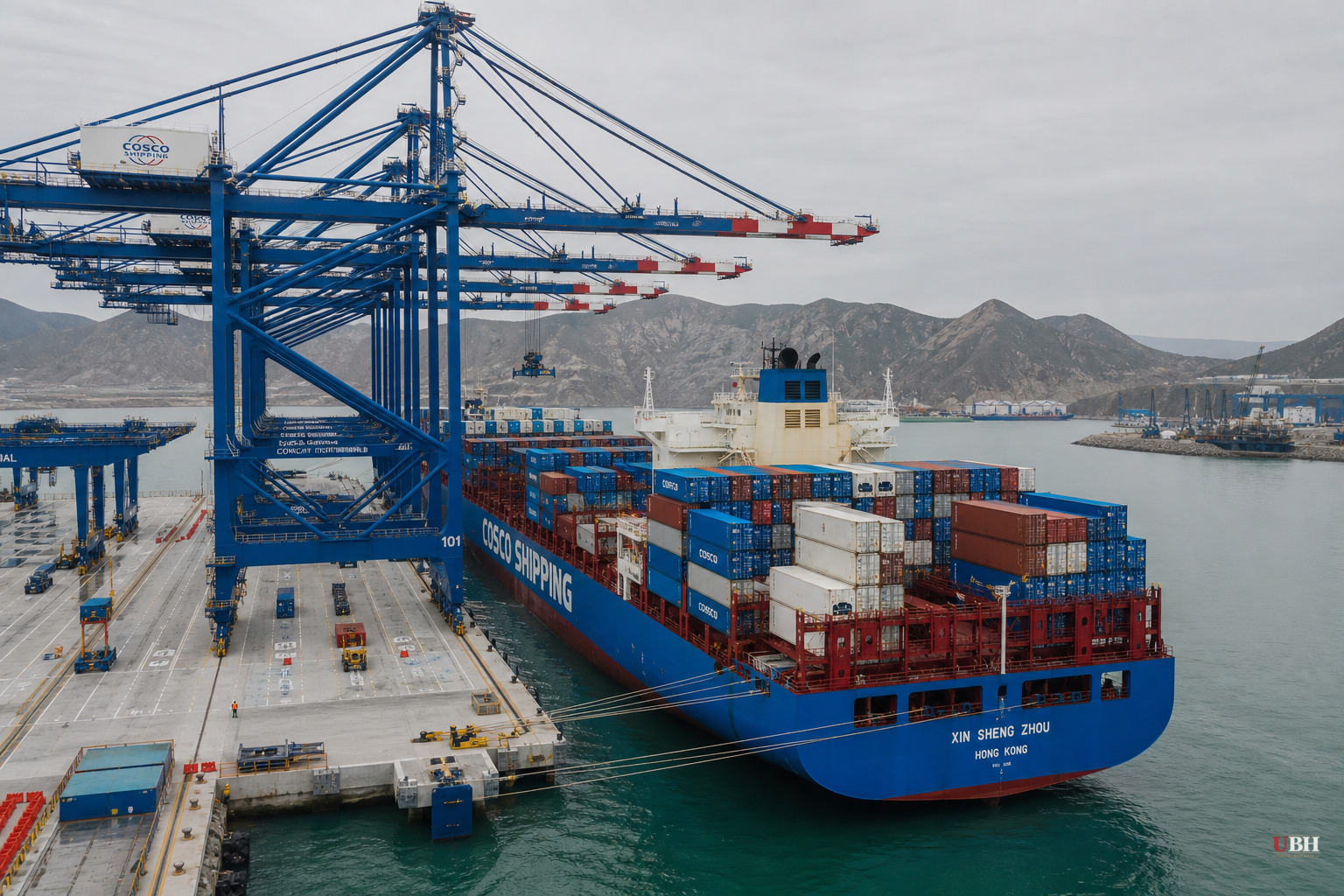
The fight is really about one thing: the Chancay megaport, inaugurated in November 2025 and built by Chinese state company COSCO with an investment projected to reach $3.5 billion, according to World Socialist Web Site (WSWS). It turns Peru into the main logistics gateway linking South America to Asia.
The numbers explain why Washington is worried. China accounts for 36% of Peru's total foreign trade versus 14% for the United States, WSWS reported. Chinese direct investment in Peru totals roughly $30 billion, compared to $6.7 billion from the U.S. This represents a country that has quietly become more economically tied to Beijing than to Washington, right in America's own hemisphere.
The Trump administration didn't sit on its hands. The Pentagon committed $1.5 billion to relocate Peru's main naval base to a site roughly 80 kilometers north of Chancay, according to WSWS. The State Department has publicly described the port as an instrument of Chinese "predatory ownership" that threatens Peruvian sovereignty. Peru's government responded by shifting regulatory oversight of the megaport away from COSCO to a Peruvian state body.
This represents a concrete win for Washington. It's also a long way short of getting COSCO out of the port entirely, which is what China-hawks in Washington actually want.
A Legitimate Strategic Worry, Not Paranoia
Critics of U.S. policy will say Washington is overreacting to a commercial port deal. That's too dismissive. A Chinese state-owned company holding critical port infrastructure in a hemisphere the U.S. has treated as its own backyard since the Monroe Doctrine is a legitimate national security concern, not a conspiracy theory. Ports controlled by Beijing can be leveraged for intelligence gathering, logistics for the Chinese navy, and economic coercion. That concern deserves to be taken seriously on its own terms, independent of who's making it.
The flip side is also true: Peru is a sovereign country, and its government signed the Chancay deal with COSCO because it needed the investment and China was willing to provide it at scale. The U.S. wasn't offering $30 billion. If Washington wants Peru to pick America over China, it needs to bring money and infrastructure to the table, not just naval base relocations and public statements calling Chinese investment "predatory."
The Political Instability Angle
Fujimori will be Peru's ninth president in a decade. That list is remarkable on its own terms: Pedro Pablo Kuczynski removed in 2018, Martín Vizcarra impeached in 2020, Manuel Merino resigning after six days, Francisco Sagasti serving as a transitional president, Pedro Castillo impeached and arrested in 2022, Dina Boluarte governing from 2022 to 2025, José Jerí removed after four months in 2026, and José María Balcázar serving as a transitional president before Fujimori's win.
This is not a stable democracy making careful, deliberate foreign policy choices. It's a country cycling through leadership so fast that any strategic pivot toward or away from China is inherently fragile. WSWS frames this instability as evidence of "imperialism" and a "terminal crisis" of Peru's political system, tying it directly to alleged U.S. interference including claims about Ambassador Bernie Navarro fabricating a "Cuban interference" narrative and a prior CIA-linked ambassador, Lisa Kenna, pressuring Peru's military in 2022. Those are serious allegations. They are WSWS's characterization and have not been independently verified or confirmed through U.S. government acknowledgment in these sources. Readers should treat them as claims made by an outlet with a clear ideological framing, not established fact.
What is verifiable: Congress did approve deployment of more than 1,200 U.S. troops on Peruvian territory for 2025 and 2026, including Marines in jungle operations and Air Force personnel in the "Resolute Sentinel" exercises, according to WSWS's reporting. That's a real U.S. military footprint expansion in Peru, whatever the motive behind it.
Fujimori takes office facing a country more economically entangled with China than with the U.S., a Pentagon that just spent $1.5 billion trying to counterbalance a Chinese-built port, and a domestic political system that has burned through eight presidents before her. Whether her "strategically balanced" position survives contact with Washington's pressure campaign, or Beijing's $30 billion footprint, is the open question nobody currently has an answer to.
Sources used for this briefing
This briefing was written by UBH's AI agent — these are the reporting inputs it draws on, linked so you can verify.


