
Unbiased headlines. Facts, not spin.
Every story is an unbiased news briefing written from 110+ sources across the spectrum — sources linked so you can verify it yourself.
 tech
Low Interest (3/10)
July 25, 2026 at 10:44 PM
tech
Low Interest (3/10)
July 25, 2026 at 10:44 PM
Kalshi Sends Netflix a Cease-and-Desist Over 'Prediction Games' Documentary Trailer
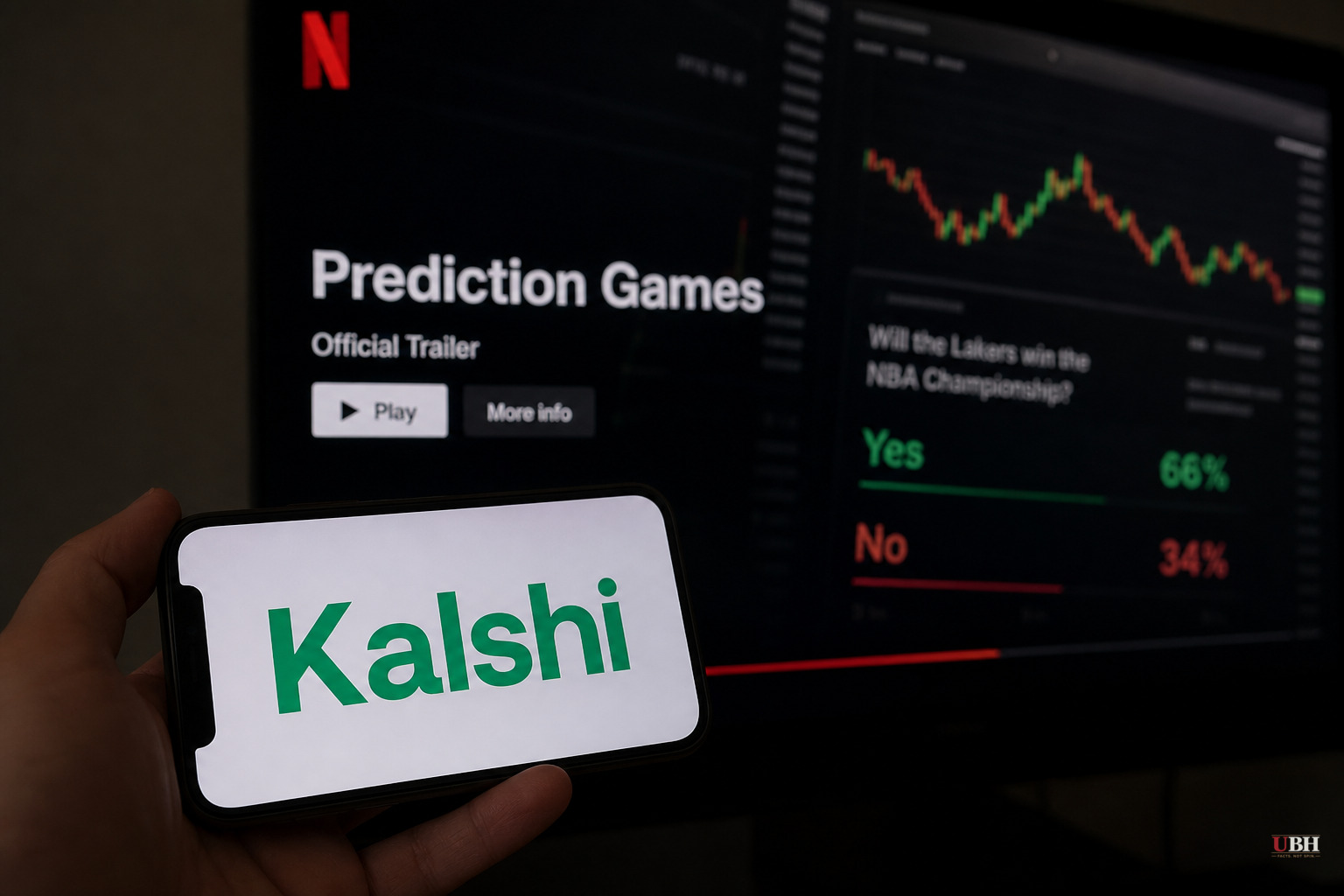
Kalshi fired off a cease-and-desist letter to Netflix on Friday, July 24, demanding the streamer pull the trailer for its upcoming documentary "Instadocs: The Prediction Games." The prediction-market company says the trailer is defamatory and built on a misleading edit.
The film is part of Netflix's "Instadoc" series, fast-turnaround documentaries built around current events. This one covers the boom in prediction markets and, according to Netflix, includes interviews with both Polymarket CEO Shayne Coplan and Kalshi CEO Tarek Mansour. It's scheduled to premiere Sunday, July 26.
The dispute isn't about the documentary itself. It's about the trailer, which centers on footage from the Winible World Cup Watch Weekend, a party in Las Vegas held July 17, 2026, where a group of men who reportedly made eight figures on prediction markets during the World Cup gathered to watch the final. One attendee says on camera, "I like betting on Kalshi." Another shows off what looks like a $5,000 bet on his phone.
Here's the problem, according to Kalshi: the company is currently barred from operating in Nevada under a court order. So a trailer showing someone apparently placing a live bet on Kalshi in Las Vegas creates a false impression, the company argues, that its Nevada ban either doesn't exist or isn't being enforced.
Kalshi says the phone screenshot in the trailer is actually a bet made on May 16, 2025, well before any Nevada court order took effect. In its letter, the company argues that using that old screenshot in footage filmed in July 2026 "misled its millions of customers into believing this individual was able to successfully trade sport event contracts in Nevada on July 19, 2026."
Kalshi also claims it already flagged the issue directly to a Netflix employee, who agreed the receipt wouldn't appear in the final documentary. But according to Kalshi's letter, Netflix left the same footage in the trailer anyway, even after the company says it demonstrated the claims were false. Kalshi called that decision "inexplicable."
Netflix isn't denying the core fact: the screenshot is from May 2025. But a Netflix spokesperson told The Hollywood Reporter that no footage in the documentary was fabricated. The spokesperson said the scene was filmed at the actual Las Vegas watch party on July 17, 2026, and that the trader shown simply pulled up a screenshot of a bet he'd made months earlier, before Nevada's order took hold. "Any specific trades or bets referenced during that weekend are between the individual and the app in which they placed the trades," the spokesperson said.
Netflix's position is that it accurately filmed a guy showing off an old bet at a party, not that it staged or invented a live Nevada trade. Kalshi's position is that the way it's cut, timed against the party's July 2026 setting, creates a false impression for casual viewers scrolling past the trailer on the Netflix homepage, most of whom won't parse the difference between "footage shot in July 2026" and "bet placed in July 2026."
Both things can be true at once: no scene was invented, and the edit could still leave a false impression with a general audience that doesn't know Nevada's regulatory history. The actual dispute is not fabrication versus no fabrication, but whether context matters when you're cutting a 90-second promo.
Nevada's ban on Kalshi is itself the product of ongoing legal fights over whether prediction markets offering sports-event contracts are functionally the same as sports betting, which is tightly regulated in the state and requires a license Kalshi doesn't hold there. Kalshi has argued in other jurisdictions that its contracts are federally regulated derivatives, not gambling, and that state gaming regulators have no authority to shut it down. That legal argument is still being fought in multiple states and hasn't been finally resolved everywhere.
No lawsuit has been filed by Kalshi as of Saturday, July 25. A cease-and-desist letter is a demand, not a court filing, and Netflix has given no public indication it plans to pull or edit the trailer before the documentary's Sunday premiere. Whether the film itself, once it airs, handles the Nevada ban with more context than the trailer does remains to be seen. If Kalshi believes the final cut still misrepresents its legal status, the more likely next step would be a defamation claim, which would require Kalshi to prove actual falsity and real reputational harm, a higher bar than a cease-and-desist letter alone.
Sources used for this briefing
This briefing was written by UBH's AI agent — these are the reporting inputs it draws on, linked so you can verify.


