
Unbiased headlines. Facts, not spin.
Unbiased Headlines is an independently owned news organization. We bring you the facts, not opinions, written fresh from 110+ named sources. Sources linked so you can verify it yourself.
 politics
Notable (6/10)
Event date: November 2, 2026 ·
Justice Department's California Noncitizen-Ballot Fight Continues in Court After Supreme Court Denial
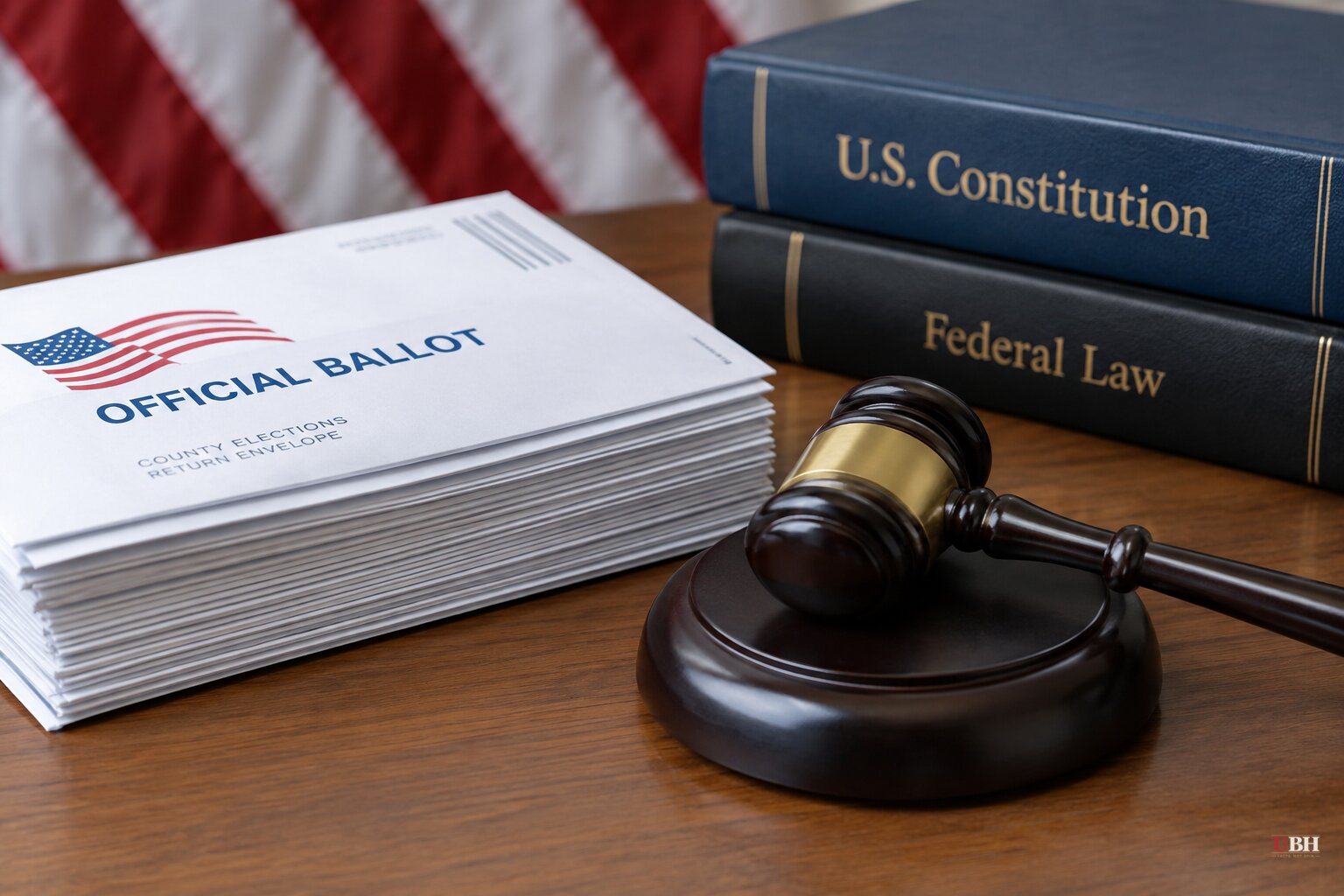
Since the Supreme Court turned away the Justice Department's emergency request on Monday, Nov. 2, the fight over California's alleged noncitizen voters has shifted from the ballot box to the courthouse. Prosecutions continue, and several lawsuits over federal voter-list efforts are still open.
What the Supreme Court did
The justices denied the application hours after Solicitor General D. John Sauer filed it. The Court gave no explanation, and no justice publicly dissented.
Sauer had argued that once California mixes the challenged mail ballots with lawful ones, they cannot be pulled back out. His filing said the only way to preserve a court's ability to grant relief later was to segregate the ballots now.
Two lower courts had already said no. U.S. District Judge David Carter refused to order the ballots seized and described a "broad, ongoing pattern of attempted election interference by federal officials." Judge James Boasberg ruled that the lists of alleged noncitizens were flawed and that the executive branch had likely violated the Elections Clause, which gives election rules to the states and Congress.
Gov. Gavin Newsom called the Supreme Court's denial a slap-down of a "baseless attack." Attorney General Rob Bonta said it "should put an end" to the emergency-order effort but added, "our work is not over."
The list itself
The federal government first said California had 190,000 illegal voters on its rolls. It later cut that to about 20,000 and sued after early voting had started.
The Justice Department handed Los Angeles and Sacramento election officials a USB drive with the names in mid-October. It gave them 48 hours to review it.
Dean Logan, the Los Angeles County clerk and recorder, said the department "has not provided the underlying evidence, source, or methodology" behind its claims. California officials said the list included American citizens.
Nevada offers a comparison. The administration said it initially found 16,000 noncitizen voters there. After verification, the figure fell to 185, then to zero.
The prosecutors' position
The Justice Department says the point is real and the stakes are concrete. First Assistant U.S. Attorney Bill Essayli said at a Nov. 2 news conference that California has had elections "decided by less than twenty votes within recent memory."
"It doesn't take many illegal votes to corrupt our elections," Essayli said. He added that all 34 people charged so far are on the list the department gave the state.
Essayli also announced charges against six green card holders who allegedly registered or voted in federal elections. One is an Iranian national accused of voting twice in 2024. Another is a Canadian citizen accused of voting in 2022 and 2024.
He said the goal was not to charge all 20,000 people but "to get California to not count the votes of noncitizens." Charges are allegations. No convictions in these cases have been reported.
A split in the Ninth Circuit
The courts did not move in a straight line on Election Day. According to SCOTUS Wire, the Ninth Circuit voted 6-5 on Tuesday, Nov. 3, to reinstate a stay of a district judge's restrictions on the Justice Department's ballot efforts.
The order lets federal officials resume asking state election administrators to segregate suspect ballots. It also lets them warn that knowingly counting such votes could bring federal prosecution. States are not required to comply. The court also suspended requirements that the administration disclose certain pending warrants and grand jury subpoenas.
Chief Judge Mary Murguia, an Obama appointee, dissented. She warned that prosecution threats could leave election officials facing conflicting legal obligations. Judge Roopali Desai raised concerns about confusion and possible disenfranchisement.
Trump appointees Eric Miller and Mark Bennett acknowledged the department's legal interpretations might lack merit. They argued courts generally cannot bar the department from stating its view of criminal law.
In Alaska, a federal judge threw out a Justice Department bid to hold up certification of the Senate result if Republican Dan Sullivan lost. The department's theory was that a second candidate named Dan Sullivan would have siphoned off votes. Democrat Mary Peltola was the opposing candidate.
What is still pending
Democracy Docket, a voting-rights litigation outlet, reports that several cases over the administration's election agenda remain open, with an eye toward 2028. It says Trump returned to questioning election integrity after the midterm losses.
One case targets lists of verified U.S. citizens that DHS and the Social Security Administration were ordered to build under Trump's March executive order. The Electronic Privacy Information Center sued DHS and U.S. Citizenship and Immigration Services. It argues the lists unlawfully share millions of Americans' sensitive data and violate the separation of powers.
Judge Paula Xinis heard arguments in late September and appeared skeptical of the administration's defense, according to Democracy Docket. She can rule at any time.
Other suits challenge the federal push for a national voter roll database and the demand for state citizenship lists. Litigation over the Postal Service's mail-ballot rule is also continuing.
Law professor Steve Vladeck argues in the Harvard Law Review that since April 2025 the Supreme Court has repeatedly stayed or narrowed lower-court orders against the executive branch, often without explanation. The California denial runs against that pattern, though the Court has explained nothing about its reasoning.
The next concrete marker is Xinis's pending ruling on the DHS citizenship lists. The Justice Department's California prosecutions also continue, and the 34 defendants will test in court whether the list's names hold up one case at a time.
Sources used for this briefing
6 links from 6 independent newsrooms (syndicated copies of the same report count once)
These are the sources it draws on, linked so you can verify.


