
Unbiased headlines. Facts, not spin.
Unbiased Headlines is an independently owned news organization. We bring you the facts, not opinions, written fresh from 110+ named sources. Sources linked so you can verify it yourself.
 politics
Major Story (7/10)
Event date: November 10, 2026 ·
Carney Says China Security Risks Are 'Much Less' Than the U.S. as He Prepares to Meet Xi at APEC
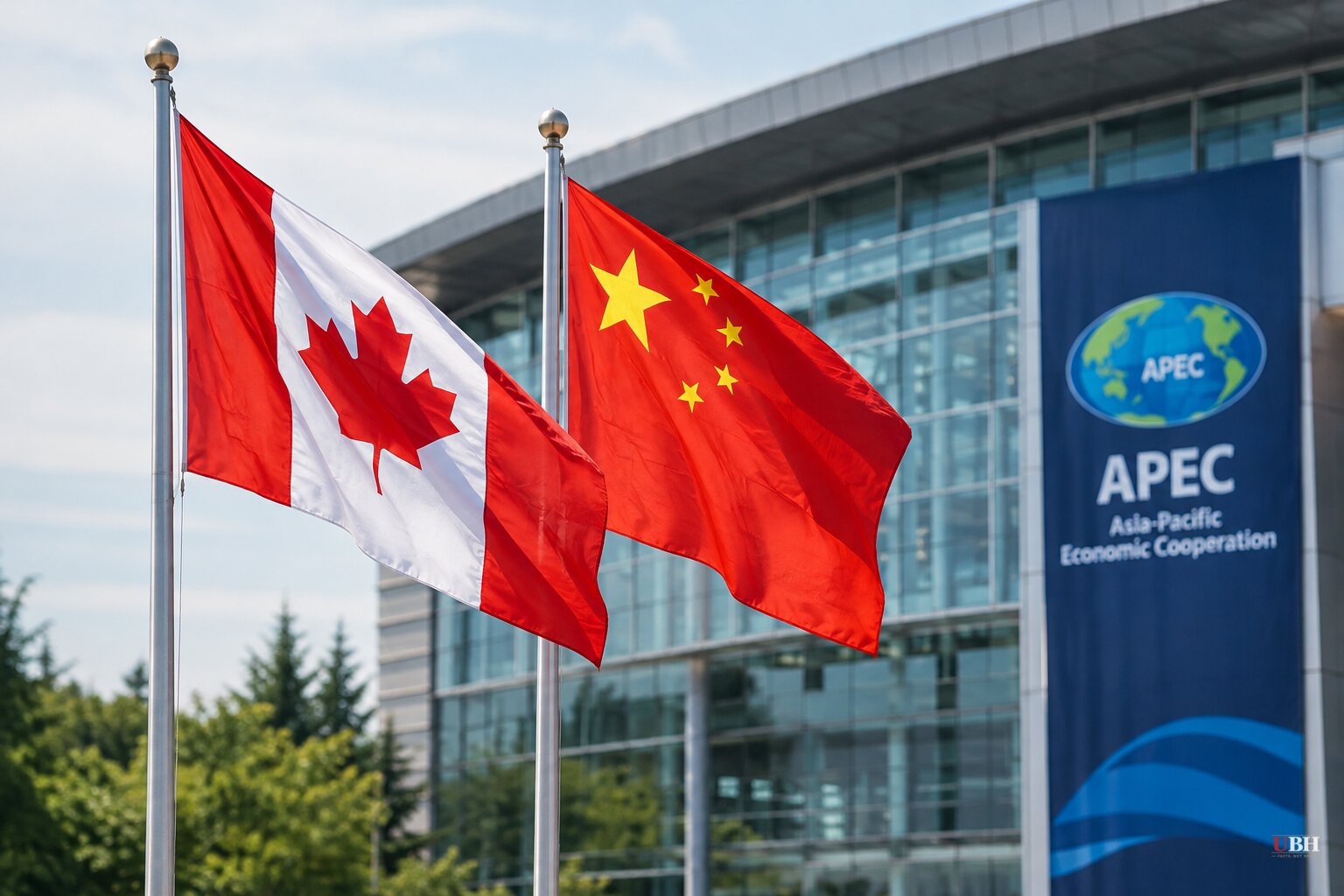
Prime Minister Mark Carney is heading into a meeting with Chinese President Xi Jinping with a very different message about China than the one he carried through the 2025 election.
Asked Tuesday, Nov. 10, about the risks of closer ties with Beijing, Carney said: "In terms of the security risks of our partnership, they are much, much, much, much less than the security risks, for example, of the United States."
The two leaders are set to meet on the sidelines of the Asia-Pacific Economic Cooperation summit in Shenzhen, scheduled for Nov. 18 and 19. It will be their second meeting in under a year, after Carney's trip to Beijing in January.
What Carney says he will tell Xi
Carney says he will press the interference issue directly. "The advantage of these meetings is you can raise issues directly and frankly, and I will be raising the importance with which we attach to the non-interference in our affairs by China and other countries," he said.
China has already denied it engages in foreign interference.
The topic is sensitive for Carney. In March, a federal document tabled in the House of Commons said he had not "proactively" raised human rights or foreign interference with Xi in January. The Prime Minister's Office said the document was submitted in error and filed a correction, saying human rights were raised "proactively at multiple levels."
A new report from Safeguard Defenders identifies more than a dozen Chinese "liaison" points in Canada. The group says they form part of a broader network Beijing uses to monitor and influence Chinese diaspora communities abroad. The report's findings are the group's own.
From "China" to "strategic partnership"
In the April 2025 leaders' debate, Carney was asked to name Canada's greatest geopolitical threat. His answer was one word: "China." The next day he said, "China is the biggest threat from a geopolitical sense."
The January 2026 Beijing visit produced a "strategic partnership." China cut its tariff on Canadian canola seed from 84 per cent to about 15 per cent and dropped tariffs on canola meal, peas, lobster and crab. Canada agreed to admit up to 49,000 Chinese-made electric vehicles a year at a 6.1 per cent tariff, down from 100 per cent.
The agreement also commits the RCMP and China's Ministry of Public Security to "increase co-operation to better combat narcotics trafficking, transnational and cybercrime, synthetic drugs and money laundering." Toronto Sun columnist Lorrie Goldstein notes the details of the memorandum are secret by mutual agreement. He points to past arrangements that led to accusations Chinese authorities were allowed to track alleged fugitives in Canada, as examined in a 2023 CBC/Fifth Estate documentary.
The financial ties are growing too. On Nov. 9, China issued 4 billion yuan (about CA$846 million) in green sovereign bonds in Canada, to be listed on the Hong Kong Stock Exchange. China's Ministry of Finance says the proceeds will fund environmentally beneficial projects. It came during the second Canada-China Economic and Financial Strategic Dialogue in Vancouver on Nov. 8 and 9, co-chaired by Vice-Premier He Lifeng, Finance Minister François-Philippe Champagne and International Trade Minister Maninder Sidhu.
Budget 2025 set a goal of doubling Canadian exports to markets outside the U.S. by 2035. In January, Carney committed to raising exports to China by 50 per cent by 2030.
The U.S. trade war behind the pivot
The shift tracks the breakdown with Washington. U.S. tariffs on Canadian goods remain in place and there is no trade deal. Last month Carney said Canada is not ready to sign one. President Trump replied that the two countries had the "concept" of a deal.
In October, Trump again said Canada will become the 51st state, adding, "We don't need them, but they need us."
Carney has also unveiled a new alliance with EU leaders earlier this month. Democrats gained in last week's U.S. midterms and have said they want to end Trump's tariffs on Canada, but for now Ottawa still has to deal with the Trump administration.
Security experts say the threat is the same
Vina Nadjibulla, co-founder and CEO of the Centre for Strategic Statecraft, says the relationship has improved but the "serious national and economic security threats to Canada ... have not fundamentally changed."
"What has changed is not China's behaviour but Canada's strategic circumstances and the Carney government's approach," she told CBC News. She also sees reasons for the shift: "With growing uncertainty in our relationship with the United States, there are compelling reasons to stabilize relations with Beijing, pursue economic opportunities and diversify our trade."
Jody Thomas, national security adviser to Justin Trudeau, said on Rosemary Barton Live that despite the re-engagement, China remains a security threat.
Goldstein is more pointed. He argues Carney is now following the advice he says Xi gave him at last year's APEC summit: "don't lecture me in public." He cites Carney's response in April to testimony from China expert Margaret McCuaig-Johnston, who told a Commons committee that China uses Uyghur forced labour to build aluminum components for its electric vehicles. Goldstein calls the response tepid. Carney described forced labour as a global problem and said Canada takes it seriously.
Carney's position is that Canada can talk frankly with Beijing while building trade, and that his government's security exposure through China is limited. He has not published a public assessment backing the comparison with the United States.
What to watch in Shenzhen
The meeting will be held behind closed doors. Whatever readout Ottawa and Beijing release will be the first public account of whether interference, human rights and the RCMP cooperation memorandum came up, and in what terms. Carney has said he will raise interference. China's position, so far, is that there is nothing to raise.
Sources used for this briefing
5 links from 5 independent newsrooms (syndicated copies of the same report count once)
These are the sources it draws on, linked so you can verify.


