
Unbiased headlines. Facts, not spin.
Unbiased Headlines is an independently owned news organization. We bring you the facts, not opinions, written fresh from 110+ named sources. Sources linked so you can verify it yourself.
 politics
Major Story (8/10)
Event date: November 10, 2026 ·
Democrats Flip 12 State Legislative Chambers and End GOP Control of Most Statehouses Held Since 2010
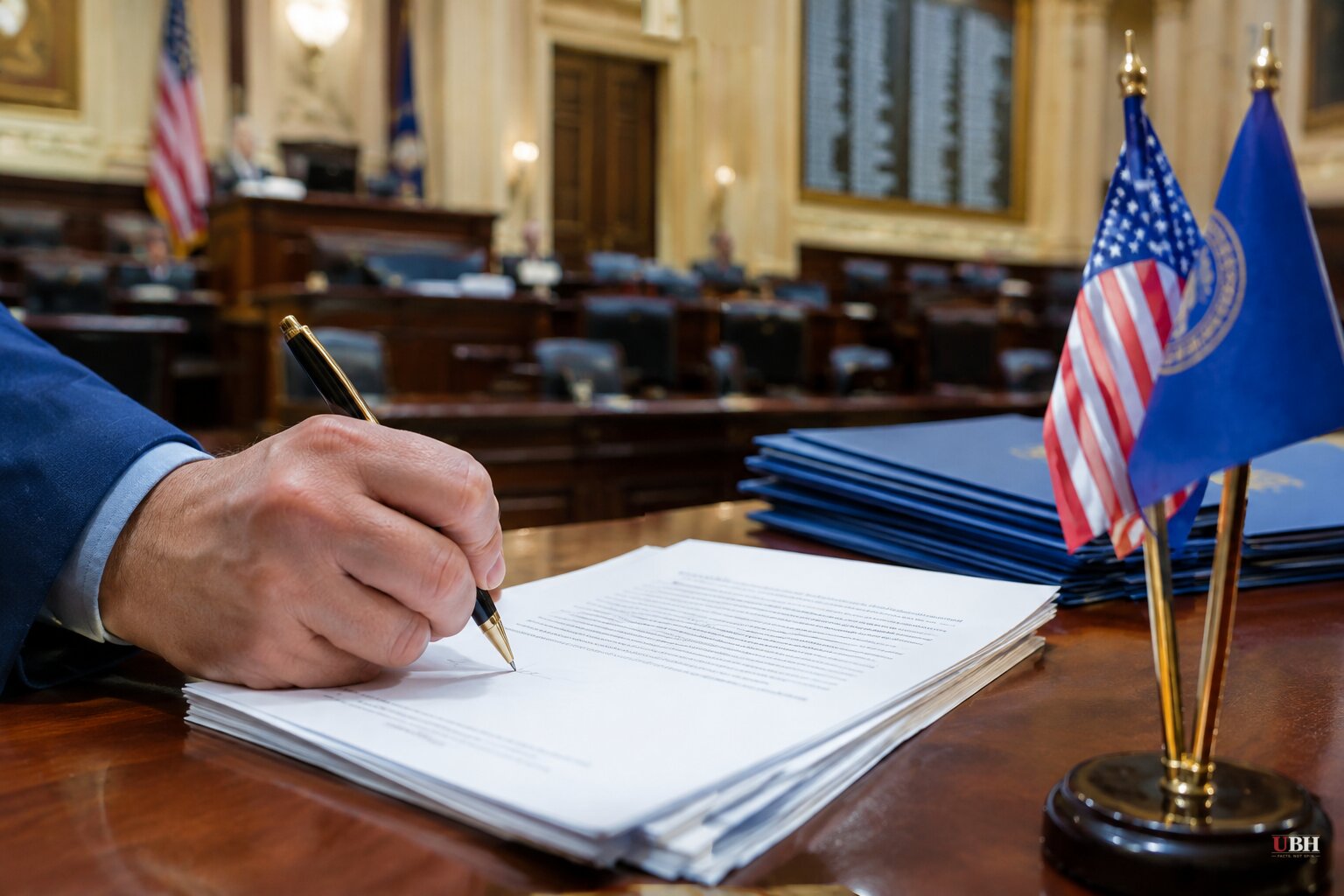
After Democrats won the Senate and a House majority in Tuesday's midterm elections, the attention has moved from Washington to the statehouses. Those results are now mostly in, and they end a Republican grip on state legislatures that began with the 2010 Tea Party wave.
The National Conference of State Legislatures counts 39 Democratic-controlled chambers before the election and 52 after, a net of 12 flips. A flip of the Alaska House would make it 13. Katy Owens Hubler, who directs NCSL's Elections and Redistricting Program, said this is the Democrats' high point of chamber control since before 2010.
The count
Republicans entered Election Day controlling 28 legislatures to the Democrats' 18, with the rest divided. The tally now depends on who is counting and which races are still open.
NCSL has Democrats controlling 25 states, Republicans 21 and four divided, with Alaska the likely fourth divided state. NPR's data and Fox News count 24 Democratic and 22 Republican states, with others divided or pending. Nebraska's officially nonpartisan unicameral legislature is counted as Republican-led. Either way, Democrats lead.
On governors, Republicans held 26 offices and Democrats 24 going in. NCSL puts Democrats at 30 if they win Alaska and Kansas, where they lead but the races are uncalled. The Associated Press counts at least 28 Democratic governors in 2027, with pickups in Georgia, Iowa, Ohio and Texas.
Hubler said Republicans have lost "400-some-odd seats" and could pass 500, but she called that speculative while ballots are still being counted. For comparison, she said Democrats lost more than 700 seats in 2010. In 20 of the last 22 midterms, the president's party has lost state seats.
Who holds what
Democrats gained six new trifectas, meaning both chambers plus the governor's office. NPR cites Michigan, Minnesota, Wisconsin, Nevada and Arizona among them, and NCSL lists Pennsylvania as a new trifecta as well. Democrats also broke Republican trifectas in Georgia, Iowa, New Hampshire, Ohio and Texas.
The individual milestones are lopsided by recent standards:
- Pennsylvania: the first Democratic Senate majority since Jimmy Carter was president.
- Arizona: the first Democratic trifecta since 1966.
- Texas: Democrats are poised to run the House for the first time in 24 years.
- Georgia: a Democratic House majority for the first time in more than 20 years. Rep. Carolyn Hugley is the party's nominee for speaker.
- Wisconsin: both chambers flipped, breaking a 16-year Republican majority.
Democratic wins also broke GOP supermajorities. In Florida, that removes the Republican power to override a governor's veto. Supermajorities also fell in the Indiana, Kansas, Ohio and South Carolina Houses and in both Missouri chambers.
The agenda
Arizona Gov. Katie Hobbs has tried repeatedly to limit the state's billion-dollar school voucher program, and the Republican legislature blocked her. Arizona Democrats have also said they want relief on rent, utilities and childcare.
Pennsylvania Gov. Josh Shapiro has promised to work with a Democratic legislature on a $15 minimum wage, stronger abortion rights and affordable housing. In Michigan, Gov.-elect Jocelyn Benson is seeking a state Voting Rights Act and open-records legislation.
Democratic state Rep. Brian Garcia told Votebeat the party's focus will be "access, ease of voting, and more collaboration with our election workers and officials." Wisconsin Democratic Party Chairman Devin Remiker put it more bluntly: "Now it's time to deliver."
Republican response
The Republican State Leadership Committee has blamed the environment, not the candidates. President Edith Jorge-Tuñón cited an "historically difficult political environment" and said Democrats poured "unprecedented resources" into these races. She said top-of-ticket results "significantly affected our candidates' ability to defy historical trends."
Democratic Legislative Campaign Committee President Heather Williams said the wins show "what is possible when you put statehouses at the center of a national strategy." The committee called the result Democrats' best performance since the Watergate scandal.
The voters behind these results were angry about prices. The AP reported the electorate is frustrated over gas costs, inflation, housing and the cost of living. Democrats in power will have to answer on those same issues.
Redistricting
President Trump successfully urged eight Republican states, Texas among them, to redraw congressional maps before this election. The AP reports the effort backfired, with Republicans losing most of the Democratic-held seats they targeted. Democrats in California drew new lines in response.
The AP reports Democrats in Wisconsin and other battleground states now face pressure to redraw congressional maps in kind. Even under Republican-favored lines, Wisconsin Democrats picked up two U.S. House seats, which leaves the state's delegation evenly split in 2027. States will next redraw maps after the 2030 census.
Still open
Alaska's legislative and governor's races are uncounted, as is the Kansas governor's race. Georgia's final chamber tallies are also pending. Those results will settle the final count of Democratic-controlled legislatures and whether Democrats hold 28 or 30 governorships.
Sources used for this briefing
7 links from 6 independent newsrooms (syndicated copies of the same report count once)
These are the sources it draws on, linked so you can verify.


