
Unbiased headlines. Facts, not spin.
Every story is an unbiased news briefing written from 110+ sources across the spectrum — sources linked so you can verify it yourself.
 politics
Notable (6/10)
July 19, 2026 at 08:29 PM
politics
Notable (6/10)
July 19, 2026 at 08:29 PM
Judge Tosses DOJ Lawsuit Seeking New Mexico's Unredacted Voter Data, 14th Loss for Federal Effort
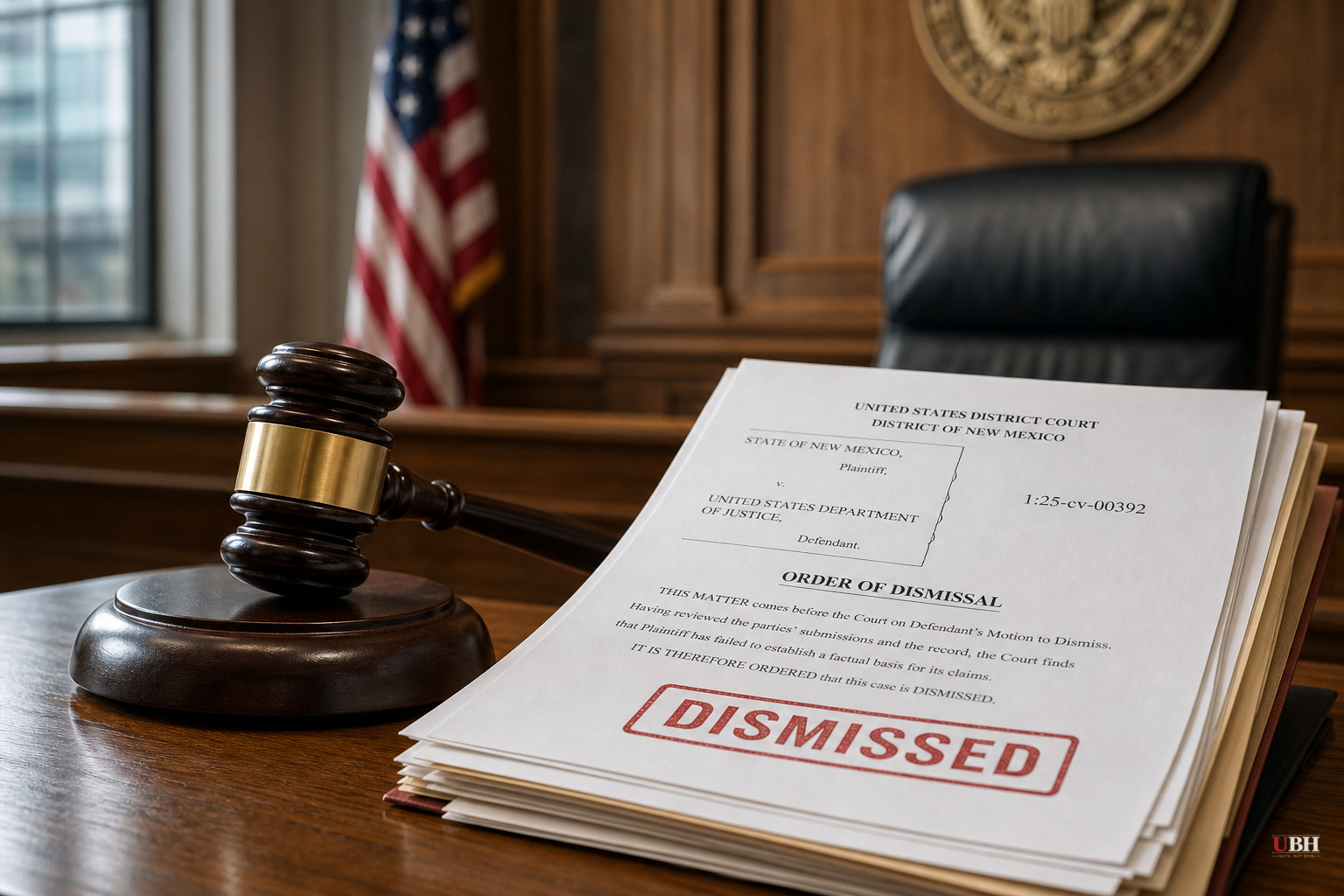
U.S. District Judge Judith C. Herrera dismissed the Justice Department's lawsuit against New Mexico on Tuesday, July 14, rejecting the federal government's demand for unredacted personal data on every registered voter in the state.
The ruling is blunt. Herrera wrote that "the DOJ's Demand Letter fails because it altogether lacks an identifiable 'basis.'" She found DOJ never pointed to any factual suggestion that New Mexico violated the National Voter Registration Act or the Help America Vote Act, never showed a pattern of noncompliance, and never explained why it needed unredacted Social Security numbers and birth dates to check the state's compliance with federal law.
The National Voter Registration Act and Help America Vote Act exist to keep voter rolls accurate. They don't hand the federal government a blank check to build a national database of every American's Social Security number just because it asks.
The Broader Pattern
This isn't an isolated loss. According to New Mexico Secretary of State Maggie Toulouse Oliver's office, courts have now dismissed 14 similar DOJ lawsuits in other states. A federal judge in New Hampshire threw out a nearly identical case on June 29, with U.S. District Judge Joseph Laplante ruling in a 26-page opinion that state-generated voter records fall outside what DOJ is entitled to demand.
Common Cause, the advocacy group that intervened in the New Mexico case alongside a coalition of individual voters, says DOJ has filed parallel lawsuits in 30 states and Washington, D.C. Molly Swank, Common Cause's New Mexico Executive Director, called the ruling a win against what she described as an effort to build "an unauthorized national database that would have been a goldmine for hackers and a tool for intimidation."
Toulouse Oliver, a Democrat, was more pointed when the lawsuit was first filed in December, calling it part of "the Trump administration's assault on free and fair elections," according to New Mexico Political Report. After the dismissal, she struck a more measured tone: "Federal and state legal guardrails on social security numbers and dates of birth exist for the identity protection of every voter in our state. I absolutely will not risk any disclosure of voters' private data, as it could carry very real and severe consequences for the personal lives of New Mexicans participating in our democratic process."
The Case for the Other Side
DOJ's argument, even though it hasn't won in court yet: federal election-integrity law does give Washington some role in verifying that states are properly maintaining accurate voter rolls, removing ineligible voters, and complying with list-maintenance requirements under HAVA and the NVRA. Proponents of stricter voter-roll audits argue that without access to underlying data, it's nearly impossible for outside verification to happen at all, and states asserting privacy concerns can effectively self-certify compliance with little independent check.
Voter rolls with duplicate registrations, deceased voters still listed, or address errors are a real maintenance issue in every state, and Congress built HAVA specifically to address it. The dispute here isn't whether that oversight interest exists. It's whether DOJ, in this specific demand letter, ever showed its work: no cited pattern of violations in New Mexico, no explanation of why unredacted Social Security numbers specifically were necessary rather than some more limited or anonymized dataset. Judge Herrera's ruling is about that missing evidentiary link, not a wholesale rejection of federal list-maintenance authority.
No fraud has been alleged or proven in New Mexico's voter rolls in this case. DOJ's own filings didn't claim a specific violation had occurred. That's why 14 courts in a row have ruled against the government: the legal standard requires some factual basis, and DOJ hasn't cleared that bar anywhere it's been challenged.
What's Unresolved
DOJ has not said whether it will appeal the New Mexico ruling or the New Hampshire decision. It did not respond to a request for comment on the New Mexico case, according to The Epoch Times.
With lawsuits still pending or unresolved in a reported 30 states and D.C., the legal question is far from settled nationally. Every court that has ruled so far has sided with the states. Whether DOJ revises its demand letters to include the specific factual showing judges keep saying is missing, or takes one of these cases to an appeals court for a broader ruling on its authority, will determine whether this fight is over or just getting started.
Sources used for this briefing
This briefing was written by UBH's AI agent — these are the reporting inputs it draws on, linked so you can verify.


