
Unbiased headlines. Facts, not spin.
Unbiased Headlines is an independently owned news organization. We bring you the facts, not opinions, written fresh from 110+ named sources. Sources linked so you can verify it yourself.
 politics
Notable (5/10)
Judge Lets Intercept and Press Freedom Group Seek Trump Media Records on Paid Early Access to Truth Social Posts
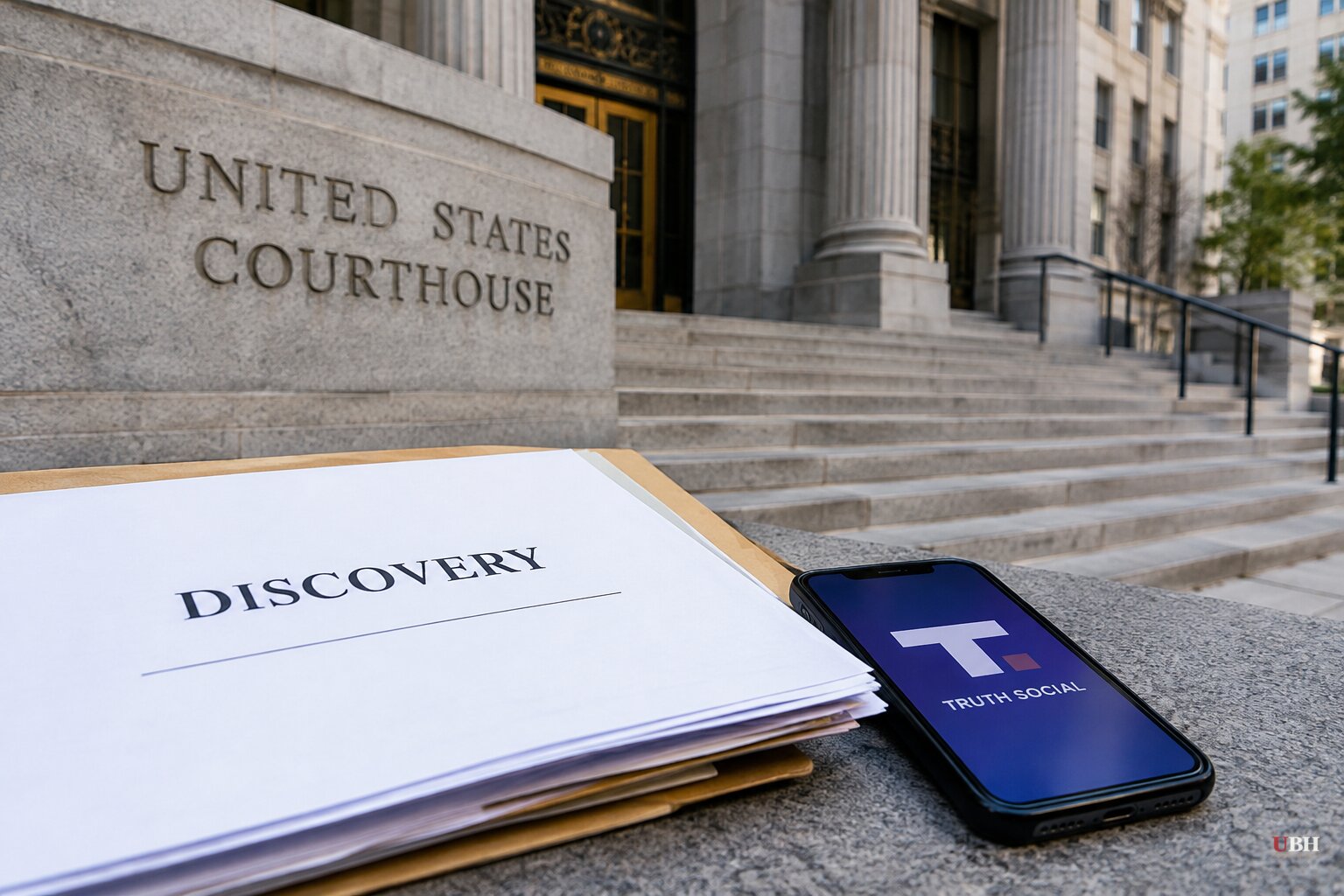
A federal judge has cleared the way for two plaintiffs to dig into who is buying early access to President Donald Trump's Truth Social posts, and what they get for the money.
On Tuesday, Nov. 24, Judge J. Paul Oetken of the Southern District of New York ordered that an initial phase of limited discovery "shall commence at this time" with a deadline of January 29, 2027. The plaintiffs are The Intercept and the Freedom of the Press Foundation.
The target is Trump Media & Technology Group, which the order treats as a third party. Trump Media is not a named defendant, and the order does not compel Trump himself to reveal anything.
What the plaintiffs can ask for
Oetken wrote that the plaintiffs may seek discovery from Trump Media on the operation of Truth Social API, "including but not limited to the marginal speed advantage and archival access obtained by subscribers." The order also covers the uptake in membership. The plaintiffs describe the scope as including whether other media companies have bought subscriptions and Trump Media's communications with the defendants.
The judge said he weighed the parties' letter briefs, the briefing on the plaintiffs' motion for a preliminary injunction and the defendants' motion to dismiss, and arguments at a November 19 conference. He concluded limited discovery "is warranted."
Both of those motions are still pending.
The product and the price
Trump Media announced Truth API on July 16, 2026, and launched it August 1. The company called it a "direct, licensed, real-time feed" of the platform's "most market-moving Truths."
At launch the feed covered 10 high-profile accounts. Those include Trump's, Vice President JD Vance's, HHS Secretary Robert F. Kennedy Jr.'s, FBI Director Kash Patel's and the White House's.
In August, Trump Media said it had signed more than 10 customers, mostly high-frequency trading firms, paying between $60,000 and $100,000 a month. The company has not named them. That is the information the plaintiffs now have a route to.
The lawsuit
The suit names Trump, Natalie Harp, Daniel Scavino, the Executive Office of the President and the White House Office. It alleges that selling preferential access to Truth Social posts alongside the president's official use of the platform violates the First Amendment rights of the press and public to equal access to government communications.
The complaint says Trump has published roughly 11,000 posts or reposts on Truth Social since returning to office in 2025. The plaintiffs argue he uses the platform to communicate matters relating to his presidency, not merely personal opinion.
The Intercept and the Freedom of the Press Foundation called the ruling "a crucial victory." The Intercept said it offers "a chance to peel back the layers on the president's scheme to enrich himself through his public office." That is the plaintiffs' characterization. No court has made such a finding, and no charge or investigation has been announced.
The defendants' answer
The defendants say the practical advantage is small. According to their filing, the speed edge is approximately 50 milliseconds.
That figure is now a factual question the discovery can test, because the order lists the "marginal speed advantage" as a subject. Fifty milliseconds is nothing to a human reader. For an algorithmic trading system reacting to a market-moving post, it may be the entire product. Trump Media priced the service as though it is worth something.
The defendants have also moved to dismiss the case. The sources do not detail their legal arguments beyond that motion and the speed claim.
Why the facts matter
Trump Media has been public since 2024, following a SPAC merger. Truth Social is a private company's product, and the company is free to sell data feeds. The legal fight is over something narrower: whether a president's official announcements, posted on a platform tied to his own business, can be sold ahead of the public without a constitutional problem.
The same question would arise for any officeholder who sold early access to official statements, whatever the party. Whether the posts count as government communications is the court's call, and the order does not answer it.
What the discovery could answer is simpler. Who is paying, how many customers there are, how much of a head start they get, and what Trump Media and the White House said to each other about it.
The discovery window closes January 29, 2027. The preliminary injunction request and the motion to dismiss remain undecided.
Trump Media, the White House, The Intercept and the Freedom of the Press Foundation did not respond to a Newsweek request for comment, the outlet said.
Sources used for this briefing
5 links from 3 independent newsrooms (syndicated copies of the same report count once)
These are the sources it draws on, linked so you can verify.


