
Unbiased headlines. Facts, not spin.
Unbiased Headlines is an independently owned news organization. We bring you the facts, not opinions, written fresh from 110+ named sources. Sources linked so you can verify it yourself.
 politics
Major Story (7/10)
Event date: October 26, 2026 ·
Judge Furman Rules DOJ's Firing of Maurene Comey Violated Civil Service Law, Orders Back Pay
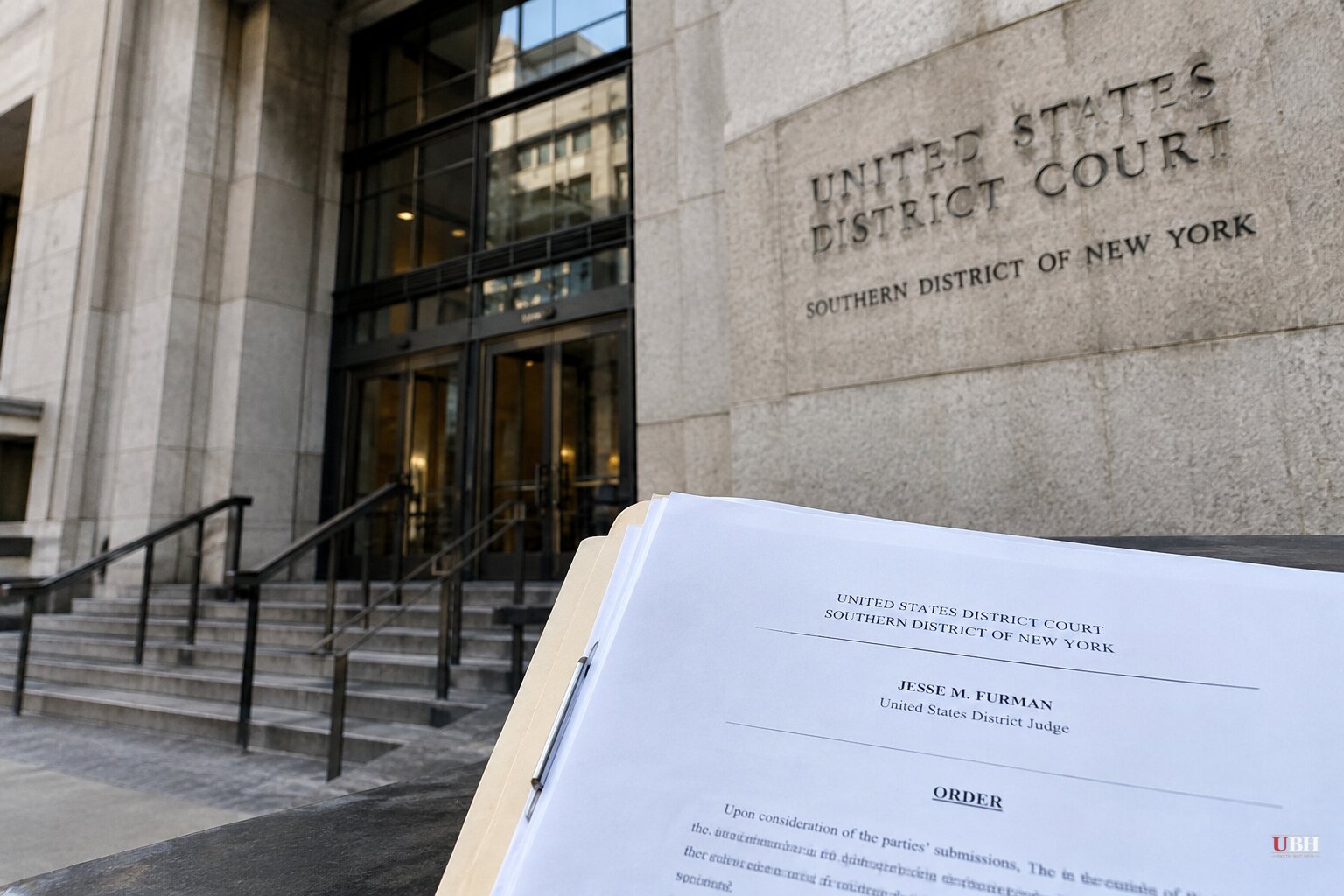
Since the Justice Department fired assistant U.S. attorney Maurene Comey on July 16, 2025, and she sued that September, the case has turned on one question: can the attorney general remove a career prosecutor with no cause and no notice?
On Monday, Oct. 26, U.S. District Judge Jesse Furman of the Southern District of New York said no. His 55-page order found the firing unlawful, granted Comey retroactive reinstatement, and awarded back pay.
What the judge ruled
The facts at the center of the ruling are not in dispute. The Justice Department acknowledged in court filings that Comey was not fired for cause and that her performance was not the reason. She received no advance notice and no chance to respond.
Furman did not say the attorney general lacks the power to fire assistant U.S. attorneys. "Yes, the Attorney General is authorized by law to remove an AUSA," he wrote. But the attorney general is also limited by the Civil Service Reform Act to doing so "only in a particular manner and only for certain reasons."
The law allows removal only "for such cause as will promote the efficiency of the service," the judge said. "And Comey's removal indisputably violated the CSRA."
Back pay runs from July 16, 2025 to Dec. 20, 2025, the day Comey started a new job on the white-collar defense team at Patterson Belknap. That is about five months of salary.
The Article II argument
The department did not rest on the statute. It argued that Article II of the Constitution, which vests executive power in the president, bars Congress from restricting the removal of assistant U.S. attorneys. It also argued that recent Supreme Court decisions undermined older precedent protecting such employees.
Furman rejected both points. The first, he wrote, "flies in the face of nearly two centuries of Supreme Court precedent, rooted in the text of the Appointments Clause, holding that Congress may generally restrict the removal of 'inferior officers.'" On the second, he said a lower court may not accept the claim that recent decisions fatally undermined that precedent, and added that it "is also without merit."
He warned that accepting the department's position "would be to unsettle the very equilibrium established by this Nation's constitutional system." He also wrote that it would "risk a return to the spoils system that Congress has sought to end since the nineteenth century."
The judge also wrote that the defendants "invented a new and expansive theory of executive power" and have used it to remove other executive branch employees who have long held removal protections.
DOJ's response
A Justice Department spokesperson said the department "disagrees with this decision and will appeal in due course." The spokesperson added that the judgment does not address Comey's First Amendment claim, and that an appeal cannot be filed until that part of the case is resolved.
The department's legal position is that the Constitution gives the president and his attorney general authority over who prosecutes in the executive branch. Its filings also argued that the CSRA itself says assistant U.S. attorneys are subject to removal by the attorney general. Furman's ruling accepted that the authority exists and held that Congress conditioned how it can be used.
Opponents of the administration's broader theory, cited in reporting by Government Executive, have called the dependence on recent Supreme Court language a mistake of treating dictum, a passing remark by a court, as binding precedent. The Justice Department has not conceded that point.
Motive is still undecided
Comey's suit claims she was fired "solely or substantially because her father is former FBI Director James B. Comey, or because of her perceived political affiliation and beliefs, or both." She says the government gave "no legitimate explanation."
Furman's ruling rests on the civil service statute and the separation of powers. By the department's own account, it does not address the First Amendment claim, which is where the question of political motive would be tested. The administration has not offered a reason for the firing beyond Article II authority. Her father, whom Trump fired as FBI director in his first term, has since been charged by the administration with federal crimes.
Comey's lawyers Ellen Blain, Nicole Gueron, Deepa Vanamali and Margaret Donovan issued a joint statement: "This hard-earned victory belongs to Ms. Comey, to all civil servants and to all fighting for the rule of law." They said the decision "reaffirms our bedrock system of checks and balances: the president is not above the law."
What comes next
Carl Tobias, a law professor at the University of Richmond, said he expects the government to appeal to the Second Circuit, expects that court to affirm Furman, and assumes the administration would then seek Supreme Court review. If the justices decline to hear the case, the appeals court decision would stand.
Government Executive described the ruling as a marker ahead of other litigation over so-called Article II firings, though Furman's decision binds no other court.
The open question is sequencing. Until Furman resolves the First Amendment claim, the department says no appeal can be filed, which leaves the central Article II dispute with the Second Circuit on hold.
Sources used for this briefing
7 links from 7 independent newsrooms (syndicated copies of the same report count once)
These are the sources it draws on, linked so you can verify.


