
Unbiased headlines. Facts, not spin.
Every story is an unbiased news briefing written from 110+ sources across the spectrum — sources linked so you can verify it yourself.
 tech
Notable (5/10)
July 27, 2026 at 01:25 PM
tech
Notable (5/10)
July 27, 2026 at 01:25 PM
Jodrell Bank Observatory Loses UK Funding, Faces Closure by April 2028
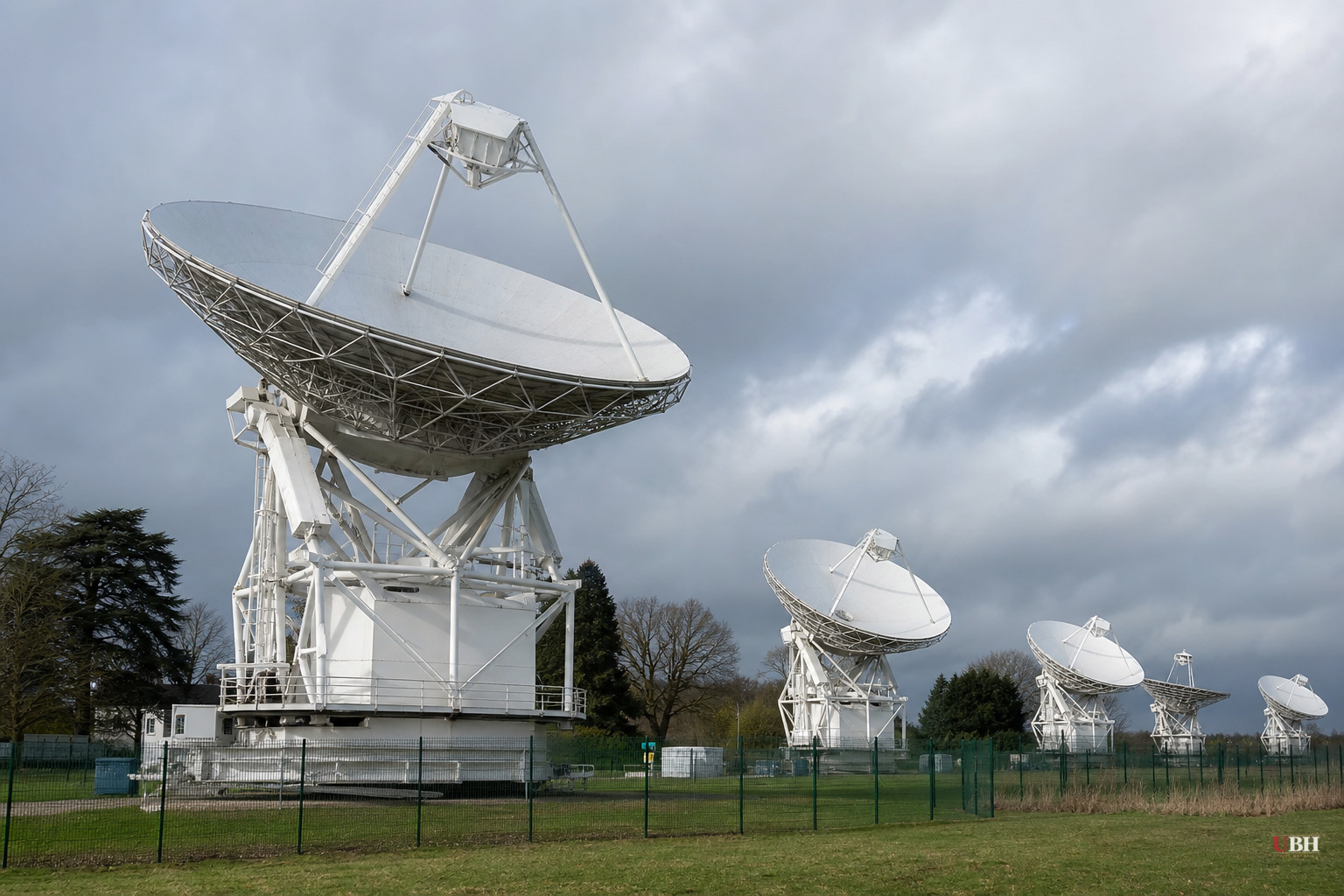
Jodrell Bank Observatory has been studying the universe from a field in Cheshire since 1945. That run is now set to end on April 1, 2028, after UK Research and Innovation confirmed it's pulling the plug on funding, according to the BBC and Research Professional News.
The cut, confirmed by UKRI on July 27, zeroes out support for e-Merlin, the network of seven radio telescopes anchored by Jodrell Bank's Grade I-listed Lovell telescope. Six other dishes across the UK, including one in Cambridge, are part of the same network and face the same fate.
The number at the center of this is small by government standards: £2.8 million a year, according to the Chester and District Standard. UKRI runs an annual budget of just under £10 billion. But the agency that actually funds Jodrell Bank, the Science and Technology Facilities Council, says it needs to save close to £700 million by 2029-30 to deal with cost overruns elsewhere in its physics and nuclear research portfolio, according to Research Professional News.
The real issue: STFC blew its budget on other projects and is now looking for line items to cut.
What else got hit
Jodrell Bank isn't alone. UKRI also confirmed cuts to UK participation in the James Clerk Maxwell Telescope in Hawaii, which is used to image supermassive black holes, according to the BBC. Two instruments planned for the Extremely Large Telescope in Chile, built specifically to hunt for signs of life on other worlds, lost their funding too.
The Vera Rubin Observatory in Chile, which only started operating last year and is building the first continuous movie of the universe, is taking a 20% funding cut. Research Professional News reported that two cameras supplying data to that project, Hipercam and Ultracam, are also being defunded.
Add to that a scaled-back UK role at CERN, where Britain is skipping a second chance to fund an upgrade to a major experiment, plus cuts to quantum technology research and an Electron-Ion Collider project that would have given UK scientists access to a new US facility. Nine projects total lost funding in this round, according to Research Professional News.
The jobs and the science
Twenty-eight jobs are directly at risk at the Jodrell Bank site, and nearly 3,000 researchers who use the facility could feel the impact, according to both the BBC and the Guardian.
Prof Simon Garrington, associate director of Jodrell Bank, told the BBC staff were "devastated." Prof Catherine Heymans, Scotland's astronomer royal, called the decision on the observatory "just devastating" in comments to the Guardian, noting Jodrell Bank has been "delivering spectacular discovery science for decades."
Jodrell Bank isn't some obscure lab. It earned UNESCO World Heritage status in 2019. During the Cold War it tracked Soviet missile activity for NATO. The Lovell telescope is the world's third-largest movable instrument of its kind, according to the Chester and District Standard.
UKRI's defense
Prof Michele Dougherty, STFC's executive chair, framed this as the result of a genuine six-month consultation process, not an arbitrary axe. "After listening to our community we have protected core discovery research within particle physics, astronomy and nuclear, through a more focused portfolio that safeguards postdoctoral researchers, protects PhD opportunities and maintains the UK's international leadership," she said, according to Research Professional News.
"These are never easy choices, but we have made what we feel are the right decisions to bring STFC to a sustainable financial position by 2029-30," Dougherty added.
A UKRI spokesperson told the Guardian the decision followed "a rigorous prioritisation process to focus investment on the areas that will deliver the greatest long-term scientific capability, impact and value for the UK," and pointed to investment in "the next generation of world-leading radio astronomy facilities."
It's a fair institutional defense, and it deserves to be taken seriously rather than waved off as bureaucratic spin. STFC didn't invent this shortfall out of nowhere. Research Professional News reported the agency is dealing with roughly £700 million in cost overruns across its broader physics and nuclear portfolio, and Dougherty says the review protected postdoc and PhD positions elsewhere in the system. Prioritizing means something loses.
What's unresolved
Research Professional News flagged a political wrinkle worth watching: Jodrell Bank sits in the patch overseen by Greater Manchester mayor Andy Burnham, who has made boosting regional economies a signature promise. A high-profile scientific closure in the north of England cuts directly against that pitch.
The other open question is whether £2.8 million a year is actually findable from somewhere else before April 2028. UKRI has left that door open. Whether the University of Manchester, private donors, or another government department step in before the deadline is the thing to watch over the roughly 20 months remaining until closure.
Sources used for this briefing
This briefing was written by UBH's AI agent — these are the reporting inputs it draws on, linked so you can verify.


