
Unbiased headlines. Facts, not spin.
Every story is an unbiased news briefing written from 110+ sources across the spectrum — sources linked so you can verify it yourself.
 politics
Notable (6/10)
July 27, 2026 at 01:04 AM
politics
Notable (6/10)
July 27, 2026 at 01:04 AM
Jewish Students at Over 10 UK Universities Report Routine Antisemitism, Hide Their Identity to Avoid Abuse
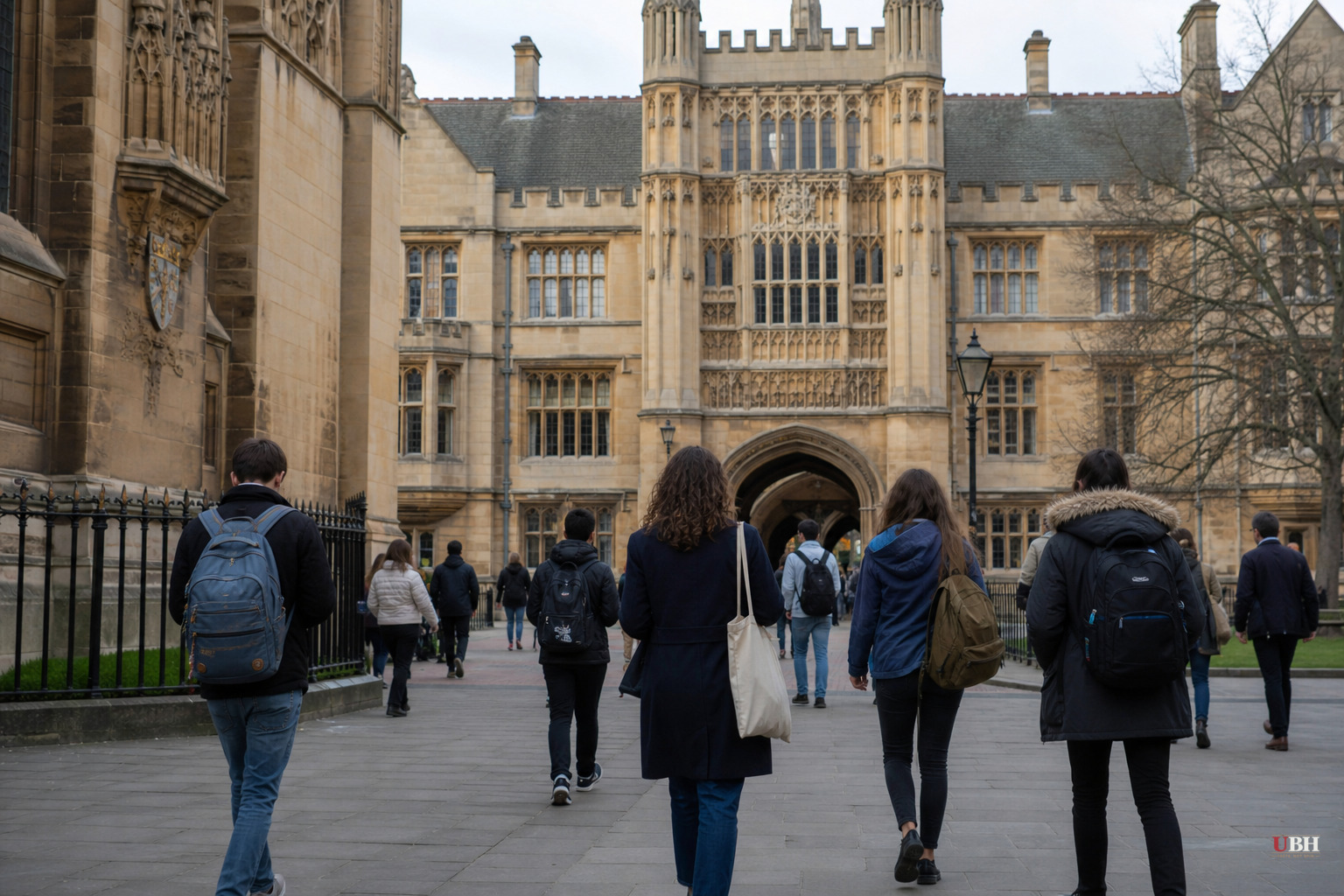
A Jewish student at Cardiff University says his first week on campus in 2023 was "terrifying." His name is Oliver, he's 21, and his first week happened to coincide with the October 7, 2023 Hamas attack on Israel, which killed roughly 1,200 people and took hundreds hostage. Israel's military response in Gaza has since killed more than 70,000 Palestinians, according to estimates cited by the BBC.
That single week set the tone for three years, Oliver told the BBC. He stopped speaking Hebrew outside his home. He started hiding his Star of David pendant when he was on campus. He says the abuse became "relentless" — overheard conversations questioning whether Jewish history is "fake," pamphlets circulating with the same message, and house parties where classmates started calling him "Netanyahu" the moment they learned he was Jewish.
"You found out my religion and you've decided I'm a bad person," he said.
Oliver isn't an isolated case. Students at more than 10 universities across England and Wales told the BBC they've faced similar hostility and described what they call a "culture of antisemitism" that's become normalized rather than shocking. That's a serious charge. It deserves to be taken at face value rather than waved off as campus drama.
What Counts as Antisemitism, and Why It Matters Here
Some of what these students describe is straightforward: slurs, threats, mockery tied directly to their religion. But other incidents blur the line between criticism of Israeli government policy and hostility toward Jewish people as a group. Oliver said some of what he witnessed at pro-Palestine protests on campus crossed that line.
The International Holocaust Remembrance Alliance's working definition of antisemitism explicitly states that holding Jewish people collectively responsible for the actions of the Israeli government is a form of antisemitism. That's not a fringe position. Dozens of governments and institutions, including the UK government, have adopted that definition. Calling someone "Netanyahu" because he's Jewish isn't political commentary. It's bigotry wearing a political costume.
That said, campuses are also sites of legitimate, heated debate over Israeli policy in Gaza, where the death toll the BBC cites — more than 70,000 Palestinians — is a humanitarian catastrophe by any measure. Students protesting that campaign have a right to do so loudly and without being smeared as bigots simply for criticizing a foreign government's military conduct. The problem arises when protest curdles into targeting individual Jewish students for who they are, not what they've said or done.
The Institutional Response Isn't Matching the Complaints
The Union of Jewish Students published a report in March 2026 calling for new, enforceable standards governing how universities investigate and punish hate crimes on campus. That's a specific, reasonable ask — not a vague demand for "more awareness," but a call for actual accountability mechanisms with teeth.
Universities UK, which represents more than 140 higher education institutions, told the BBC that universities are working to improve support, reporting, and campus safety for Jewish students. Cardiff University specifically said it was sorry "any student felt unsafe" and claimed a "zero-tolerance approach" to harassment.
Oliver's own experience undercuts that claim. He said when he reported antisemitic incidents, they were often "swept under the rug." A zero-tolerance policy that produces zero consequences isn't zero-tolerance. It's a press release.
What's Proved, What's Alleged, and What's Missing
The BBC's reporting is built on firsthand student testimony from more than 10 universities, which is real and specific, not anecdote laundered as data. But it stops short of quantifying the scale: how many formal complaints have actually been filed, how many were substantiated, and how many resulted in disciplinary action. Without that data, it's hard to know whether this is a failure of enforcement, a failure of reporting, or both. That's exactly the gap the Union of Jewish Students report is trying to close by pushing for enforceable, auditable standards rather than institutional self-assessment.
The Duke of Sussex weighed in publicly in May, calling the rise in antisemitism in the UK "deeply troubling," according to the BBC. Royal commentary doesn't fix a broken complaints process, but it does reflect how far this issue has traveled beyond campus quads.
The open question now is whether Universities UK's member institutions adopt the enforceable standards the Union of Jewish Students is demanding, or whether "zero-tolerance" remains a phrase on a webpage. Cardiff University hasn't said what specific disciplinary actions, if any, followed Oliver's reports.
Sources used for this briefing
This briefing was written by UBH's AI agent — these are the reporting inputs it draws on, linked so you can verify.


