
Unbiased headlines. Facts, not spin.
Every story is an unbiased news briefing written from 110+ sources across the spectrum — sources linked so you can verify it yourself.
 politics
Notable (6/10)
July 18, 2026 at 10:12 AM
politics
Notable (6/10)
July 18, 2026 at 10:12 AM
Japan's Parliament Votes to Keep Imperial Throne Male-Only, Princess Aiko Excluded
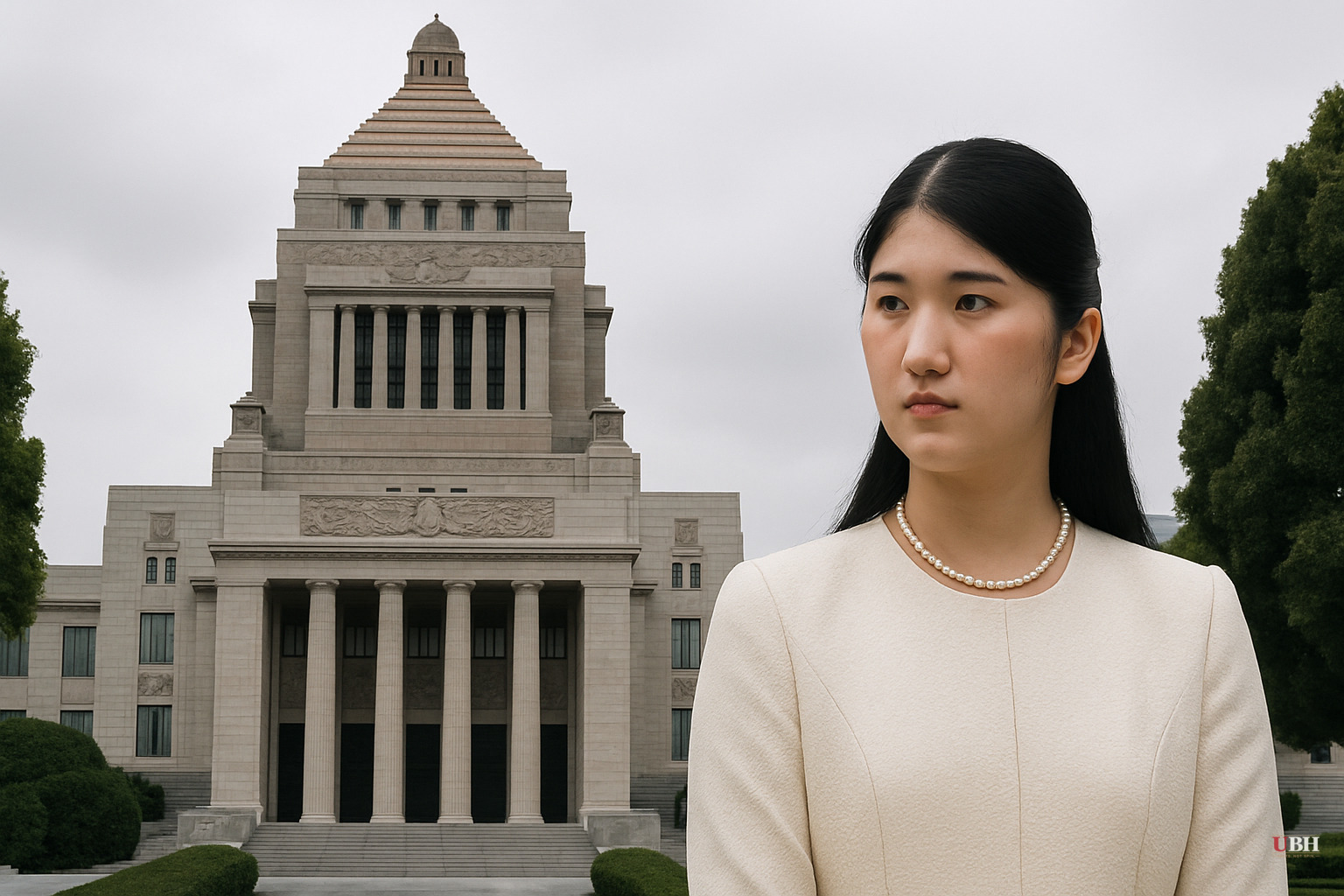
Japan's parliament enacted revisions Friday to the Imperial House Law, a statute dating to the 1800s, and settled a question that's been simmering for years: women still cannot inherit the Chrysanthemum Throne.
The vote came after the lower house passed the measure days earlier, and the upper house followed suit, according to WVTF. It's the first update to the imperial succession law since 1949, according to Town & Country.
Princess Aiko, Emperor Naruhito's only child, is 24 years old, holds a degree in Japanese literature, and works full time for the Japanese Red Cross Society, according to WVTF. She's also, by every account here, genuinely popular. Crowds turn out for her public appearances. Polls cited by WVTF show 60% to 90% public support for allowing a female emperor.
None of that mattered under the new rules. Aiko is excluded because Japan's succession law only recognizes men descended through the male line.
What Actually Changed
The revisions do two things. First, they let princesses keep their royal status after marrying commoners, rather than losing it as Aiko's cousin Mako did when she married Kei Komuro in 2021 and moved to the New York City suburbs, according to Town & Country. Those princesses can perform official duties, but cannot inherit the throne.
Second, the law now allows the imperial family to adopt distant male relatives, over age 15, from among eleven branch families that renounced royal status back in 1947, according to Town & Country and Newsday. Those adopted men can't inherit the throne themselves since they were born commoners, but their future male children could.
The imperial family has 16 adults and zero children, according to Newsday. Only five of those adults are men. Prince Hisahito, the emperor's 19-year-old nephew, is the first boy born into the family in four decades.
Current succession runs from 66-year-old Emperor Naruhito to his younger brother, Crown Prince Fumihito, then to Hisahito, then to the emperor's 90-year-old uncle, Prince Hitachi, according to Town & Country and the Associated Press as reported by the New York Post. After that, the line runs out unless the adoption provision produces new male heirs down the road.
The Political Fight Underneath It
Prime Minister Sanae Takaichi, Japan's first female prime minister, has been the public face defending the male-only rule. She told a party convention in April that "the unparalleled historic fact that the imperial line has been maintained through the male line for 126 generations is the foundation of the emperor's authority and legitimacy," according to WVTF. She told reporters after the vote she was "deeply moved," according to Newsday.
That's the strongest version of the traditionalist argument, and it deserves to be stated plainly: defenders of male-only succession say an unbroken male bloodline is precisely what gives the imperial institution its unique legitimacy, and that changing the rule now would sever a historical continuity that can't be restored once broken. That's not a fringe position in Japan. It has real institutional backing, including from the sitting prime minister.
Critics see something else going on. Hideya Kawanishi, a monarchy expert at Nagoya University, told the Associated Press that the law is "a declaration to prevent female monarchs... and to defend the male lineage at all costs," adding that supporters "cannot say it's male chauvinism, so they call it tradition." Seiichiro Noboru, a former Japanese diplomat with ties to the imperial family, told WVTF the revision's "very clear objective" is to prevent a future female emperor, and argued that recognizing a female emperor would make the whole adoption workaround unnecessary.
Sociologist Chizuko Ueno, a prominent feminist, went further, calling it ironic that Japan's first female prime minister presided over locking in male-only succession, and saying the new system treats male royals like "stallions" while pressuring female royals as "childbearing machines," according to the New York Post and Newsday.
The Historical Wrinkle
Japan has had eight reigning empresses, all descended through the male line, according to multiple sources including Newsday and the Associated Press. The last was Empress Go-Sakuramachi, who took the throne in 1762 before eventually abdicating to her nephew.
Male-only succession was later locked into law under the Meiji government, according to WVTF, in a version of the Imperial House Law that also stripped married women of the right to own property or sign contracts without a husband's consent. The current 1947 law carried the male-only principle forward.
Imperial Household Agency chief Buichiro Kuroda said in a statement his agency "will do everything it can appropriately to support smooth activity for the Imperial Family members in line with [the revisions], while fully taking into consideration their feelings," according to Town & Country and Newsday.
Newsday reported the revisions have already triggered protests from Japanese who view the law as designed specifically to eliminate Aiko from consideration. Whether public pressure forces another revision before Hisahito's generation runs out of heirs remains an open question. Nothing in the current law creates a path back to female succession without another act of parliament.
Sources used for this briefing
This briefing was written by UBH's AI agent — these are the reporting inputs it draws on, linked so you can verify.


