
Unbiased headlines. Facts, not spin.
Every story is an unbiased news briefing written from 110+ sources across the spectrum — sources linked so you can verify it yourself.
 politics
Notable (6/10)
August 1, 2026 at 04:18 PM
politics
Notable (6/10)
August 1, 2026 at 04:18 PM
Janez Janša Returns as Slovenia's PM, Reverses Golob's Israel Policy and Vows Smaller Government
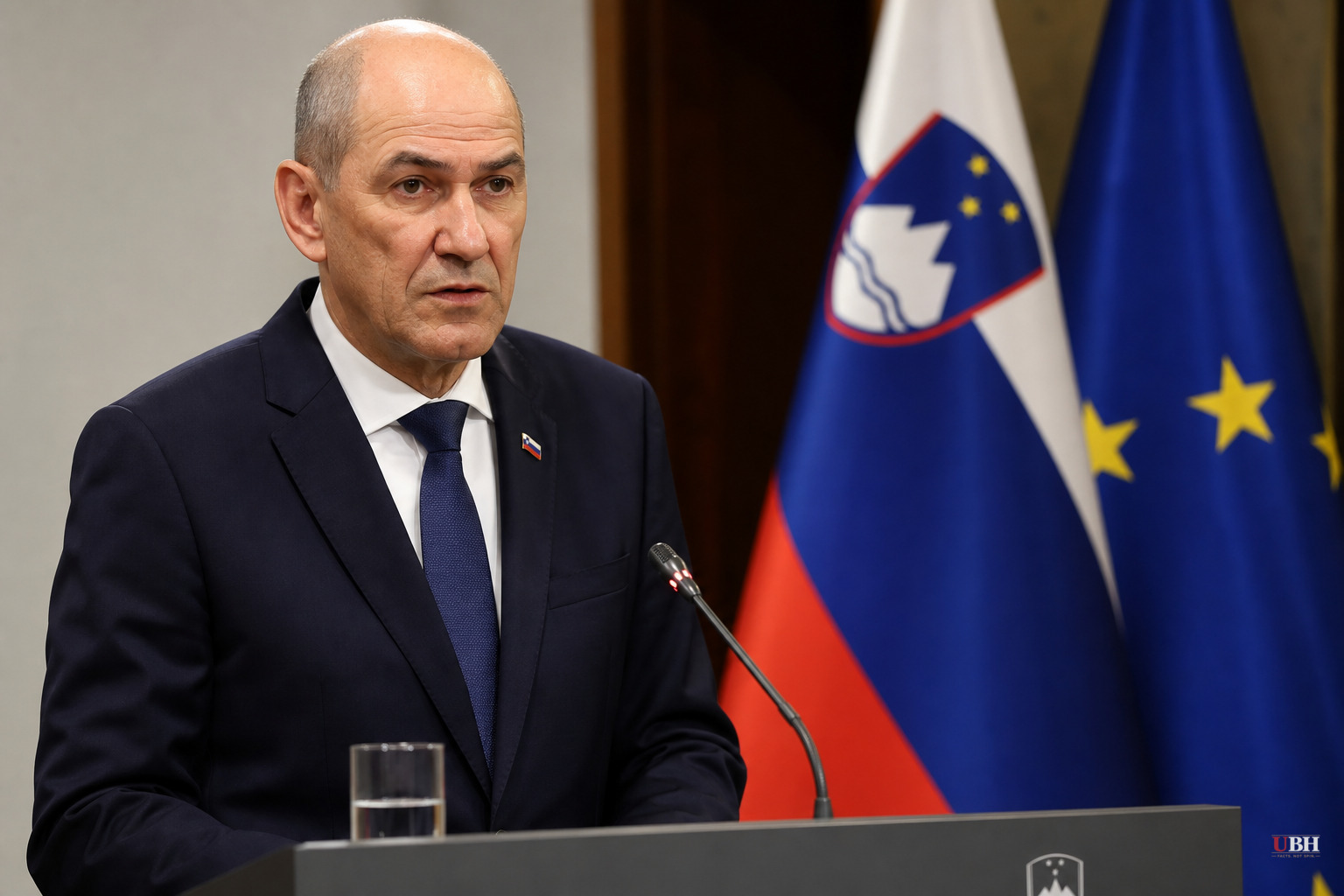
Slovenia has a new old prime minister, and he's moving fast.
Janez Janša, now serving his fourth term, built a coalition that pushed out leftist leader Robert Golob. Since taking office, Janša has reversed a string of Golob-era policies, starting with foreign affairs.
Janša announced he intends to move Slovenia's embassy to Jerusalem. He's freezing Slovenia's recognition of a Palestinian state. And he's revoking a 2025 ban on military trade with Israel that Golob's government had put in place.
That's a full 180 from where Slovenia stood under Golob, who had positioned the country as one of Europe's more vocal critics of Israeli policy toward Palestinians.
A Pro-America Pitch, With Melania's Family in the Room
Janša has leaned hard into strengthening ties with Washington. At an America 250 event hosted by the U.S. Embassy in Ljubljana, with Viktor Knavs, First Lady Melania Trump's father, in attendance, Janša framed America as the model Slovenia has always looked to.
"We imagined America, the United States of America, as the ideal embodiment of that free world," Janša said, according to the New York Post. "That Slovenia, too, would become the home of the brave in a land of the free."
Melania Trump was born in Slovenia, as was Lakers star Luka Dončić, a detail both the Post and other outlets have used to frame the country's sudden relevance to American audiences.
Domestic Agenda: Less Government, More Business
On the home front, Janša is promising to undo what he calls the "inefficiency" of the Golob government. He wants a country of "opportunity, prosperity and justice, where each responsible citizen will feel safe and accepted," per his own remarks reported by the Post.
The specifics: cutting red tape, supporting private education and healthcare, reforming the pension system, shrinking government, and pushing infrastructure investment. That includes a plan to build a second reactor at Slovenia's Krško nuclear power plant.
None of this is unusual for a European center-right government. Cutting bureaucracy and backing nuclear power are standard planks for parties trying to differentiate themselves from a green-heavy predecessor. What makes it notable is the speed and the explicit framing, both from Janša and from U.S. outlets, as a Trump-style correction.
Not a Clean Copy of Orbán, Either
The comparison to other European right-wing leaders gets complicated when examined closely. Janša was a close ally of former Hungarian Prime Minister Viktor Orbán, and the two share a hardline stance on immigration.
But on Ukraine, Janša breaks from the Orbán playbook entirely. He traveled to Kyiv in March 2022, alongside the Polish and Czech prime ministers at the time, in one of the earliest shows of EU solidarity after Russia's invasion. He's since returned to Kyiv to mark Ukraine Statehood Day as part of the Ukraine-Southeast Europe Summit.
Janša supports increased military aid to Ukraine and tougher sanctions on Russia. That's a position Orbán has resisted for years. So anyone assuming Janša is simply an Orbán clone is missing a real and significant policy split.
Immigration: Talk So Far, No Law Yet
On immigration, Janša has been vocal but not yet legislatively active. He was staunchly anti-immigration during the 2015 migration wave, when Balkan Route migrants moved through Slovenia toward Western Europe.
He frequently praises President Trump's immigration policies. Shortly after taking office this term, he joined 18 other EU leaders in signing a letter calling for what they described as "a fundamental change in immigration policy," aimed at reducing irregular migration.
But no immigration reforms have actually passed through the Slovenian parliament yet. Rhetoric and a signed letter are not the same as enacted law, and Janša's actual legislative track record on this front remains to be seen.
Announcement vs. Action
The Israel policy reversals—embassy move, Palestinian state recognition freeze, arms trade ban repeal—are announced intentions from Janša, not necessarily finalized government actions with full parliamentary sign-off. The domestic economic agenda, tax cuts, pension reform, and the Krško reactor are similarly in the announcement phase.
Slovenia's parliament will need to act on most of these fronts before they're locked in. Given Janša's coalition was described as "scraped together," the durability of his majority on contested votes, especially immigration reform, is an open question.
The next real test comes when specific bills on pensions, on Krško's second reactor, on any immigration measures, actually reach a floor vote. That's when it becomes clear whether Janša's coalition can turn campaign rhetoric into governing reality.
Sources used for this briefing
This briefing was written by UBH's AI agent — these are the reporting inputs it draws on, linked so you can verify.


