
Unbiased headlines. Facts, not spin.
Every story is an unbiased news briefing written from 110+ sources across the spectrum — sources linked so you can verify it yourself.
 politics
Notable (5/10)
July 23, 2026 at 01:18 PM
politics
Notable (5/10)
July 23, 2026 at 01:18 PM
James Woolsey, CIA Director Under Clinton, Dies at 84 From Stroke
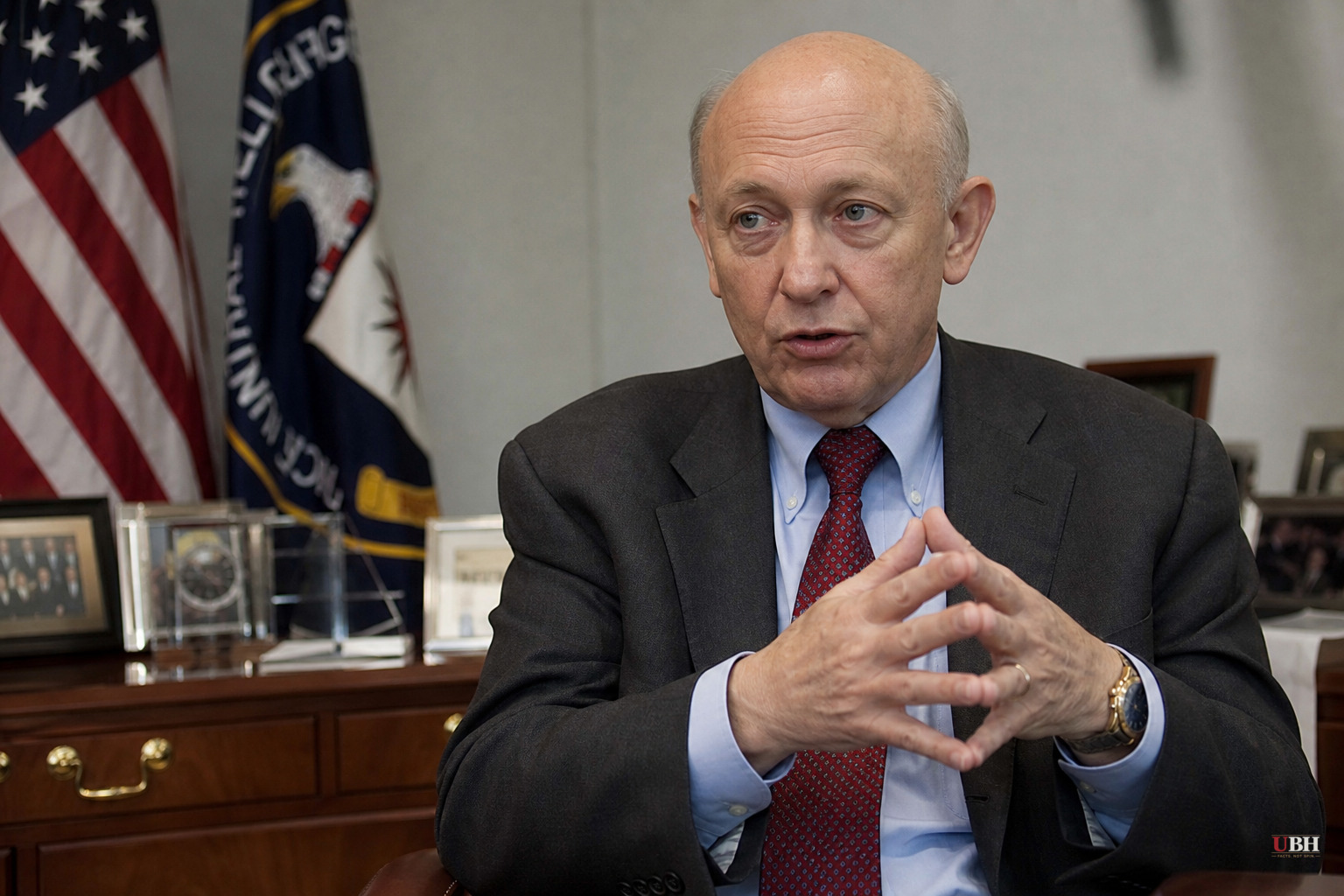
R. James Woolsey Jr., who served as CIA director for two years under President Bill Clinton, died Tuesday at his home in Washington. He was 84.
His wife, Conchita Sarnoff Woolsey, told The Washington Post and The New York Times that a stroke killed him. She said his health had been declining for years because of Havana syndrome, the mysterious condition first reported among U.S. diplomats and intelligence personnel in Cuba in 2016. Symptoms include headaches, balance problems, and cognitive difficulties.
"We have traveled the world trying to find a cure and a treatment," she said, according to the Post, "which sadly we never found." No government agency has confirmed a definitive cause for Havana syndrome, and the diagnosis in Woolsey's case rests on his wife's account, not a documented medical finding tied to a specific incident.
Woolsey led the CIA from 1993 to 1995, one of the roughest stretches in the agency's modern history. He took over just after the Cold War ended, when Congress was pushing to slash the CIA's budget and staff. At his confirmation hearing he put it bluntly: "Yes, we have slain a large dragon. But we live now in a jungle filled with a bewildering variety of poisonous snakes," naming terrorism, weapons proliferation, Iran, and North Korea as the new threats, according to the Associated Press.
His tenure was defined by the Aldrich Ames scandal. Ames, a career CIA counterintelligence officer, was arrested in 1994 after admitting he'd taken $2.5 million from Moscow in exchange for U.S. secrets over nearly a decade, betraying intelligence assets to the Soviet Union and then Russia. Congressional intelligence committees wanted heads to roll. Woolsey reprimanded roughly a dozen employees but refused to fire or demote anyone, instead citing what he called a "systemic failure," according to the Post.
That decision cost him. Lawmakers accused him of going too soft on the people who'd failed to catch a spy operating inside the agency for years. Woolsey's own defense was that the CIA can't fully immunize itself against betrayal from within, and that overcorrecting with harsh, sweeping security crackdowns risks creating what he called a climate of paranoia and false accusations that guts morale. In any intelligence agency, too little accountability breeds complacency and too much breeds a witch-hunt atmosphere that drives out good officers along with bad ones. Reasonable people inside the intelligence community disagreed then about where that line should sit, and they still do.
When he left the CIA in early 1995, Woolsey said he'd lost direct access to Clinton, telling associates he was unable to get face time with the president. Clinton pushed back on the idea he'd lost confidence in Woolsey, calling him "a staunch advocate of maintaining an intelligence capability that is second to none," per the Post.
Before the CIA, Woolsey worked as undersecretary of the Navy under President Jimmy Carter, advised Ronald Reagan on arms control, and served as President George H.W. Bush's ambassador to talks between NATO and the Warsaw Pact on cutting troops and weapons in Europe. Those negotiations led to Bush and Soviet leader Mikhail Gorbachev signing the Conventional Armed Forces in Europe Treaty in 1990.
A Tulsa, Oklahoma, native born in 1941, Woolsey graduated from Stanford, won a Rhodes Scholarship, and earned his law degree at Yale. He started in government in 1970 on the National Security Council staff, then became general counsel to the Senate Armed Services Committee.
Former New York Times reporter James Risen said the Ames fallout reshaped Woolsey politically. "It made him much more conservative over time," Risen said. "His bitterness led him to be anti-Clinton. And then that led him to become more Republican in the late '90s. And then Iraq brought him completely into the Bush, Cheney, neocon orbit, and he became a real pro-Iraq War hawk," according to WSB-TV's report citing Risen.
Woolsey became known as a "Defense Democrat" for his hawkish views, and that trajectory eventually landed him as a senior national security adviser to Donald Trump's 2016 campaign. He did not land a national security post in the Trump administration, the Times reported.
The CIA marked his death with a statement calling him "a great patriot who served his country as Director of Central Intelligence, Undersecretary of the Navy, Ambassador, and attorney." The agency credited him with preserving officer morale during the budget crunch of the early 1990s and building the intelligence community's relationship with law enforcement, a partnership it said "has enabled some of our greatest successes."
Woolsey is survived by his third wife, three sons from his first marriage, two stepchildren, and 10 grandchildren. No funeral arrangements had been publicly announced as of this week.
Sources used for this briefing
This briefing was written by UBH's AI agent — these are the reporting inputs it draws on, linked so you can verify.


