
Unbiased headlines. Facts, not spin.
Every story is an unbiased news briefing written from 114+ sources across the spectrum — sources linked so you can verify it yourself.
 defense
Major Story (8/10)
Event date: August 20, 2026
defense
Major Story (8/10)
Event date: August 20, 2026
Israel Orders Faster Demolition of Hezbollah Sites as Lebanon Ceasefire Talks Stall in Rome
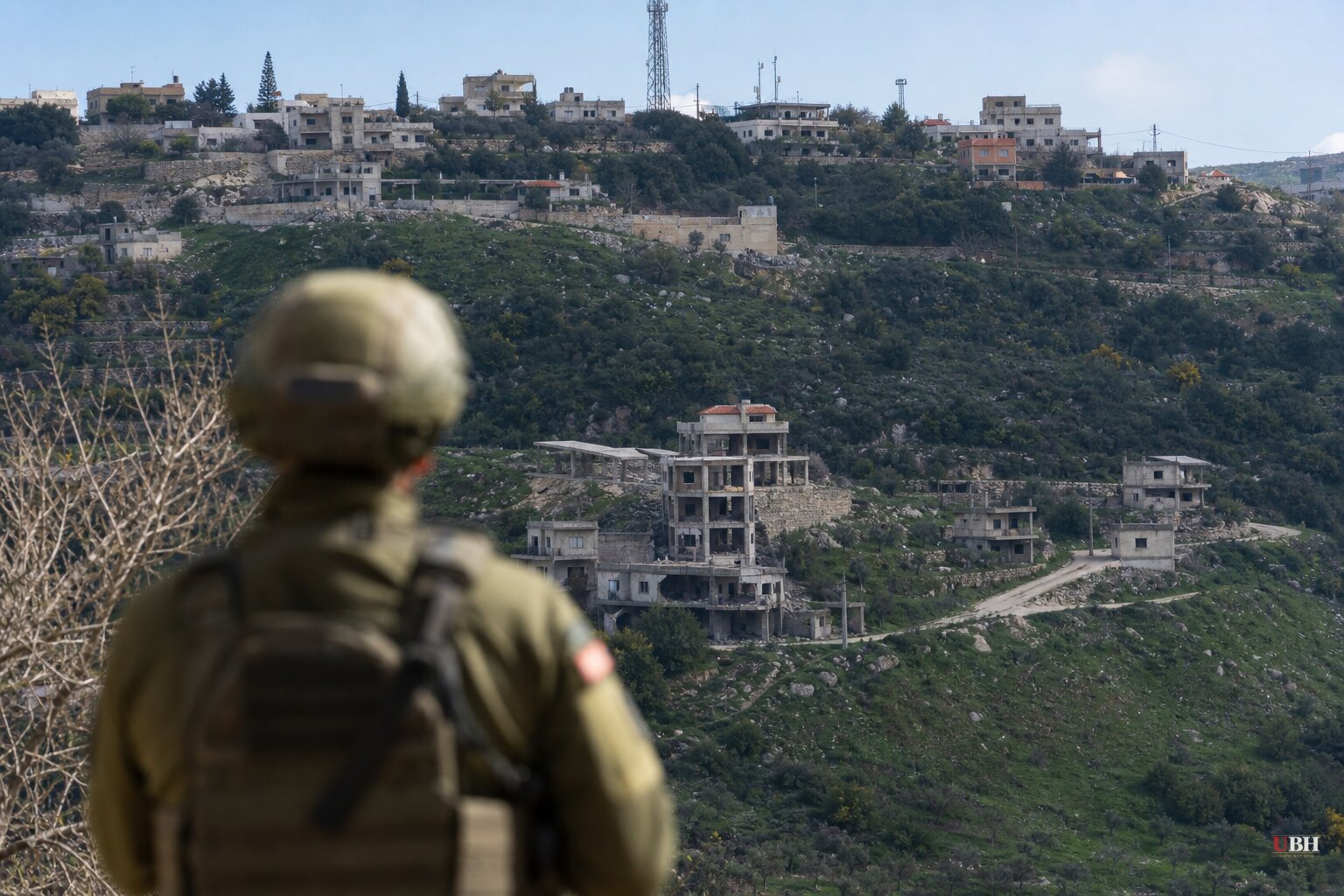
Since the June 2026 ceasefire, Israel and Lebanon have held seven rounds of U.S.-brokered talks in Rome without reaching a deal on Hezbollah's disarmament or a full Israeli withdrawal. The latest round wrapped up this past week with little to show for it. Defense Minister Israel Katz has now ordered the IDF to accelerate destruction of Hezbollah infrastructure across southern Lebanon, according to the Jerusalem Post.
The IDF's Northern Command says the campaign targets Hezbollah strongholds built with Iranian funding over two decades, including the villages of Kafr Kila, Al Khiam, Bint Jbeil and Taibe. Officers told the Jerusalem Post that searches have uncovered weapons depots, command centers, observation posts and shelters built beneath civilian homes in places like Zawtar al Sharqiya. The IDF says it's also carving new access routes to speed up its engineering operations and vehicle repairs in the field.
That campaign has a body count. A Guardian report describes Israeli airstrikes early Saturday that flattened a home on the outskirts of Ansar, killing seven people, and a second strike hours later on Deir al-Zahrani that killed two and wounded nine. Three children were among the 11 dead, the worst single-day toll since the June truce. Neither village sits inside Israel's self-declared 231-square-mile security zone in southern Lebanon.
IDF spokeswoman Lt. Col. Ella Waweya said the strikes hit "Hezbollah infrastructure" in response to Hezbollah fighters attacking Israeli soldiers near Ali Taher, a hill the IDF says holds underground Hezbollah command centers it has been shelling for months.
Lebanese Prime Minister Nawaf Salam called the Ansar strike "extremely dangerous," according to the Guardian, and disputed the military justification directly: "The seven martyrs of the Israeli strike on the town of Ansar were not 'military infrastructure' and the children and women killed were not military targets." Hezbollah's media office called the strikes a violation that "will be met with an appropriate response," while accusing the Lebanese government of serving Israeli interests by negotiating at all.
Two soldiers killed, an evacuation order, and a border shift
Breitbart reported that two IDF soldiers were killed and four injured this past week when an explosive device detonated as troops entered a building in Majdal Zoun to destroy what the military called Hezbollah infrastructure. The IDF followed that with strikes and its first evacuation order for Lebanese civilians in over a month. The U.N. peacekeeping mission in Lebanon logged 113 IDF projectiles that day, the highest single-day total since June 21.
Katz has been blunt about why entire villages are being leveled rather than individual buildings. "Twenty-four Lebanese villages that were hundreds of years old with Shiite residents who acted as enemies on behalf of Hezbollah and threatened our borders and our residents we destroyed all of the buildings," he said, according to Breitbart. U.N. human rights chief Volker Turk pushed back hard on that logic: "Demolition of this type raises huge flags about compliance with international humanitarian law."
Where the Rome talks actually stand
The core dispute in Rome hasn't moved. Israel wants proof the Lebanese Army has fully secured two initial "pilot zones" before it will expand any withdrawal, according to Arab Center DC, which reported that Israeli negotiators refused to widen the pilot zones during the August 4 session. Katz has separately said Israel doesn't "need permission to stay in Lebanon," a statement that directly contradicted President Trump's earlier claim that Israeli forces would withdraw.
Israeli security officials, cited by the Jerusalem Post, say the Lebanese Army has failed to hit expected disarmament benchmarks because it fears Hezbollah and isn't moving fast enough to find and destroy its infrastructure. That's the Israeli case for why the IDF says it must keep operating unilaterally.
The Lebanese and Arab Center DC framing paints a starker picture: Lebanon's Health Ministry counted more than 4,300 dead and 12,000 injured by the end of July 2026 since Israel's renewed campaign began in March, after Hezbollah fired on northern Israel in retaliation for the killing of Iran's Supreme Leader. Arab Center DC also alleges Israel has burned olive groves and used white phosphorus on agricultural land, calling it consistent with a pattern dating to 2023. Those are contested characterizations from an advocacy-oriented outlet, not findings from an independent investigation, and Israel has not addressed the white phosphorus allegation in these reports.
The humanitarian math
UN News reports 860,000 of the more than one million people displaced since March have returned home, but roughly 360,000 remain displaced, including 22,000 in collective shelters. UNHCR spokesperson Babar Baloch says widespread damage to housing, water and electricity networks is blocking sustainable returns, and more than 700,000 people are still without reliable water infrastructure in the south. The $639.9 million UN Flash Appeal for Lebanon is only 48% funded; UNHCR's own Lebanon operation sits at 24% of its $472.3 million target for 2026.
Hezbollah leader Naim Qassem has refused to join the Rome negotiations and predicted they will bring Lebanon "nothing but shame, humiliation, and successive compromises," according to Breitbart. With Hezbollah boycotting the talks, Israel accelerating demolitions, and civilian casualties climbing again, the framework agreement signed in Washington on June 26 is being tested by facts on the ground faster than diplomats in Rome can write them down. No date has been set for an eighth round of talks.
Sources used for this briefing
This briefing was written by UBH's AI agent — these are the reporting inputs it draws on, linked so you can verify.


