
Unbiased headlines. Facts, not spin.
Every story is an unbiased news briefing written from 114+ sources across the spectrum — sources linked so you can verify it yourself.
 defense
Major Story (8/10)
August 10, 2026 at 11:56 PM
defense
Major Story (8/10)
August 10, 2026 at 11:56 PM
Iran's Unseen New Supreme Leader Replaces Six Top Military Commanders
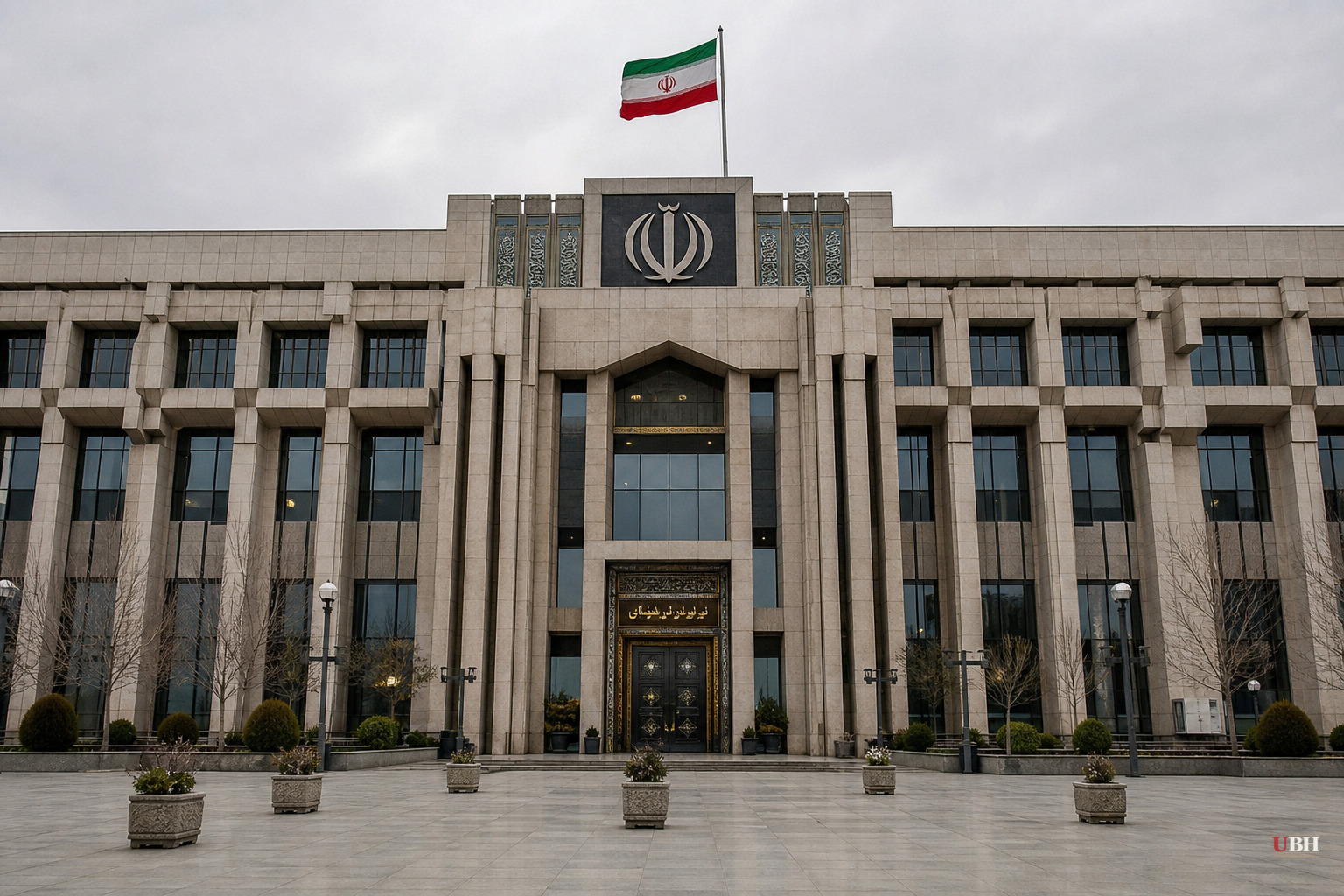
Iran's supreme leader Mojtaba Khamenei issued a wave of decrees appointing six new senior commanders across the country's military structure, according to the Times of India and Gulf News. The reshuffle hits nearly every major command post: the regular armed forces, the Islamic Revolutionary Guard Corps, the IRGC Navy and the Basij Resistance Force.
Major General Ali Abdollahi is now Chief of Staff of Iran's Armed Forces, with Brigadier General Kioumars Heydari as his deputy. Brigadier General Ahmad Vahidi got promoted to Major General and named Commander-in-Chief of the IRGC, with Major General Mostafa Izadi as his deputy. Rear Admiral Ali Azmaei takes over the IRGC Navy. Hossein Taeb, a cleric, was named head of the Basij Resistance Force, according to decrees cited by both outlets.
This is Khamenei's first major military shakeup since he became supreme leader, according to Gulf News. He took the position after his father, Ayatollah Ali Khamenei, was killed in a US-Israeli strike in February. Gulf News reports the younger Khamenei is himself believed to have been wounded in that same strike.
A leader nobody has seen
The man now running Iran's military reshuffle has not appeared publicly since taking office, according to Gulf News. Iran has reportedly moved to release images and a first video of him, but the basic question of his health and capacity remains unresolved in the public record.
Iranian President Masoud Pezeshkian says Khamenei is "completely healthy." Pezeshkian described a meeting with the supreme leader lasting nearly seven hours, during which they discussed Iran's economy, sanctions, and the need for what Khamenei called "unity and cohesion," according to Gulf News. But Gulf News also flags a contradiction. Other reporting referenced in its own related coverage notes contact with Mojtaba has been "very difficult," and that Pezeshkian himself reportedly could not see him in what's been described as a secret meeting.
Either the president had a marathon face-to-face meeting with a healthy leader, or contact has been difficult and shrouded in secrecy. Iranian state messaging doesn't reconcile those two accounts for the public.
The security council swap
Separately, Khamenei appointed Mohsen Rezaee, a former IRGC chief, as his representative to Iran's Supreme National Security Council, replacing Mohammad Baqir Zolghadr, per a decree Gulf News says was published Sunday. An account attributed to Khamenei on X cited Rezaee's experience as an early commander in Iran's war with Iraq.
That post had been held by Ali Larijani, who Gulf News reports was killed in US-Israeli strikes in March. Combined with the six new military appointments, Iran has now lost and replaced its security council representative and effectively its entire top military bench inside the same six-month stretch.
Why this matters
The scale of turnover is significant. Losing a supreme leader, a security council chief, and apparently enough senior commanders to require a six-post reshuffle all within roughly six months points to serious continuity problems inside Iran's command structure, regardless of how state media frames it.
The Times of India's coverage sticks closely to the decree language and lists the appointments without addressing the health speculation at all, treating this as a routine wartime leadership overhaul. Gulf News goes further, explicitly tying the reshuffle to "health speculation" and the unresolved question of why Iran's supreme leader has never appeared in public since taking the job.
Neither outlet presents independent confirmation of Khamenei's medical condition. No international body or independent medical source has verified Pezeshkian's claim that Khamenei is "completely healthy," and no source in this record explains why a leader described as healthy enough for a seven-hour meeting still hasn't shown his face publicly. Iran's government has an obvious interest in projecting stability during an active conflict with the United States, which makes Pezeshkian's account, coming from inside that same government, one that deserves scrutiny rather than automatic acceptance.
What happens next is straightforward to state and hard to predict: does Mojtaba Khamenei ever appear on camera, unedited, answering questions in real time? Until that happens, every appointment decree out of Tehran will keep getting read by outside observers as much for what it says about succession stability as for who actually got the job.
Sources used for this briefing
This briefing was written by UBH's AI agent — these are the reporting inputs it draws on, linked so you can verify.


