
Unbiased headlines. Facts, not spin.
Unbiased Headlines is an independently owned news organization. We bring you the facts, not opinions, written fresh from 110+ named sources. Sources linked so you can verify it yourself.
 politics
Major Story (7/10)
Iran Warns Iraq Not to Become 'Tool of Trump' as Baghdad Tightens Border Crossings
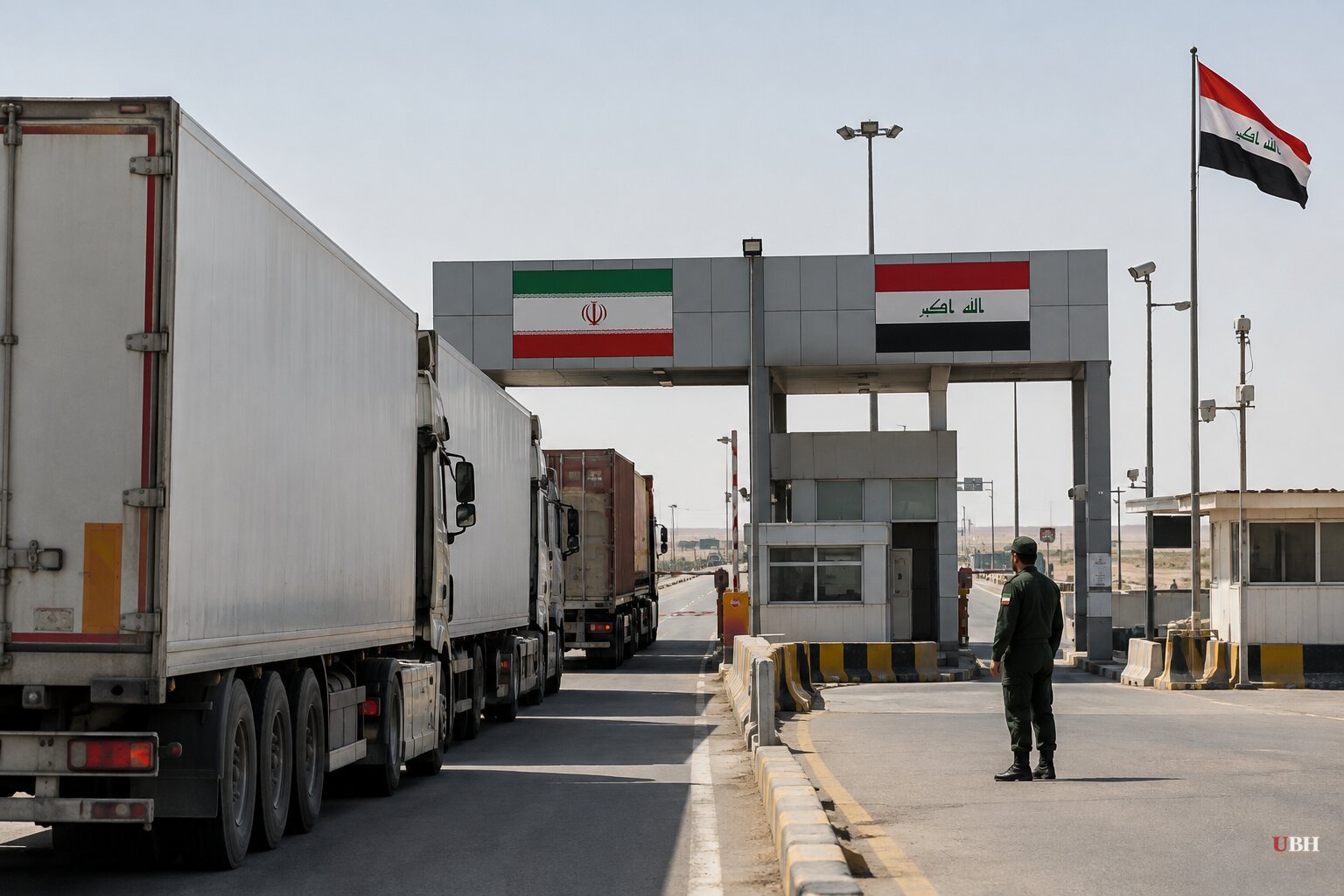
Iran is publicly leaning on Iraq to stop helping Washington squeeze its economy.
On Saturday, Nov. 28, Mohammad Mokhber, an adviser to Supreme Leader Ayatollah Mojtaba Khamenei, posted on X that Baghdad must "remain vigilant on the issue of borders so that it does not become a tool of the enemies of Islam or give in to the policies of the criminal Trump." Mokhber is a former interim president of Iran, appointed after Ibrahim Raisi's death in 2024.
The post came after reports that Iraq had closed several crossings with Iran.
Why the border matters now
The United States has imposed a naval blockade on Iranian ports. Washington says it is a response to Iran's restrictions on shipping through the Strait of Hormuz. That closure has seriously disrupted oil and gas exports and sent prices soaring.
With its ports squeezed, Iran has turned to land routes. Amer Lafi, reporting from Tehran for Al Jazeera, said Iran "has begun to resort to its land crossings as an alternative."
That is where Iraq comes in. The two countries share a border of more than 1,400 kilometers (850 miles) with at least eight official crossings.
Iraqi Foreign Minister Fuad Hussein told Al Jazeera earlier this month that the U.S. Treasury had asked Baghdad to close all but two crossings with Iran. Lafi said one of the two that would stay open sits in the semi-autonomous Kurdish region in the north. The other is under direct federal control.
What Baghdad has done
Prime Minister Ali al-Zaidi this week moved to put border crossings in the Kurdistan region and several oil fields under federal control. The stated aim is to curb smuggling. Baghdad has also stepped up efforts to disarm Tehran-aligned Shiite armed groups.
President Trump praised the moves on Truth Social on Friday. He credited al-Zaidi with efforts to "stop the smuggling of Iraqi oil, end corruption, and bring all weapons under the exclusive control of the state."
Iraq's state news agency cited an intelligence document describing routes through the Kurdistan region used to truck oil into Iran. According to the document, the oil was blended with Iranian crude and exported to Afghanistan for domestic consumption. Washington accuses Tehran of using Iraq to evade sanctions and has previously sanctioned Iraqi individuals and companies over the blending of Iraqi and Iranian oil.
Tehran's message, in its own words
Mokhber framed the issue as loyalty. "Sharing a common destiny with our neighbors is a fundamental principle" of Iranian foreign policy, he wrote. "In the darkest days, Iran stood by the people of Iraq with all its might and proved its friendship."
Iranian security chief Mohsen Rezaei delivered the same message in person. Meeting Iraqi National Security Adviser Qasim al-Aboudi in Tehran, Rezaei said, per Iranian state media: "Foreigners must not be allowed to negatively impact Iran-Iraq economic cooperation." He added that the bilateral security agreement needs to be fully implemented.
Al-Aboudi reaffirmed Baghdad's commitment to that agreement. He said Iraq would not allow its territory or airspace to be used for attacks against Iran or other neighboring countries.
Iraq's ambassador to Iran, Yasser Abdul-Zahraa al-Hajjaj, said the delegation was discussing counterterrorism, smuggling and border security. He described the issues as being of "strategic importance and high sensitivity."
The cost inside Iraq
The closures are not free for Iraqis. Press TV reported protests in Maysan Province, where drivers, border workers and residents are demanding the reopening of the Al-Sheib (Chazabeh) crossing with Iran. Hussein himself said further closures could carry economic consequences for Iraq.
The Kurdish region is also unsettled. Demonstrators waved Kurdish flags at a rally in Irbil on Thursday, Nov. 26, amid tensions with Baghdad over control of border crossings and oil resources.
The federal-control push touches who runs the crossings and the revenue that flows through them, not just smuggling. That is a domestic fight layered on top of a superpower standoff.
Hormuz stays shut
On the same day, Iranian Army Commander-in-Chief Maj. Gen. Amir Hatami said the Strait of Hormuz "shall remain closed until Iran's conditions are met," according to the state-affiliated Tasnim News Agency. He spoke at an event marking the Army's Strategic Naval Force Day. Iran has not publicly detailed those conditions in the statements available.
The U.S. military, meanwhile, says it disabled a merchant ship that was trying to breach the blockade.
What comes next
Baghdad is being pressed from both sides, and it has not said whether it will cut its crossings with Iran down to two, as the U.S. Treasury reportedly requested. Washington holds heavy leverage over Iraq, and Tehran has Shiite politicians and paramilitary groups with influence inside the Iraqi state. How far al-Zaidi can go on border control, oil fields and disarmament, while Maysan protesters and Irbil rallies keep up the pressure, remains an open question.
Sources used for this briefing
8 links from 8 independent newsrooms (syndicated copies of the same report count once)
These are the sources it draws on, linked so you can verify.


