
Unbiased headlines. Facts, not spin.
Unbiased Headlines is an independently owned news organization. We bring you the facts, not opinions, written fresh from 110+ named sources. Sources linked so you can verify it yourself.
 politics
Major Story (7/10)
Duterte Trial Opens at ICC Monday on Three Counts of Murder as Alleged Crimes Against Humanity
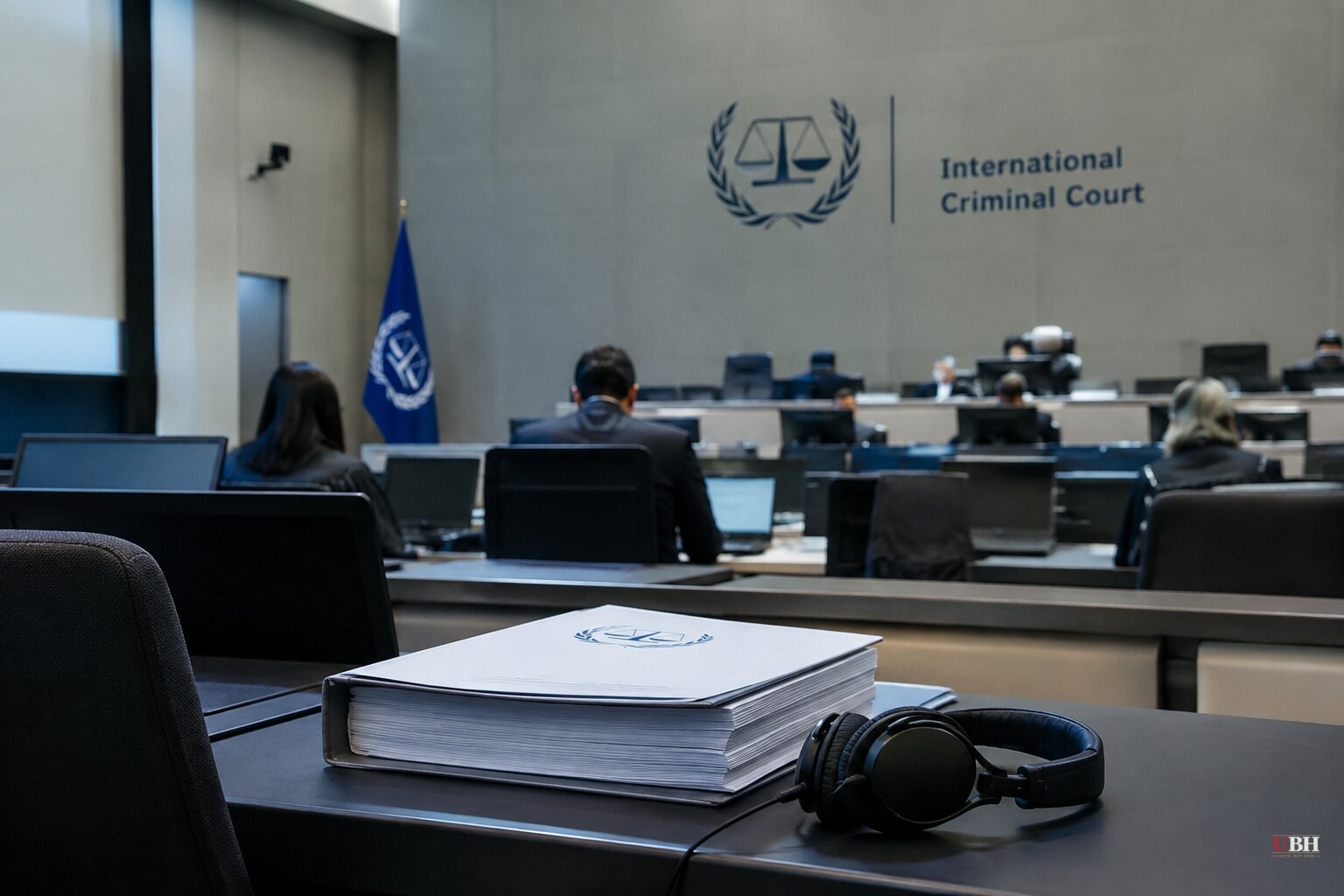
Rodrigo Duterte is scheduled to appear before the International Criminal Court in The Hague on Monday, Nov. 30, for the opening of his trial on charges of murder and attempted murder as alleged crimes against humanity. Proceedings are set to start at 10:00 local time before Trial Chamber III.
He is the first Asian leader to face trial at the court. Judges are expected to confirm that he understands the charges and take his plea, followed by opening statements.
What he is charged with
Duterte faces three counts of murder and attempted murder as crimes against humanity. Prosecutors allege the crimes were committed against a civilian population between November 2011 and March 16, 2019, the date the Philippines withdrew from the court.
The counts cover three phases:
- Count 1: Killings in and around Davao City during his time as mayor, allegedly carried out by the so-called Davao Death Squad from 2013 to about June 2016.
- Count 2: Killings of "high-value targets" across the country, from about July 2016 to July 2017.
- Count 3: Murders and attempted murders in barangay clearance operations, from about July 2016 to September 2018.
Pre-trial judges found substantial grounds to believe he is responsible as an indirect co-perpetrator. The court will examine 49 incidents. The prosecution plans to call around 100 witnesses, and sittings are expected to run four hours a day.
The death toll is still disputed
There is no agreed death toll. The Philippine National Police acknowledges 6,252 deaths in anti-drug operations. Independent groups put the figure far higher.
The police's own 2017 year-end report listed 20,322 deaths from July 1, 2016, to Nov. 27, 2017. In an April 2018 resolution, the Philippine Supreme Court noted that figure worked out to an average of 39.46 deaths a day.
Duterte was arrested in Manila in March 2025 and flown to The Hague. He did not attend the February 2026 confirmation hearings, saying in a statement that he was "old, tired and frail" and suffering memory loss. An independent panel of experts has since declared him fit to stand trial, and Presiding Judge Joanna Korner has said he must be physically present.
The defense
Defense lawyer Peter Haynes said in a Nov. 25 submission that the defense does not dispute that police carried out unlawful killings during anti-drug operations, or that murders occurred in the Philippines during the charged period. He also acknowledged that some victims or perpetrators were drug users or pushers.
"Killings undoubtedly occurred, but they were not crimes against humanity," Haynes said.
That distinction is the legal core of the case. Under the Rome Statute, murder becomes a crime against humanity when it is part of a widespread or systematic attack on civilians.
The defense has also filed a pretrial motion arguing that Duterte's "kill" remarks were a Visayan cultural expression known as "bugalbugal," not literal orders. Duterte has publicly said he would be "happy to slaughter" millions of drug addicts, and has boasted of personally killing suspected criminals while mayor of Davao.
Sovereignty fight at home
Duterte remains popular. His supporters argue he should not be in The Hague at all and accuse President Ferdinand Marcos Jr.'s government of selling out national sovereignty by sending him to a foreign court. They view the case as a political move against the Duterte family, whose feud with the Marcos family has dominated Philippine politics.
The ICC's position is that it has jurisdiction over crimes committed before the March 2019 withdrawal. It cites the failure of Philippine authorities to investigate the killings.
The victims
More than 500 victims have been authorized to participate in the proceedings. Joel Butuyan, one of their lawyers, said in February that Duterte's absence from the confirmation hearings was a "very deep disappointment" for them.
Llore Pasco, 72, a massage therapist, is traveling from Manila to attend. She blames the crackdown for the May 2017 killings of her two sons in Quezon City. She says both were former drug users who had reformed, and that they were shot by unknown gunmen months after authorities questioned the family about their history.
Leonila Ignacio says her 15-year-old daughter Princess was seen on CCTV being bundled into a police vehicle seven years ago. Police denied taking her, and Ignacio has never found her. Randy Delos Santos, whose 17-year-old nephew Kian was shot dead by police in August 2017, said he is grateful the court "paid attention." Three officers were convicted of Kian's murder, one of the few drug-war killings to be properly investigated.
The court under pressure
The trial opens while the ICC is under heavy pressure from Washington. The Trump administration has sanctioned key court staff individually and the institution as a whole, in what it calls an effort to dismantle the court "brick by brick." The court also has outstanding arrest warrants for Russian President Vladimir Putin and Israeli Prime Minister Benjamin Netanyahu.
James A. Goldston of the Open Society Justice Initiative said the proceedings "demonstrate its vital role in holding the powerful to account."
The procedural schedule sets evidentiary hearings for early 2027. Whether Duterte, whose lawyers say his health limits his participation, can sit through months of four-hour sessions is unresolved. A verdict is unlikely for a long time.
Sources used for this briefing
8 links from 8 independent newsrooms (syndicated copies of the same report count once)
These are the sources it draws on, linked so you can verify.


