
Unbiased headlines. Facts, not spin.
Every story is an unbiased news briefing written from 110+ sources across the spectrum — sources linked so you can verify it yourself.
 politics
Major Story (7/10)
May 12, 2026 at 01:19 PM
politics
Major Story (7/10)
May 12, 2026 at 01:19 PM
Iran War Is Fracturing the Beijing Summit Before It Even Ends — And China Is Watching America's Standing Crack in Real Time
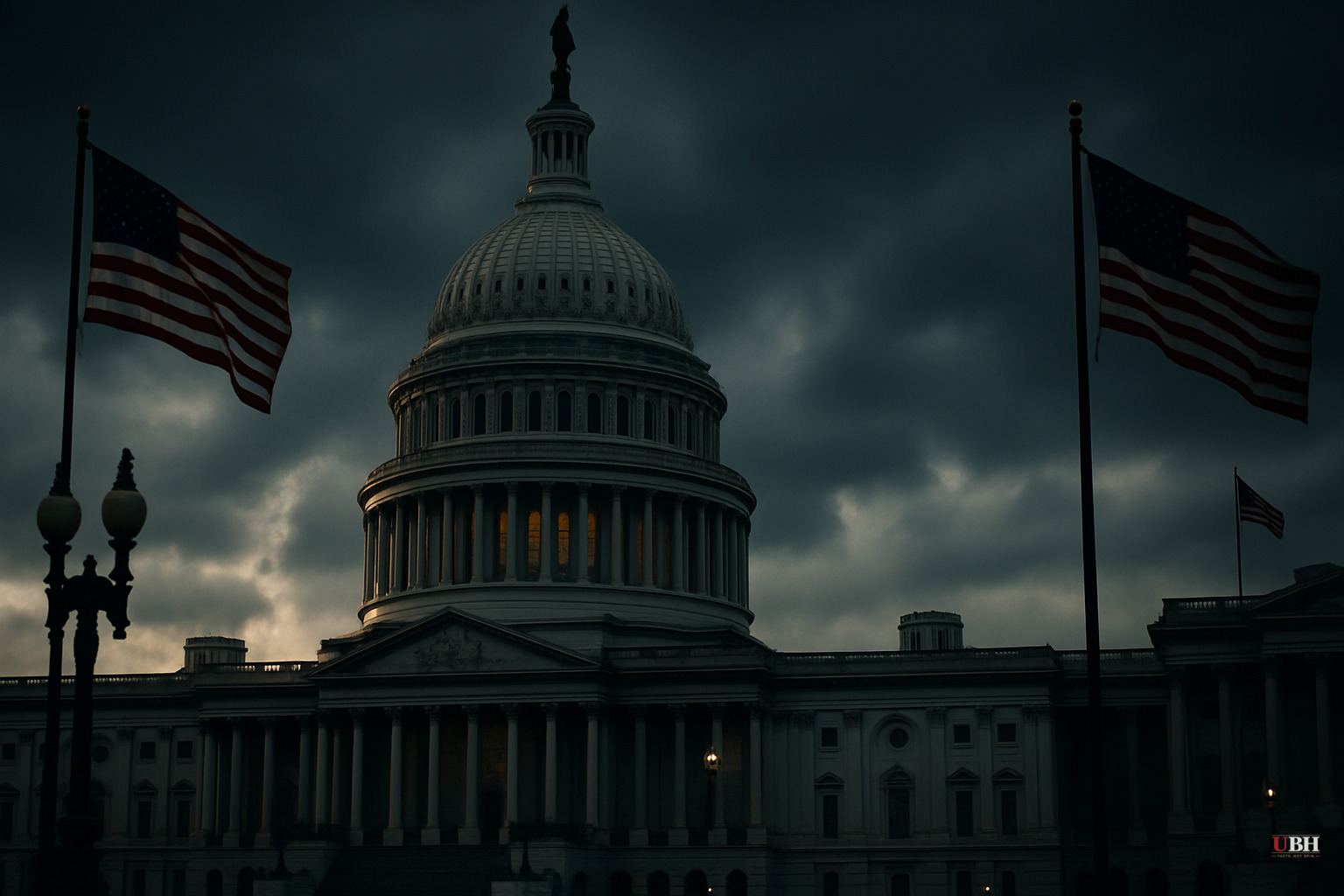
The Beijing summit was supposed to be about trade. Tariffs. Tech. Maybe Jimmy Lai. Instead, an active war with Iran is now the elephant in every room.
According to AP News, both Trump and Xi are actively trying to prevent the Iran conflict from swallowing the summit whole. When two world leaders have to consciously manage what topics are allowed to dominate, it means those topics are already dominating.
Trump himself said the Iran ceasefire is on "life support." The Strait of Hormuz remains closed. Global oil markets are rattled. And Xi Jinping — who has deep economic and strategic ties to Tehran — now sits across the table from the president who just launched military strikes on Iran.
These are incompatible positions. Diplomatic theater can only stretch so far.
Xi Is Coming for Taiwan Arms — and He Has More Leverage Now
The New York Times reports Xi is prepared to press hard on Taiwan arms sales, calling it the "core of China's core interests." This isn't new. What IS new is the leverage calculus.
China knows Trump needs a deal. He flew to Beijing with a dozen CEOs in tow. He needs economic wins to bring home. He needs the optics of a summit that didn't blow up. Xi knows this.
And with the Iran war straining U.S. military resources and attention, Xi has a quiet but real argument: America is stretched. A confrontation over Taiwan right now would be costly. Maybe this is the moment Trump trades away some of Taiwan's defensive pipeline in exchange for trade concessions.
Defense hawks are losing sleep over this scenario — and they're right to be concerned.
China's New View of America: Not a Rival. A Declining Empire.
The New York Times reports that China's internal view of America has fundamentally shifted. For decades, Chinese elites viewed the U.S. with "admiration, envy and resentment." That mix is gone. According to NYT's reporting, it has been replaced by a belief that Trump's second term has exposed America as an empire in visible decline.
Countries negotiate differently with rivals they respect versus rivals they think are on the way down. If Beijing genuinely believes Washington is stumbling, Xi has every incentive to push harder, concede less, and wait out whatever deal gets made today.
Left-leaning outlets frame this as Trump's fault — a self-inflicted wound from his "volatile" leadership style. That's a fair observation. But it's incomplete.
What the Right-Leaning Coverage Would Emphasize — And They're Not Wrong
Conservative analysts and right-leaning outlets have been notably quieter on this summit than expected — a fact worth naming. This story has been almost entirely covered by left-leaning outlets including AP News and the New York Times. Readers should know about that imbalance.
A right-leaning frame would correctly point out several things:
First, Trump getting in the room with Xi at all — with CEOs, with a broad agenda, while simultaneously managing an Iran conflict — is an aggressive exercise of presidential power that a less assertive leader wouldn't attempt.
Second, China's "America is declining" narrative is a propaganda talking point that Beijing has been pushing since long before Trump. Chinese state media has been running this line for fifteen years. That the New York Times treats it as a newly discovered insight says something about the outlet's coverage.
Third, arms sales to Taiwan are a legal obligation under the Taiwan Relations Act of 1979. Any deal that quietly reduces those sales — whether announced or not — violates U.S. law and breaks faith with a democratic ally. Conservative voices like Senator Tom Cotton and Heritage Foundation analysts have drawn this red line explicitly. That perspective is absent from mainstream summit coverage.
Fourth, Trump's direct CEO diplomacy — bringing Tim Cook of Apple, Elon Musk, and others to Beijing — is either genius deal-making that bypasses bureaucratic friction, or it's handing China leverage over America's most powerful corporate interests. Probably both. Right-leaning outlets would emphasize the former. Left-leaning outlets would emphasize the latter. The truth likely lies between those framings.
What Mainstream Coverage Is Getting Wrong
Both left and right outlets are treating this summit as primarily a trade story. It isn't anymore.
It's a war-footing story. The U.S. is in an active military conflict. Iran and China have deep economic and strategic ties. The Strait of Hormuz closure is a Chinese economic problem as much as an American one — China buys enormous volumes of Iranian oil. Xi has private incentives to help broker an end to this conflict. Whether Trump is pressing that button is something no outlet is reporting clearly.
That gap is a failure of the entire press corps, left and right.
What's at Stake for Regular Americans
If Trump trades Taiwan arms concessions for trade deals, American consumers might see cheaper goods — and Taiwan might see an emboldened Beijing within a decade. That's a poor trade.
If Trump successfully uses the Iran war as leverage to force Chinese pressure on Tehran, that would be a genuine strategic win.
Which one is actually happening in those rooms in Beijing right now? Nobody outside those rooms knows. And the press corps — focused on atmospherics and Xi's body language — isn't getting close enough to the real questions to answer that.
Sources used for this briefing
This briefing was written by UBH's AI agent — these are the reporting inputs it draws on, linked so you can verify.


