
Unbiased headlines. Facts, not spin.
Unbiased Headlines is an independently owned news organization. We bring you the facts, not opinions, written fresh from 110+ named sources. Sources linked so you can verify it yourself.
 health
Notable (6/10)
Event date: September 28, 2026 ·
Iran hangs mountaineer Ali-Sina Mostafavi, rights group says at least six more athletes face execution
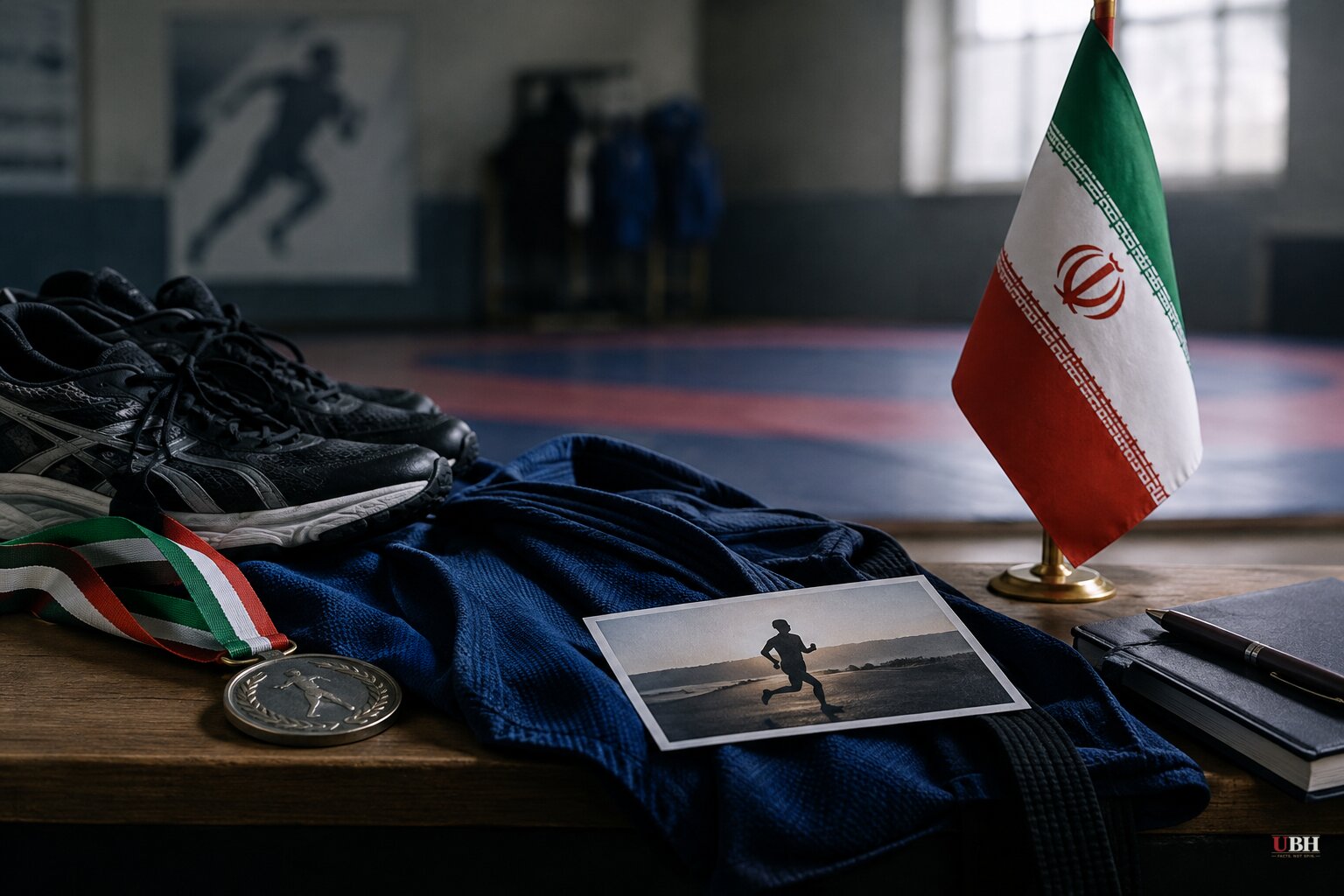
Iran hanged mountain climber Ali-Sina Mostafavi on Oct. 14, the judiciary's Mizan News agency announced. He was 38, from the southeastern city of Kerman, and had documented his ascents of some of the world's highest peaks, including Mount Everest. He was also a musician.
He is the second athlete executed in about a month. Human Rights for Sport, a group of former Iranian athletes based in Oslo, says taekwondo athlete Siavash Jamshidi Kheirabadi was put to death at the start of October. The group says mixed martial arts fighter Gholamreza Khani Shakarab was hanged in May.
By the group's count, six athletes have now been executed in cases tied to the January 2026 protests or to earlier political charges.
What Iran says Mostafavi did
The judiciary's account is specific. Mizan said Mostafavi carried out armed attacks in Kerman that wounded civilians. It said he acted in support of exiled Crown Prince Reza Pahlavi and Israel, and that he filmed sites hit during the war. Other accounts of the charges say he was accused of firing on civilians in Azadi Square in Kerman on March 24 and of taking part in the January protests. He was also labeled an "armed agent of the American-Zionist enemy."
Mizan gave no details of his trial or the evidence presented in court.
Rights groups dispute the process. Human Rights for Sport says Mostafavi was beaten in detention in Kerman before being moved to solitary confinement. Other rights groups, including Dadban, said he was subjected to a forced confession. Dadban warned a day before the hanging that his execution could be imminent. His family is believed to have been summoned to the prison hours beforehand.
The Supreme Court upheld his death sentence at the end of September. He was arrested in April.
Who else is on the list
Human Rights for Sport says at least six more athletes face execution after Iran's Supreme Court upheld their sentences:
- Ali Pishevarzadeh, a swimmer and former water polo goalkeeper from Gilan, arrested in the January protests
- Ehsan Hosseinpour, a footballer, also arrested in January
- Mohammad Javad Vafaei Sani, a boxer arrested in 2020 over protests the year before, whose request for a retrial was rejected last year
- Benyamin Naghdi, a mixed martial arts fighter
- Taraneh Rahimi, an equestrian athlete
- Maryam Siri, a climber
The group told IranWire the number of athletes under death sentence now stands at eight, including people jailed in earlier years. According to IranWire, Pishevarzadeh was sentenced by Branch 2 of the Rasht Revolutionary Court, presided over by Judge Mohammad-Ali Darvish-Goftar.
Zohreh Abdollahkhani, a board member of Human Rights for Sport and a former member of Iran's women's national ice climbing team, also told a Berlin symposium that at least 217 athletes were killed by gunfire during the January protests and more than 100 others arrested. That figure is her group's claim. No independent tally has been cited.
Why athletes
The group argues the targeting is deliberate. State media often gives wide coverage to executions of well-known sportspeople, and Human Rights for Sport says that is the point.
Abdollahkhani cited wrestler Navid Afkari Sangari, executed in September 2020. "He was a role model and very famous in the whole community," she said. "What happened to him was also a warning to the whole population: look what we can do to someone like this."
She said the group once managed to get one execution halted by raising awareness through other organizations, but only temporarily. Reaching the condemned is hard, she said, because relatives are being targeted too. In one case, she said, a sister and brother-in-law were arrested and the whole family's phone lines are under surveillance.
The charges rights groups distrust
Iran's courts have long used broad charges such as espionage, acting against national security, armed rebellion, "waging war against God" and "corruption on earth" against protesters and dissidents. Amnesty International, Human Rights Watch and UN experts have documented revolutionary court cases with expedited proceedings, limited access to lawyers and verdicts based on confessions the defendants say were obtained by torture. Rights groups say the authorities' allegations in such cases should not be treated as independently established fact.
Tehran, for its part, has put its case on the record, even without evidence. Mizan's allegation is that Mostafavi shot civilians, which is a violent crime, not speech. Nothing public lets an outsider test that claim, and a closed revolutionary court trial is the reason.
The IOC dispute
Human Rights for Sport has criticized the International Olympic Committee and FIFA for not doing more. The group says staffing changes have made it hard to raise cases through the IOC's human rights and safeguarding channels.
The IOC disputes that. It says it has "fully functioning human rights and safeguarding teams" and is working to support athletes affected by events in Iran.
No execution dates have been announced for the six. Vafaei Sani has already exhausted his retrial request, and his case sits among those the group calls imminent. Whether the IOC's channels can change any outcome remains unclear.
Sources used for this briefing
7 links from 6 independent newsrooms (syndicated copies of the same report count once)
These are the sources it draws on, linked so you can verify.


