
Unbiased headlines. Facts, not spin.
Every story is an unbiased news briefing written from 110+ sources across the spectrum — sources linked so you can verify it yourself.
 politics
Major Story (7/10)
July 28, 2026 at 08:27 PM
politics
Major Story (7/10)
July 28, 2026 at 08:27 PM
Iran Executes Two More Protest-Linked Prisoners in Isfahan as Mass Hunger Strike Spreads at Tehran's Largest Prison
Since Iran hanged five protesters in public since March, according to the U.S.-based Human Rights Activists News Agency (HRANA), Tuesday's dawn executions of Abdolfazl Sepahi Badjani and Amir Hossein Safari Hosseinabadi in Isfahan's Alikhani Square push that tally further. State media confirmed the hangings, carried out at the same square where the government says four police officers were killed during January's protests.
The two men were among 14 people sentenced to death over the police killings. Two others in that group were executed earlier this month, according to the LA Times. Twenty-six people total have now been hanged this year over their alleged role in the January demonstrations, the Guardian reported.
A judiciary-affiliated website said the men also set fire to a police station and damaged public buildings. Rights groups paint a different picture. Amnesty International says the trials behind these executions were "torture-tainted" and "grossly unfair," run through revolutionary courts that operate with less oversight than ordinary criminal courts.
A prison uprising nobody can silence quietly
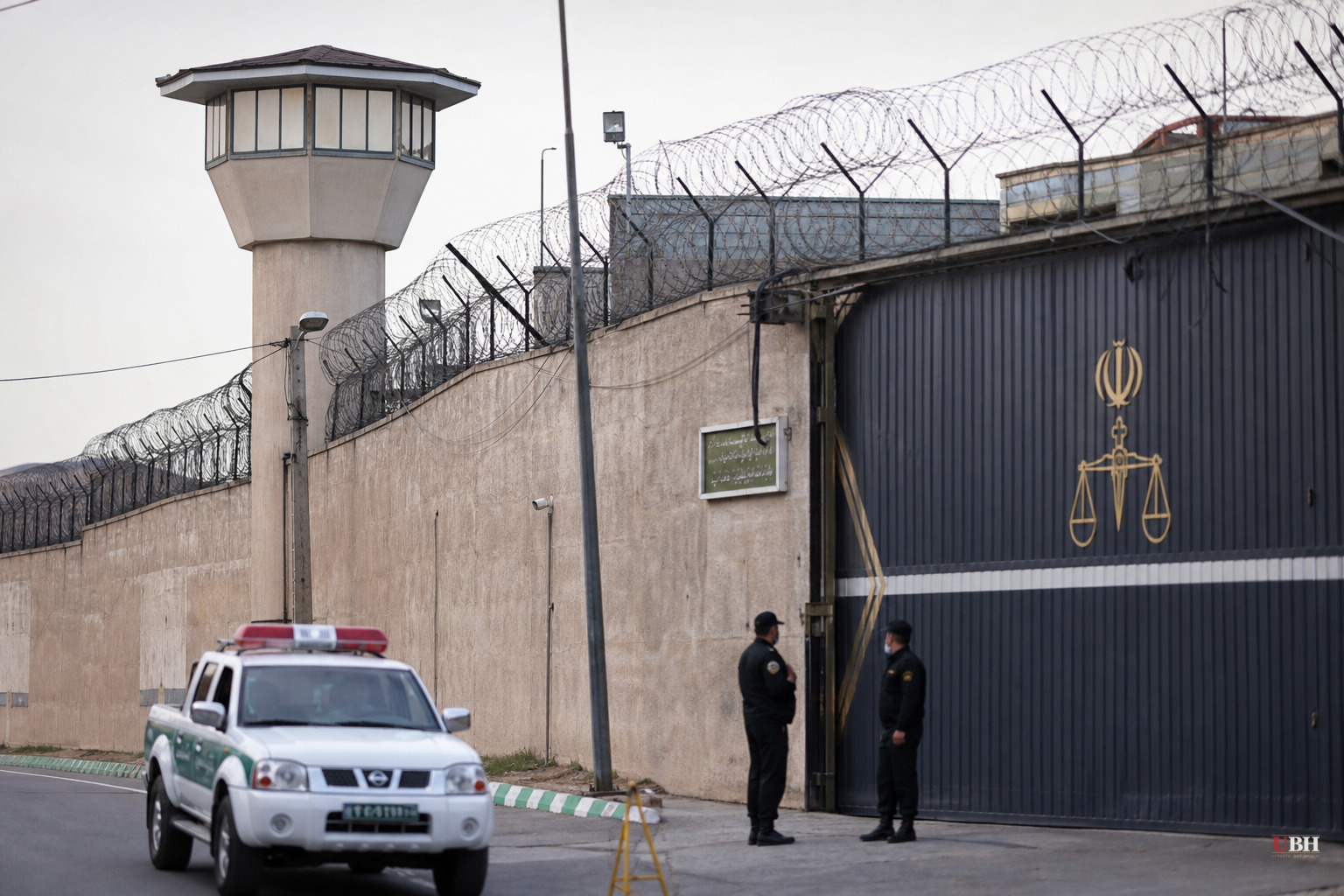
While Isfahan's gallows were being prepared, a different form of protest has been building at Ghezel Hesar prison outside Tehran. At least 1,500 death row prisoners began a hunger strike roughly two weeks ago after six men convicted on drug charges were moved to solitary confinement ahead of possible execution, according to the Guardian, citing Iranian rights groups.
Videos shared by exiled rights groups show prisoners holding signs reading "No to Executions" and chanting "Be our voice." In one video, a prisoner says he's sewing his lips shut because six days into the strike, no prison official has responded. Footage shows another prisoner stitching the man's lips with a needle and thread. A separate video shows a prisoner pleading for medical help, saying guards won't unlock the door so sick inmates can reach the infirmary.
This isn't a new phenomenon. The prisoner-led campaign against executions has run since January 2024 and has spread across Iranian prisons as death sentences have surged, the Guardian reported. Mahmood Amiry-Moghaddam, director of the Oslo-based Iran Human Rights (IHRNGO), noted that people sentenced for drug offenses are often the most invisible prisoners on death row. He said at least 795 people were hanged on drug charges last year alone, with almost no international reaction.
IHRNGO has recorded at least 424 executions so far this year, most tied to drug-related cases, with hundreds more still awaiting their fate.
The strongest case still hasn't gone to verdict
A parallel case out of Isfahan shows how these prosecutions are built. Sixteen people, including 20-year-old twins Taraneh and Romina Rahimi, face the death penalty over the killing of IRGC Colonel Abbas Kamrani during the January 8 unrest, according to RFE/RL's reporting on Radio Farda sources. They're charged with moharebeh, or "enmity against God," a capital offense under Iranian law.
Prosecutors have not charged the defendants with murder. Instead, the case rests on allegations they made Molotov cocktails in a shoe store near Shahada Square. Radio Farda's sources say prosecutors presented no independent evidence tying the defendants to Kamrani's death or that of a second man described as homeless, and the case relies mainly on confessions the defendants say were obtained through torture. The verdict has not yet been issued.
The government's position should be stated plainly, even though it can't be independently verified here. Iranian authorities maintain these are criminal prosecutions for violent acts, including arson and property destruction, not political persecution, and that confessions were obtained lawfully. No outside monitors have been given access to verify either claim, and the revolutionary court system that hears these cases is explicitly less regulated than Iran's ordinary judiciary, according to RFE/RL.
What rights groups say is driving the pace
Amnesty International's regional director, Heba Morayef, called the pattern "a further escalation in the authorities' use of the death penalty to crush dissent," adding that "the muted response from the international community emboldens the Iranian authorities to continue their deadly rampage." Amnesty says at least 60 more people, including three who were arrested as children, remain at risk.
A source inside Tehran cited by the Guardian claimed executions have intensified rather than eased since the U.S. bombing campaign was called off, saying "whenever the shadow of war over the regime lifts even slightly, the regime becomes more savage." That's a characterization from one unnamed source, not a verified pattern. But the underlying execution numbers, tracked independently by HRANA and IHRNGO, are consistent across both organizations.
HRANA says it has documented 29 public executions over the last five years and is still investigating thousands of cases tied to the January crackdown, which it estimates killed more than 7,000 people, far above the roughly 3,000 the government has acknowledged. None of those death toll figures have been independently verified by outside media, and Iran has not opened its prisons or courts to international observers to check either number.
The immediate open question is whether the Isfahan verdict against the 16 defendants, including the Rahimi twins, comes down before or after the Ghezel Hesar hunger strike forces any response from prison officials who, as of the latest videos, still haven't shown up.
Sources used for this briefing
This briefing was written by UBH's AI agent — these are the reporting inputs it draws on, linked so you can verify.


