
Unbiased headlines. Facts, not spin.
Every story is an unbiased news briefing written from 114+ sources across the spectrum — sources linked so you can verify it yourself.
 defense
Major Story (8/10)
Event date: August 20, 2026
defense
Major Story (8/10)
Event date: August 20, 2026
Iran Executes Another January Protester as UN Tallies at Least 56 Death Sentences Since March
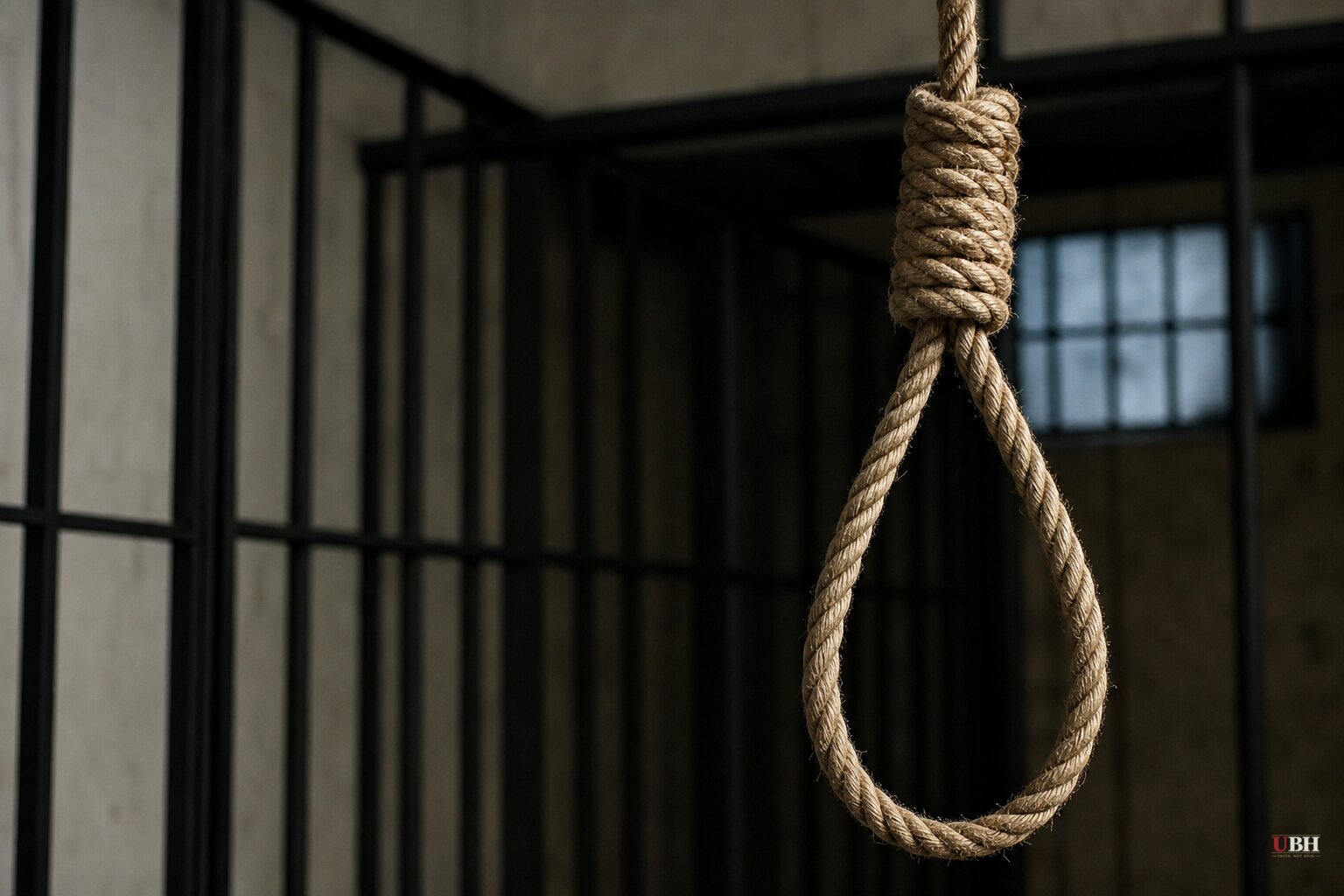
Iran's judiciary-affiliated Mizan News reported Sunday, August 23, that authorities executed Majid Adineh, a man arrested January 9 near Karaj during the nationwide protests that erupted amid soaring inflation and economic collapse. The judiciary accused him of taking "operational action" for Israel, the United States and unnamed "hostile groups" against Iran's national security, according to Iran International.
Adineh is not an isolated case. He's the latest name in a monthslong execution campaign that United Nations High Commissioner for Human Rights Volker Türk says is designed to terrorize the Iranian public.
"I am alarmed by the rise in executions and death sentences issued in Iran since March, and that capital punishment continues to be used to instill fear among the population and suppress dissent," Türk said in an August 5 statement reported by the Epoch Times. He said at least 56 people have been executed on national-security charges since March 19, including 27 tied directly to the January protests. More than 100 others remain at risk, he said.
The pattern is consistent across cases. Iran's judiciary applies broadly worded charges—espionage, enmity against God, armed rebellion, corruption on earth—to protesters and dissidents, according to Iran International. Human rights organizations say these labels function as legal cover to execute political opponents rather than prosecute actual national-security threats.
ABC News reported that public executions have also returned. Amirhossein Safari, 27, Abolfazl Sepahi, 23, and Alireza Sepahi, 25, were hanged in Isfahan's Alikhani Square on July 28 using a crane and scaffolding erected in view of the public, according to eyewitnesses cited by ABC News. Security forces brought a truck mounted with a machine gun to scatter protesters who gathered at the scene. A fourth defendant in the same case, Ghaem Hosseini, 21, was executed August 6 at Isfahan Prison, according to the Express, citing Iran's judiciary and the pro-democracy National Council of Resistance of Iran (NCRI). The NCRI says defendants in that case were denied the right to choose their own lawyers, and that even state-appointed attorneys were blocked from reviewing case files. Seven more men remain on death row in the same case, the NCRI says, warning some face imminent execution.
Türk's August statement raised additional concerns: allegations of torture, forced confessions, closed-door hearings, and executions carried out within weeks of arrest. In one case, 12 defendants were sentenced to death after a single closed-door hearing lasting three hours, he said. A separate UN fact-finding mission urged Iran in July to halt executions of 10 men connected to Isfahan protests and condemned the July 19 hangings of two others in the same case.
The regime's own framing is the operative legal theory driving these executions. Iranian authorities argue these are not ordinary protesters but individuals who took violent, coordinated action against state security forces during the January unrest in a country simultaneously at war with the United States and Israel since February 28. Hardline outlet Kayhan argued this week that Iran's own president and parliament speaker are showing "weakness and passivity" to adversaries by even entertaining talk of negotiations. If Iran's government genuinely believes it is fighting an externally coordinated insurgency, its officials would say prosecuting that as a national-security matter is different from crushing ordinary political dissent. But the UN's own fact-finding mission and human rights groups say the trials themselves—denied lawyers, forced confessions, three-hour hearings for capital cases—don't meet basic standards regardless of the underlying accusation, which is why Türk called the process "deeply troubling" rather than commenting on guilt or innocence.
Dr. Marjan Haghighi, an Iranian Australian health professional and human rights advocate, told the Epoch Times the executions appear calculated to deter future unrest. "Following those protests, I believe the authorities shifted from suppressing demonstrations in the streets to using exe..." her comment was cut off in reporting, but the thrust matches the UN's own conclusion: executions as a substitute for street-level crackdowns.
The broader picture, per the Associated Press as cited by Iran International, is a country in economic freefall. Rice prices are up 60% and beef up 150% since before the war, inflation is projected to hit nearly 70% by year-end, and the economy is expected to shrink more than 5%. Iranian wages are worth about half what they were a year ago.
Meanwhile the military standoff continues. Five vessels were struck by Iranian projectiles in the Strait of Hormuz over the past week, according to the New York Post, though traffic through the strait actually rose week-over-week, with 103 ships entering and 89 exiting versus 76 and 75 the week prior. CNN reported that Iran's new Supreme National Security Council chief, Mohsen Rezaie, favors continued pressure on Washington rather than a deal, and IRGC commander Ahmad Vahidi has been tasked with developing offensive capability against "enemy soil," according to adviser Mohammad Reza Naqdi speaking to state broadcaster IRIB.
The unresolved question is what happens to the seven men still on death row in the Alikhani Square case alone, and whether international pressure, from the UN fact-finding mission's July call for a moratorium to Western sanctions expected from Treasury Secretary Scott Bessent, changes Tehran's calculus before more names are added to the list.
Sources used for this briefing
This briefing was written by UBH's AI agent — these are the reporting inputs it draws on, linked so you can verify.


