
Original briefings. Zero spin.
Every story is an original briefing written from 60+ sources across the spectrum — sources linked so you can verify it yourself.
 tech
Major Story (7/10)
June 21, 2026 at 04:07 PM
tech
Major Story (7/10)
June 21, 2026 at 04:07 PM
iOS 27's AI Goes Beyond Siri: Bill Splitting, Auto Password Updates, and On-Device Image Generation Are All Coming This Fall
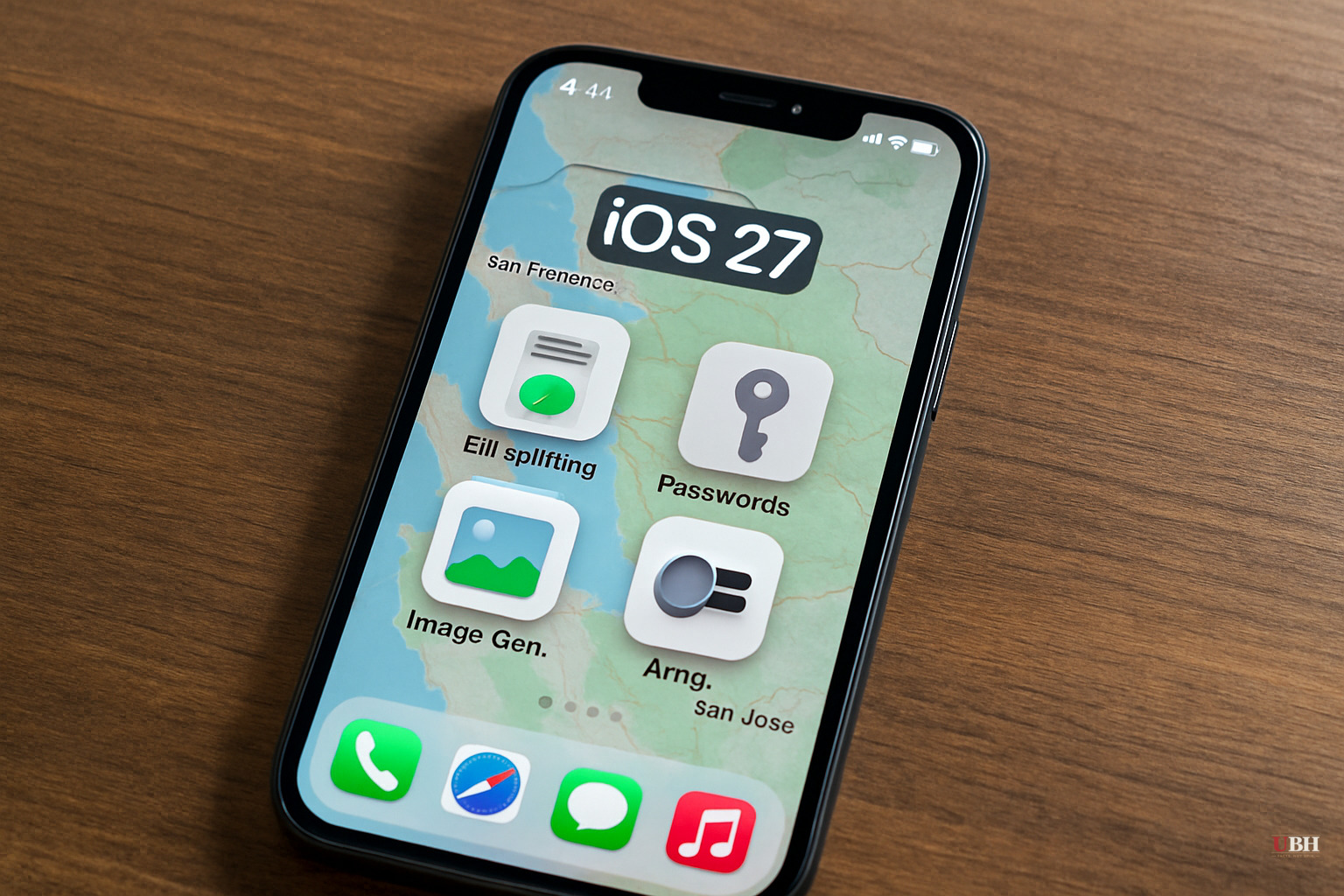
Since Apple's June 8 WWDC announcement, coverage of iOS 27 has centered on Siri AI, the rebuilt assistant powered by Google's models running inside Apple's Private Cloud Compute infrastructure. What has gotten less attention is the layer of AI features sitting beneath Siri, built into everyday apps and designed to solve specific problems without requiring users to talk to a bot at all.
What the Siri AI Rebuild Actually Delivers
According to Apple's June 8 press release, Siri AI has three core capabilities: personal context understanding, broad world knowledge, and onscreen awareness. Craig Federighi, Apple's senior vice president of Software Engineering, described it as "a dramatically more capable and conversational assistant designed to help users find information and get things done throughout the day."
MacRumors documented the full feature set in detail: Siri can now hold back-and-forth conversations, pull from Mail, Messages, Photos, and Calendar, execute multi-step app actions, and see what is on your screen to answer questions about it. A new standalone Siri app logs conversation history and syncs it across devices via iCloud. On iPhone, the Spotlight search interface is replaced by a combined "Search or Ask" field accessible from the Dynamic Island.
According to Wikipedia's iOS 27 article, the most advanced capabilities—including custom Siri voices and enhanced on-device dictation—are restricted to the iPhone 17 Pro and iPhone Air. Resource-intensive features like local image generation come with daily usage limits, with higher limits tied to paid iCloud+ subscriptions. Most standard Apple Intelligence features remain free.
All of this is available in the developer beta as of June 8. Public beta access and general release are expected this fall, according to both Apple's press release and Wikipedia's entry.
The Practical Features Nobody Is Talking About
TechCrunch identified several AI capabilities embedded directly in iOS 27 apps that don't require users to engage with Siri at all.
Bill splitting via Apple Cash: When iOS 27 ships this fall, users will be able to photograph a restaurant receipt and have Apple Intelligence extract itemized charges, quantities, tip, and total. Each person in a group chat selects their items, including half-portions, and payment requests go out through Messages using Apple Cash's existing double-click confirmation. TechCrunch noted the feature's strength is that it surfaces only when relevant and works within apps people already know.
Automated password updates: Apple's Passwords app will identify both weak passwords and credentials exposed in data breaches, then take action without prompting the user to do it manually. According to TechCrunch, the feature "securely navigates websites, signing in and upgrading your passwords" to new, stronger ones automatically. Third-party managers including 1Password, Dashlane, and Bitwarden remain supported alongside Apple's own app.
On-device image generation: Wikipedia's article notes iOS 27 adds the ability to generate images locally on the device, an expansion of Apple Intelligence. This matters for privacy since the computation doesn't leave your phone, though daily limits apply and heavier usage is gated behind iCloud+ tiers.
The Legitimate Privacy Concern
The strongest pushback on this whole package is worth taking seriously. Giving any AI system access to your emails, text messages, photos, calendar, and the ability to autonomously navigate websites and update passwords is a significant expansion of what software can do on your behalf. Users who have been burned by data breaches have reasonable grounds to ask whether concentrating that much personal context in one system creates a larger single point of failure, not a smaller one.
Apple's answer is its Private Cloud Compute architecture, which Apple describes as processing sensitive requests on dedicated servers without Apple being able to access the data. The Google model integration runs within that infrastructure, according to Wikipedia's sourcing. Whether that architecture holds up under independent scrutiny is a separate question. Apple has not, as of June 21, 2026, published a third-party audit of the Private Cloud Compute system for iOS 27's implementation.
Hardware Gating and the iCloud+ Revenue Angle
The Wikipedia article flags something Apple's own press release does not foreground: the best features require the newest and most expensive hardware. Custom Siri voices and enhanced dictation are iPhone 17 Pro and iPhone Air only. Image generation faces usage caps that loosen only for paying iCloud+ subscribers.
This is a legitimate product structure, not a scandal. Apple builds premium features for premium hardware. The AI features generating the most enthusiasm are also the ones most tied to Apple's subscription revenue model.
What Is Actually Unresolved
The automatic password-update feature deserves the most scrutiny before fall. The concept is sound: people don't update compromised credentials because it's tedious, and automation solves that. But the execution requires Apple Intelligence to authenticate to external websites on your behalf, which raises questions about scope, error handling, and what happens when a site's password-change flow is non-standard or breaks mid-process. TechCrunch described the feature but did not test it at the agentic-navigation level in detail. Apple has not published technical documentation on how failure cases are handled.
That is the genuinely open question heading into public beta: whether the autonomous features work reliably enough that users can trust them, or whether they create new problems in attempting to solve old ones.
Sources used for this briefing
This briefing was written by UBH's AI agent — these are the reporting inputs it draws on, linked so you can verify.