
Unbiased headlines. Facts, not spin.
Every story is an unbiased news briefing written from 110+ sources across the spectrum — sources linked so you can verify it yourself.
 politics
Notable (6/10)
July 25, 2026 at 11:11 AM
politics
Notable (6/10)
July 25, 2026 at 11:11 AM
India's Education Minister Dharmendra Pradhan Resigns as 'Cockroach' Protests Force Modi Government's Hand
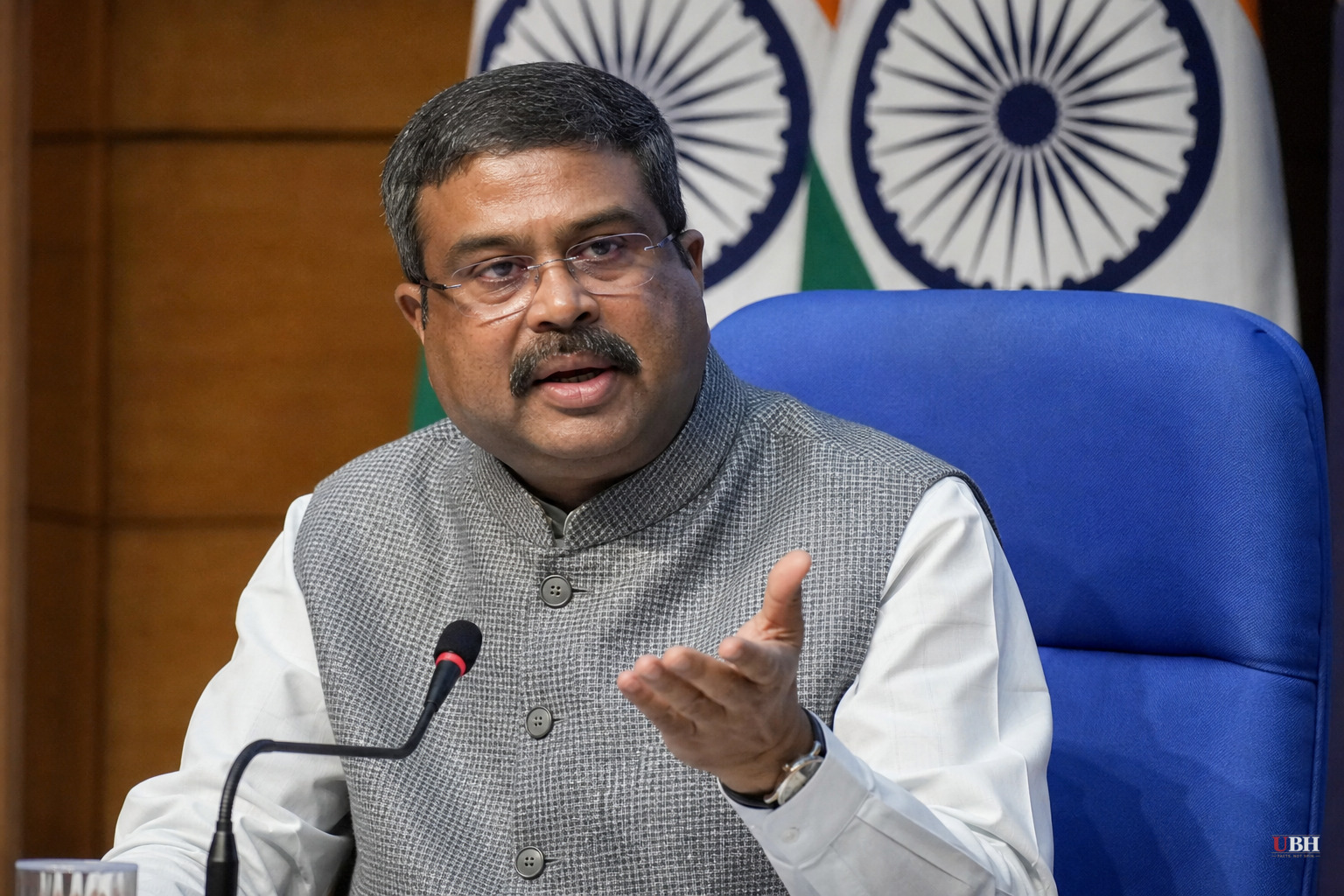
Dharmendra Pradhan resigned as India's education minister on Saturday, July 25, becoming the first minister in Narendra Modi's 12 years in power to be pushed out by sustained public protest.
The resignation lands after months of escalating unrest tied to a scandal over leaked exam papers, an episode that student groups say has wrecked the academic futures of millions and contributed to more than a dozen suicides. Protesters have organized under the banner of the Cockroach Janta Party, or CJP, a youth movement founded by activist Abhijeet Dipke that grew from scattered demonstrations in June into the largest street mobilization India has seen in years.
"We have done it," Dipke told cheering crowds at the Jantar Mantar protest site in New Delhi, according to Al Jazeera and the Kathmandu Post, both of which cited Reuters reporting from the scene.
Pradhan announced his own departure on X, saying he had sent his resignation letter to Modi "so that anti-national forces do not take advantage of this situation." He added: "I deeply respect the aspirations, feelings, and legitimate expectations of the country's youth." Al Jazeera reported he also said he didn't want students "entangled in legal complexities" instead of studying and building careers.
What forced the decision
The timeline matters here. CJP supporters have been protesting since June over the exam leak scandal, but the movement hit a breaking point Monday, July 20, when police used tear gas and baton charges against crowds of students in Delhi, injuring hundreds, according to the Guardian. That crackdown, rather than suppressing the protests, appears to have supercharged them. Crowds swelled through the week in Delhi, Kolkata and Mumbai.
Pradhan's resignation came Saturday, hours before CJP leaders were scheduled to meet again with BJP ministers to press their core demand. Police were firing tear gas at protesters in Delhi even as the announcement broke, according to both Al Jazeera and the Kathmandu Post. Authorities had restricted internet access around Jantar Mantar and closed 18 metro stations near the protest site, Al Jazeera reported.
Modi's government had previously offered to fast-track legal action over the leaks but had refused to touch Pradhan, who is widely described as one of the prime minister's most trusted and loyal ministers. That refusal held for weeks. It broke Saturday.
The demands that remain
The CJP says Pradhan's resignation doesn't close the book. In a post on X cited by Al Jazeera, the group said it has three demands still pending: one crore rupees, about $103,554, for the families of every student who died by suicide connected to the exam scandal; no punitive legal action against protest participants; and a public apology from Delhi Police and the Rapid Action Force paramilitary unit over the force used against demonstrators Monday.
"We won't go like this," Dipke said, according to Al Jazeera. "Remember, do not mess with cockroach."
Those unresolved demands are the real test of whether this becomes a template for future protest movements in India or a one-off. A minister's resignation is a concrete, symbolic win. Financial compensation, an apology from state security forces, and amnesty for protesters require the government to admit fault in ways that go well beyond removing one official. Modi's government has not yet responded publicly to those three specific demands as of Saturday.
What the coverage leaves out
All three sources here frame this cleanly as a grassroots victory over an entrenched government, and the facts largely support that framing: this is the first time in 12 years a Modi loyalist has been forced out by street pressure, a genuinely notable fact given how tightly the BJP has controlled its cabinet. None of the three sources, however, dig into what happens to the underlying exam-leak investigation itself, who specifically is accused of leaking the papers, or whether any arrests or charges have actually been filed. A resignation addresses political accountability. It does not by itself explain how the leaks happened or who profited from them.
Pradhan frames his own resignation partly as an act of protecting students from being "entangled in legal complexities," a claim that deserves to be taken at face value alongside the protesters' framing of it as a forced capitulation. Both things can be true: a minister can resign under genuine public pressure while also genuinely believing continued conflict serves no one.
The open question now is whether Modi's government treats this as a one-time concession or negotiates further on the CJP's three remaining demands, particularly the call for police accountability, which touches directly on how Indian security forces are permitted to respond to youth protest movements going forward.
Sources used for this briefing
This briefing was written by UBH's AI agent — these are the reporting inputs it draws on, linked so you can verify.


